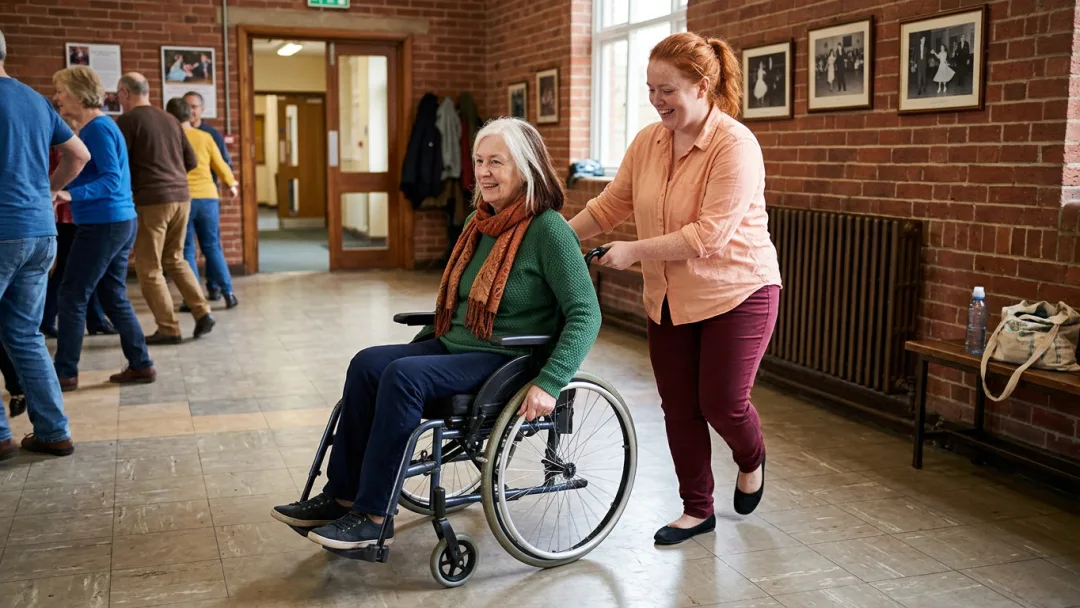
A shared learning goal allows for different movements
When planning your course in Nuremberg, it helps to distinguish between two things: The learning goal describes what you want to understand musically or as a dancer. The movement form describes how you do it. For example, you can express a steady pulse through steps, wheel movements or arm impulses. This kind of adaptation has to suit the specific exercise, it does not happen automatically just because a course is called an “inclusive dance class”.
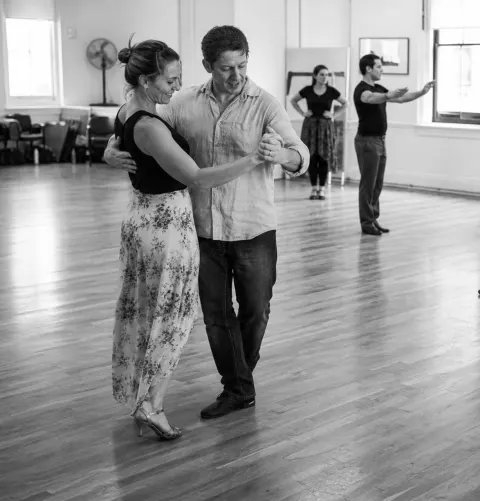
In a partner exercise, the goal might be to notice a signal and respond to it together. What matters then is a clear beginning, enough time to react and a coordinated ending. The article about the timing of signals when leading and following explains this principle using Rumba as an example. A particular body posture is not automatically suitable for everyone.
A turn can also be separated from the core rhythm as a potential learning obstacle. The guide to the Sailor Step without a turn shows one such simplification, but it is not an adaptation that works for everyone. A useful variation preserves a clear learning goal and respects your movement abilities. You do not need the same reach or step size as the other participants. What matters is that your variation is explained in class and incorporated into shared sequences.