Children's dance5 minutes

Are parents allowed to watch during children's dance classes?

By Bernhard De LucaUpdated

In a nutshell
  • The constant presence of parents in the dance studio distracts the children and disrupts the development of an independent group dynamic.
  • Without the watchful eye of their parents, the little ones can move more freely and build trust with the dance instructor faster.
  • Professional dance schools offer regular open classes instead, where parents are welcome to admire the progress.
  • Waiting in the lobby signals to the child that you trust in their own abilities and strengthens their self-confidence.

The first dance class is a huge milestone for children on their way to independence. However, it is often difficult to let the little ones go at the door of the dance studio all by themselves.

DefinitionChildren's dance parent area

The children's dance parent area refers to a designated zone, usually in the foyer or café of the dance school, where parents can wait during class. This area spatially separates the waiting adults from the active proceedings in the dance studio.

The dynamics in the dance studio with and without parents

For many parents, it is the best moment of the week when their little ones dash into the dance studio in their colorful slippers, full of anticipation. But at the door, the crucial question arises of whether mom and dad are allowed to come inside. Every dance school handles this situation a little differently, but there is always a clear pedagogical concept behind the rules. While the presence of adults is an integral part of the program in parent-child dance (0-3 years), this changes as soon as children take the step into an independent course.

From the age of about three to four, children learn in class to move within a new group without a direct caregiver. The physical presence of parents in the dance studio can unconsciously slow down this important developmental step. Dance teachers regularly observe that children whose parents are sitting on the sidelines seek eye contact for reassurance with every new exercise instead of engaging with the group. Without spectators, it is usually much easier for the little ones to build a direct bond with the instructor and gain their own experiences in a protected space.
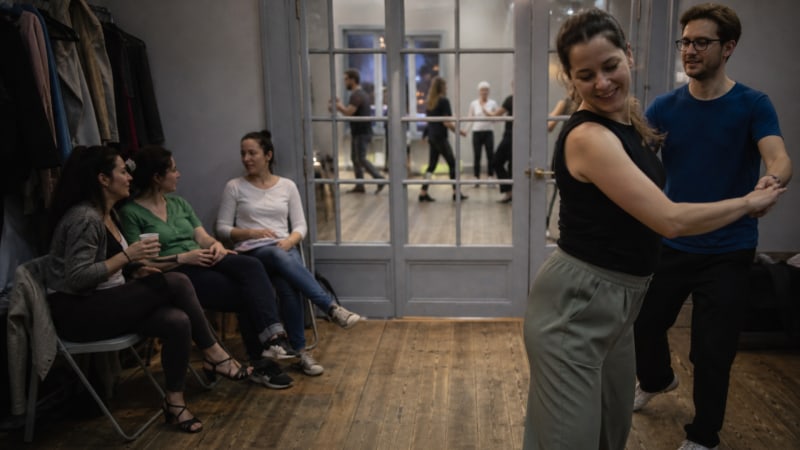
Focus without distraction: When children are among themselves, all eyes naturally turn to the dance teacher.

Why spectators disrupt the group's concentration

The presence of adults in the background fundamentally changes the entire atmosphere of the room. Children sense the expectations of the spectators, even if the parents are sitting perfectly still in their chairs. This silent attention often creates an unconscious performance pressure that conflicts with the playful approach in creative children's dance. Instead of moving freely to the music, many children glance toward the parent area to check for reactions to what they are doing. This inhibits their own creativity and the courage to make mistakes.

Furthermore, the distraction factor in the parent area during children's dance is enormously high. As soon as one child starts to cry, gets tired, or seeks eye contact, the concentration of the entire group is disrupted. Dance educators use targeted games to capture the children's attention. However, if a parent is standing on the sidelines, this spell is quickly broken. If your child is very restless, movement can work wonders, as the guide on how dance for restless children promotes concentration shows. But even this effect unfolds best when the child can fully engage with the group.

The role of parents during children's dance classes

Proper conduct

  • Establish fixed goodbye rituals at the door
  • Relax and have a coffee in the parents' area
  • Trust in the pedagogical experience of the instructor
  • Celebrate progress during the open classes

Common mistakes

  • Sitting on the edge of the dance floor during the class
  • Constantly waving through the window pane
  • Intervening with corrections for minor mistakes
  • Unnecessarily dragging out goodbyes at the door

When parents leave the room, children often really start to blossom. They dance more freely, try things out with more courage, and are incredibly proud of their own performance in the end.

Experienced dance teacher for children's dance, Hamburg

Sensible alternatives and open viewing sessions

Good dance schools do not permanently lock parents out, but instead rely on transparent intermediate solutions. A proven concept is regular open sessions or small presentations at the end of a course block. Here, families are officially allowed to accompany the dance class of their children as spectators and admire the steps they have learned. This increases the children's anticipation enormously, as they can proudly show what they have worked out all on their own. For the rest of the time, the parents' trust in the dance instructors is the key to success.

If saying goodbye at the door is difficult at first, fixed rituals help instead of staying in the room for a long time. A short, loving handover moment to the teacher signals security to the child. If you are unsure in advance how the first lesson will go, you will find valuable tips in our guide to trial lessons for children's dance. By waiting outside calmly as a parent, you show your child that you have complete confidence in them taking this independent step.

Two concepts for different age groups

Together

Parent-child courses

For babies and toddlers up to 3 years old

Here, the focus is on experiencing things together. Parents are active play partners, providing security and supporting the little ones with their first rhythmic movements in the room.

Independent

Creative Children's Dance

For children aged 4 and up

From about four years old, children dance independently. They learn to orient themselves within the group without distraction, to listen to the instructor, and to develop their own self-confidence on the dance floor.

Frequently Asked Questions

  1. Usually not, as the little ones get very distracted by it. Professional dance schools therefore politely ask parents to take a seat in the waiting area to protect the group's concentration.

Discover children's dance classes near you

Find the right class for your child in a playful way and accompany them on their journey.

View all suitable classes

Find the right dance course

On udansa, you can easily find the right dance school for your child that perfectly meets your needs. Discover offers in your region and give your child the perfect start into the world of movement.

Find the right dance course