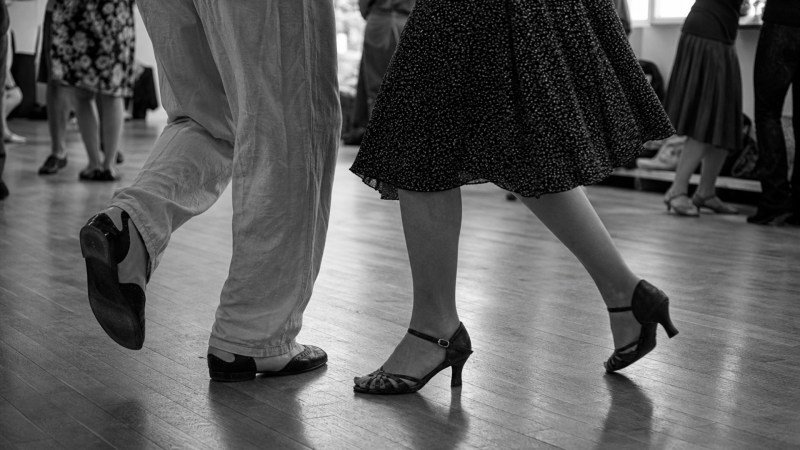
How movement originates in the ankles
The characteristic wave motion that makes the Slow Waltz or the Quickstep look so fluid does not originate from the hips or the upper body. The secret lies in the feet and ankles. Anyone wanting to master the rise-and-fall technique in ballroom dancing must learn to build the movement from the very bottom up. The rise begins in the legs and continues through the ankle joints to the tips of the toes. The subsequent fall is not an abrupt drop, but a controlled rolling motion that gently cushions the knees.
To understand this dynamic, it is worth taking a look at the physical principles of partner dancing. Every rise requires a preceding knee bend to generate the energy needed for the ascent. Many couples try to pull themselves upward using only the muscle power of their upper bodies. However, this leads to a tense ballroom dance posture that disrupts the shared frame. The power for rising and falling comes exclusively from floor contact and the activation of the calf and foot muscles.