
Dancing together knows no age
On udansa you will find dance enthusiasts of all ages who, just like you, share the joy of movement. Sign up now and discover dance partners with whom the chemistry on the dance floor is just right.


By Bernhard De LucaUpdated
On udansa you will find dance enthusiasts of all ages who, just like you, share the joy of movement. Sign up now and discover dance partners with whom the chemistry on the dance floor is just right.
The age difference when looking for a dance partner makes many beginners feel insecure. However, on the dance floor, there are unique rules that can effortlessly connect generations if the attitude is right.
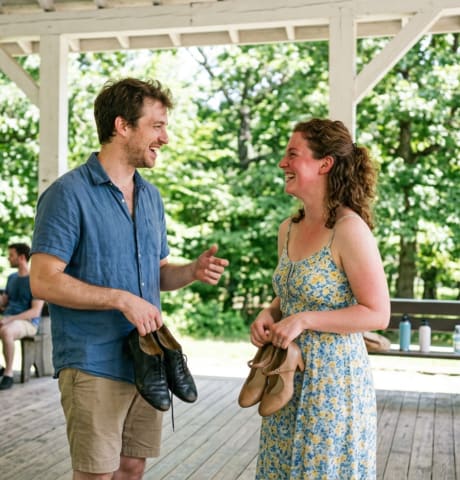
An intergenerational dance partnership refers to two people with a noticeable age difference dancing together. Mutual respect and a shared athletic goal are at the forefront, which makes biological age limits lose their significance in udansa.
Deciding on a dance partner with an age difference often raises psychological questions. Many people fear that different life experiences could lead to a generation gap in the dance studio. This concern is usually unfounded, because a unique dynamic emerges on the dance floor. When dancing, we communicate primarily non-verbally through body tension, weight shifts, and rhythm. This physical level functions completely independently of the decade in which we were born.
An age difference can even enrich the dance connection. While younger dancers often bring high energy and physical fitness, older dance partners frequently shine with patience, composure, and a deep understanding of the music. If both sides are willing to learn from each other, a productive synergy is created. The key lies in breaking down prejudices and viewing the partner as an equal athlete. Anyone who approaches their shared hobby with an open mind will quickly realize: a dance partner and their age are irrelevant as soon as the music starts.

Although the non-verbal level dominates, misunderstandings can occur in everyday training. A typical generational conflict in a dance school rarely arises from the steps themselves, but rather from different communication habits and expectations. Younger generations are often used to quick, direct digital coordination, while older dancers sometimes prefer personal conversations or fixed calling times. Anyone who remains flexible here and meets in the middle avoids unnecessary frustration before the actual training.
Musical taste can also vary. While one partner prefers traditional orchestral sounds, the other might want to dance to modern pop remixes. Here, taking a look at partner dance styles in comparison helps to find common ground. Many dances like Discofox or West Coast Swing work excellently with almost any genre of music. If you take the other person's perspective and respect their preferences, the partnership becomes a valuable experience that expands your own horizon far beyond the dance floor.
Correct
Wrong
Dancing is all about connection and rhythm, not about the date of birth on your ID. The best dance partners are often found when you least expect it.
For an intergenerational dance partnership to harmonize in the long term, clear and appreciative communication is essential. This is especially true for the initial contact. If you are writing to someone who is significantly older or younger than you, you should be open about your expectations from the start. Are you looking for an ambitious sports partner for multiple training sessions per week, or is the focus on social fun? You can find helpful tips for your first message in our guide on writing to dance partners: templates and psychological tips.
When dancing together, it is about using each other's strengths and lovingly balancing out weaknesses. A younger partner can learn to engage with calm, experienced leading, while an older partner benefits from fresh energy and spontaneity. If you embark on this adventure, you will find that a shared passion for movement easily overcomes all age barriers. In the end, only one thing counts on the dance floor: that you dance to the same beat and have fun together.
The strengths of the younger generation
Younger dancers often bring a high level of physical dynamism, quick reaction times, and a carefree spontaneity to the partnership. They challenge you and bring a breath of fresh air to classic movement sequences.
The strengths of the older generation
Older dancers usually shine with mental strength, patience, and a distinct musicality. Their life experience provides a pleasant calmness during training, which is extremely valuable, especially in stressful learning phases.
No, age does not matter when learning steps. Much more important are personal motivation, regular training, and mutual patience within the dance couple.
Talk openly about your expectations and training goals beforehand. If you meet at eye level and respect each other's taste in music, no conflict will arise at all.
Focus on your dancing goals, your preferred dance style, and your reliability in your profile. A friendly, open text attracts dance enthusiasts of all ages.
Find the right course and just start dancing, no matter your age.
Couple danceLimbach-Oberfrohna · Germany
PaartanzkreisFriday · 18:15 · Oct 23
Limbach-Oberfrohna
Couple danceLimbach-Oberfrohna · Germany
Silberkurs für PaareSunday · 16:15 · Oct 25 - Nov 15
Limbach-Oberfrohna
Couple danceLimbach-Oberfrohna · Germany
PaartanzkreisSunday · 16:30 · Oct 25
Limbach-Oberfrohna
 Comparing partner dance styles: Which one suits you?Which partner dance is the perfect fit for you? Our comprehensive style comparison highlights the differences between ballroom, Latin, and modern social dance styles.
 Messaging a dance partner: Templates and psychological tipsThe first step to a new dance partnership starts with the right message. Learn how to connect successfully using psychological insight and effective templates.Messaging a dance partner: Templates and psychological tipsThe first step to a new dance partnership starts with the right message. Learn how to connect successfully using psychological insight and effective templates.
 Organizing dance practice: The tools couples use todayDigital tools are revolutionizing coordination and organization in dance. Learn how to make your training more efficient with modern helpers.
 Which dance partner is right for me? Our self-testFind out with our self-test what you expect from a dance partnership and which personality type best suits you on the dance floor.
 Looking for a dance partner: profile text templatesWith a great template, you can make your profile on udansa appealing in no time and quickly find the perfect partner for the dance floor.
 The 7 biggest mistakes when looking for a dance partnerThe search for the perfect dance partner often fails before you even step onto the dance floor. Avoid these seven common communication mistakes for a successful search.
 Overcoming fear of rejection when finding a dance partnerThe fear of rejection stops many from finding the perfect dance partner. This psychological guide shows you how to shed insecurities and approach others with newfound confidence.
 Arranging a trial dance: How to make your first meeting a successA first trial dance is the best way to find the right dance partner. This guide shows you how to make the meeting a success without any pressure.