
Find your perfect dance partner
Create your free profile on udansa now, filter by your personal preferences, and find the dance partner who is a perfect match for you in terms of personality and dance style.


By Mary De LucaUpdated
Create your free profile on udansa now, filter by your personal preferences, and find the dance partner who is a perfect match for you in terms of personality and dance style.
Choosing the right dance partner determines whether every hour on the dance floor brings pure joy or turns into hard work. This psychological self-test helps you decode your own expectations.
The search for the perfect partner on the dance floor is often like a small journey of discovery. Many dancers focus primarily on dance level or height when making their choice. However, practice shows that a harmonious partnership is shaped much more by shared goals, personal learning pace, and the inner attitude toward dancing. If the interpersonal chemistry is not right or expectations diverge significantly, even the most precise sense of rhythm is of little use.
Before you start your search, you should be clear about what is really important to you during joint training. Are you looking for a casual leisure activity to switch off, do you want to specifically refine your technique, or is making social contacts the priority? An honest look at your own wishes will help you avoid disappointment and search specifically for like-minded people. This way, you prevent different ambitions from leading to frustration on the dance floor later on.
When dancing, you are primarily looking for relaxation, social interaction, and a good time without any pressure to perform. For you, the focus is on the shared experience and the joy of moving to beautiful music. Look specifically for dance partners who also take the hobby lightly and just want to switch off after work.
You strive to constantly improve, value clean technique, and like to take your training seriously. You are looking for a dance partner who is just as ambitious, wants to train regularly, and sees feedback as an opportunity. Phrase your search ads directly with a focus on athletic development.
For you, dancing is a wonderful medium to meet new people and be part of an active community. You love switching dance partners at parties and do not want to be tied down to rigid routines. A flexible partner who enjoys going to social events suits you best.
| Criterion | The pleasure dancer (Type A) | The perfectionist (Type B) | The social dancer (Type C) |
|---|---|---|---|
| Main motivation | Fun with music and relaxation | Technical perfection and progress | Social contacts and events |
| Learning philosophy | Learning intuitively and without pressure | Practicing in a structured way and analyzing mistakes | Going with the flow and trying things out |
| Ideal dance style | Classic partner dance or Salsa | Ballroom, Latin or Argentine Tango | West Coast Swing or Bachata |
| Biggest risk | Under-challenge with rapid progress | Impatience with a partner's mistakes | Lack of consistency in a fixed course |
The transitions between the types are fluid and can adapt depending on the phase of life.
As soon as you know your test result, you can focus your search and minimize misunderstandings from the start. If, for example, you are an ambitious performance-oriented dancer looking for like-minded people, you should signal this in your description. An honest exchange when you first meet saves both sides a lot of time. Use platforms like udansa to filter specifically for the characteristics that are important to you for a harmonious partnership.
For a first meeting, a casual trial dance in a relaxed atmosphere is always recommended, for example at an open dance party or during a taster class. Here, it quickly becomes clear whether the communication works and whether the harmony of movement meets your expectations. Don't just pay attention to the steps, but above all to how you treat each other when something doesn't work out right away. A respectful and humorous interaction is the best basis for long-term fun in your shared hobby.
You will notice this primarily through relaxed communication and a shared sense of rhythm during a trial dance. If you can both laugh about mistakes and understand each other without words, you have the right foundation.
Different expectations regarding training and the pace of learning are the most common causes. If one partner wants to train ambitiously while the other is only looking for social interaction, it quickly leads to frustration.
Yes, that can work excellently as long as both sides treat each other with respect. The more experienced partner learns a great deal about their own axis and stability through leading or following.
Find the right course for you and your dance partner.
Couple danceLimbach-Oberfrohna · Germany
PaartanzkreisMonday · 19:30 · Oct 12
Limbach-Oberfrohna
Couple danceLimbach-Oberfrohna · Germany
PaartanzkreisFriday · 18:15 · Oct 23
Limbach-Oberfrohna
Couple danceBurgstädt · Germany
Paarkurs - Goldstar TanzkreisSunday · 15:00 · Oct 25
Burgstädt
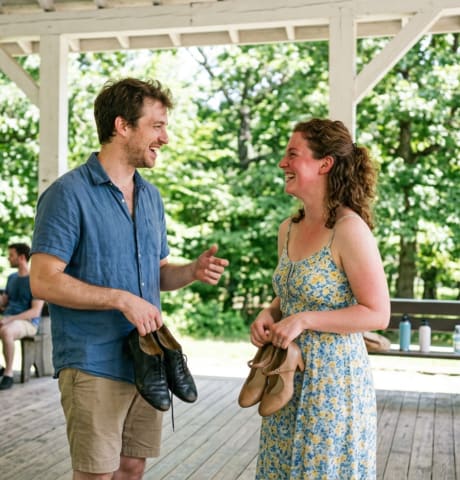 Messaging a dance partner: Templates and psychological tipsThe first step to a new dance partnership starts with the right message. Learn how to connect successfully using psychological insight and effective templates.
 Looking for a dance partner: profile text templatesWith a great template, you can make your profile on udansa appealing in no time and quickly find the perfect partner for the dance floor.
 The 7 biggest mistakes when looking for a dance partnerThe search for the perfect dance partner often fails before you even step onto the dance floor. Avoid these seven common communication mistakes for a successful search.
 Overcoming fear of rejection when finding a dance partnerThe fear of rejection stops many from finding the perfect dance partner. This psychological guide shows you how to shed insecurities and approach others with newfound confidence.
 Arranging a trial dance: How to make your first meeting a successA first trial dance is the best way to find the right dance partner. This guide shows you how to make the meeting a success without any pressure.
 Dance partners with different skill levels: What to do?When dance ambitions and skills drift apart, a delicate touch is needed. Our guide shows you how to balance level differences without frustration.
 Ending a dance partnership: Templates for a polite declineEnding a dance partnership is often an emotional step. With our concrete text templates and tips, you are guaranteed to decline in a nice and respectful way.