
Find your perfect dance partner
On udansa you meet like-minded people who share your passion. Create your profile and find the exact person who matches your dance personality.


By Bernhard De LucaUpdated
On udansa you meet like-minded people who share your passion. Create your profile and find the exact person who matches your dance personality.
The question of the optimal constellation occupies every dancer from the very first step. This self-test helps you to decode your own needs and find the perfect path for your dancing future.
The decision between a fixed training partner and constantly switching on the dance floor shapes your entire development as a dancer. Both paths offer significant advantages, but also carry specific risks. Those who commit exclusively to one person build blind trust and a shared routine rapidly, but they run the risk of adopting each other's mistakes or stagnating completely if the other person is unavailable. Especially in technically demanding dances like Ballroom or Latin, this consistency can be the key to success.
In social dancing within the scenes of Salsa, Bachata, or West Coast Swing, however, constant partner switching is firmly anchored in the culture. Here, dancing with strangers trains your adaptability and your leading or following skills in a matter of seconds. Anyone who wants to learn to react flexibly to every movement benefits enormously from the dynamic of changing partners. Which path is the right one for you depends heavily on your personality and your dancing goals.
You value security, structure, and deep dance harmony. A steady partner is ideal for you to learn complex figures without stress. Look specifically for someone who shares your ambitions.
You love variety and the adventure of the unknown. Dancing with changing partners at socials sharpens your senses and makes you an extremely flexible dancer. Use parties to let off steam.
You are looking for the perfect balance. You value working on the basics with a fixed partner, but you also need input from outside. A course with a fixed partner combined with free practice evenings is your optimal path.
| Criterion | Fixed partner | Rotating partner |
|---|---|---|
| Learning curve for choreographies | Very high, as sequences are precisely practiced | Rather flat, as coordination must happen spontaneously |
| Adaptability (social) | Lower, you get used to your partner's mistakes | Very high, trains quick leading and following |
| Flexibility with appointments | Low, if one person cancels, training is blocked | High, you can go to events alone at any time |
| Social factor | Focus is on the couple relationship and teamwork | Large network, quick integration into the scene |
The evaluation is based on the typical requirements in recreational and leisure sports.
As soon as you know your test result, you can specifically align your dance activities. If you are looking for the perfect training partner as a type A, it is worth taking a look at specialized platforms. In our guide dance school or online search you will find out where you can find what you are looking for fastest. Are you looking specifically for modern, fluid styles, our guide for a Brazilian Zouk dance partner will help you further.
For the flexible types B and C, the fun of socializing is in the foreground. Here it is about shining at parties and events without any fear of contact. Use the open atmosphere of the dance community to intuitively improve your leading and following skills. No matter which path makes your heart beat faster: The most important thing is that you feel comfortable on the dance floor and develop at your own pace.
A fixed dance partner is especially worthwhile if you are pursuing ambitious goals like competitive dancing or complex choreographies. Even for technically very demanding dances, a fixed partnership ensures faster progress and intuitive understanding.
Switching partners is ideal for anyone who loves social dance like Salsa, Bachata, or West Coast Swing. It trains your flexibility, improves your leading and following technique, and prepares you for any dance party worldwide.
Yes, that is actually the ideal combination. You can work on your technique in a fixed course during the week and train your flexibility and improvisation with changing partners at socials and parties on the weekend.
Find the right course for your dance style now and get started.
Couple danceLimbach-Oberfrohna · Germany
PaartanzkreisMonday · 19:30 · Oct 12
Limbach-Oberfrohna
Couple danceLimbach-Oberfrohna · Germany
PaartanzkreisFriday · 18:15 · Oct 23
Limbach-Oberfrohna
 Looking for a Kizomba dance partner: Step by step to your matchLooking for a Kizomba dance partner? Learn in our practical guide how to use the subtle differences in the scene to quickly find the perfect match.
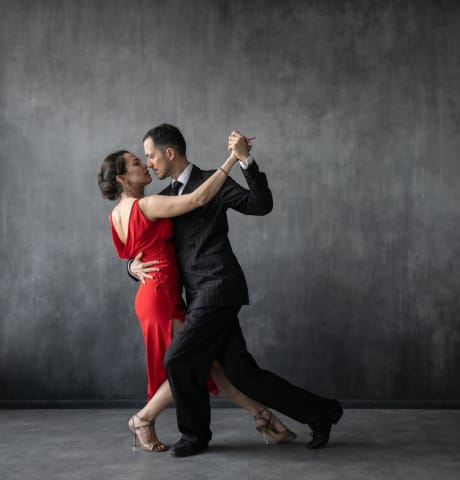 Looking for a Tango dance partnerIn the mood for Tango? Find a suitable dance partner for the next milonga with udansa.
 Find a swing dance partner: Lindy Hop & BalboaLooking for a swing dance partner for Lindy Hop, Balboa, or Shag? Our guide shows you how to find the perfect match for your favorite style.
 Find a dance partner by styleFind the perfect dance partner for your style, whether it is Salsa, Tango, Discofox, or something else. Our guide shows you what matters.
 Finding a dance sport partner: 5 steps to your tournament matchLooking for a real match for the dance floor? Our guide shows tournament dancers how to specifically find the right dance sport partner for DTV, ÖTSV, or STSV.
 Looking for a folk dance partner: The best places to lookIf you are looking for a dance partner for traditional folk dances, Bavarian Zwiefache, or Austrian folk dance evenings, you need the right places to look. Find out how to find your match here.
 Historical dance partner wanted: Baroque to vintageAre you looking for a dance partner for historical dances from Baroque to vintage? Find out here what matters when searching for a partner in this special niche.
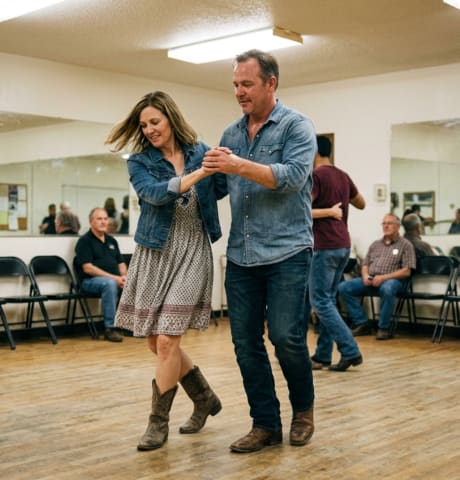 Find a Country dance partner: Two Step & partner patternsAre you looking for a companion for Country Two Step or partner patterns? Find out how to specifically find your Country dance partner and what matters in Western-style couple dancing.
 Looking for a Forró dance partner: Trends in the Brazilian sceneAre you looking for a Forró dance partner? Discover the unique aspects of the Brazilian scene and find out how the close embrace enriches your search.
 Trial dance with a new partner: The chemistry checklistYour first trial dance determines your success on the dance floor. Learn in this guide how to test your dance chemistry in a targeted and simple way.