

Dancing together at eye level
On udansa, you will meet dance enthusiasts of all levels who want to support each other and grow together. Find your perfect dance partner for your next course or party now.

By Bernhard De LucaUpdated

On udansa, you will meet dance enthusiasts of all levels who want to support each other and grow together. Find your perfect dance partner for your next course or party now.
Dancing with beginners requires sensitivity and genuine empathy. When you communicate as an advanced dancer on equal terms, you strengthen the community and refine your own technique at the same time.
Established etiquette
All advice is based on the established rules of conduct in the global social dance scenes.
Target audience focus
These tips are aimed exclusively at experienced dancers who want to practice with beginners.
Independent selection
No financial contributions or placements were accepted for the creation of this list.
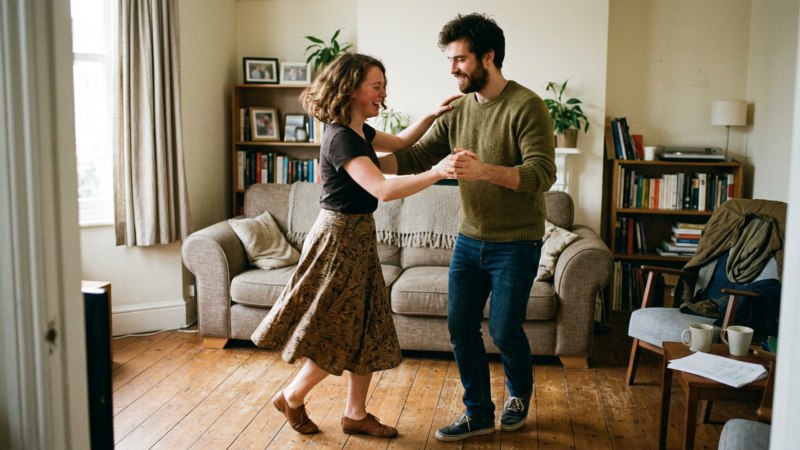
Focus on basic steps, a maximum of one or two easy variations
Avoid wild wrap figures or fast double turns. Instead, focus on clean basics and simple changes of direction that give your partner time to react.
Gentle physical contact, clear signals through the connection points
Lead softly but firmly and indicate changes in direction early. Avoid abrupt pulling or pushing, as this can quickly lead to painful blockages or falls if there is uncertainty.
Dance floor, no corrections during the song
Nothing demotivates beginners more than unsolicited instruction on the party floor. Leave mistakes uncommented and give your partner an encouraging smile instead to take the pressure off.
Adapting step size, ensuring stability as a couple
Adjust your step size to your partner and pay attention to your shared balance. If you notice that the other person is losing their balance, catch them gently instead of stubbornly sticking to your line.
Appreciative feedback, friendly farewell
Thank your partner warmly after the song and offer honest praise for a well-executed moment. This boosts the beginner's confidence and ensures that they will be happy to return to the dance floor.
Anyone who has been dancing at socials for years quickly forgets how intimidating the first steps on a crowded dance floor can be. When experienced dancers take time for beginners, it not only strengthens the entire community, but also trains your own empathy and adaptability. When it comes to lead & follow in partner dance, it is not about demonstrating your entire repertoire, but about building a shared, harmonious connection. A successful dance with a beginner is characterized by the fact that both partners felt comfortable and safe at the end.
Beginners often struggle with the fear of making mistakes or boring their partner. As an advanced dancer, you can immediately reduce this tension by creating a friendly, mistake-tolerant atmosphere. A smile when a step is missed often works wonders. Focus on the absolute basics of the respective style and keep the connection stable and predictable. This gives your partner the necessary security to engage with the rhythm and enjoy the movement, instead of panicking about the next step.
Adapt immediately by slowing down the tempo and focusing on the absolute basic steps. Reduce the complexity and give your partner orientation and security back through clear, calm leading.
No, unsolicited tips on the dance floor, also known as backseat teaching, are taboo. They usually just make beginners feel more insecure and disrupt the flow. Save technical advice for class.
Focus on precise, sensitive leading and perfect timing of the basics. Executing simple steps cleanly with maximum connection often requires more dance maturity than complex sequences of figures.
Find the right course to take your skills to the next level or to try out new styles.
 Lead & Follow: Partner dance as teamworkLeading and following is more than just telling and trailing. Learn how to harmonize perfectly as a leader and follower on the dance floor with udansa!
 Ball Season Etiquette: Do's & Don'ts for the WaltzA dance ball is elegant and sometimes a bit intimidating. This ball season etiquette guide shows you the most important do's & don'ts so you can move on the dance floor with confidence, respect, and ease.
 Harmony in partner dance: giving feedback without conflictHow do you give feedback correctly while dancing? Learn the basics of dance communication to grow as a couple without killing the vibe.
 Social Dance Etiquette: Guidelines for stress-free dancingThe social dance etiquette is your guide to respectful interaction on the dance floor. Get to know the unwritten rules of social dancing.Harmony in partner dance: giving feedback without conflictHow do you give feedback correctly while dancing? Learn the basics of dance communication to grow as a couple without killing the vibe.
 Backseat teaching in dance: Why unsolicited advice is a no-goUnsolicited advice on the dance floor can ruin the best party. Find out why backseat teaching in dance is a no-go and how to react elegantly.Lead & Follow: Partner dance as teamworkLeading and following is more than just telling and trailing. Learn how to harmonize perfectly as a leader and follower on the dance floor with udansa!
 Thanking your partner after a dance: How to say goodbye elegantlyNot every dance is perfect. Learn here how to properly thank your partner, elegantly end an awkward dance, and maintain proper etiquette on the dance floor.
 Setting boundaries while dancing: closeness, distance, and respectDance safely and carefree: learn how to clearly communicate your personal boundaries in partner dance and respect those of your partner.
 Mastering dance invitations: The guideLearn how to confidently and politely ask for a dance at social events or how to elegantly decline an invitation without making it awkward.