
Dancing together without misunderstandings
On udansa you meet like-minded people who appreciate the unwritten rules of social dance just as much as you do. Find your next events and dance partners here who perfectly match your rhythm.


By Bernhard De LucaUpdated
On udansa you meet like-minded people who appreciate the unwritten rules of social dance just as much as you do. Find your next events and dance partners here who perfectly match your rhythm.
Anyone stepping onto the dance floor at a social dance party enters a world full of dynamics and non-verbal signals. Only by understanding the unwritten rules does the evening become a carefree experience for everyone involved, and udansa helps you navigate this.
Social dance etiquette refers to the set of unwritten rules of conduct, forms of politeness, and safety aspects that enable harmonious and respectful interaction on the social dance floor.
Social dancing differs fundamentally from classical partner dance in dance school lessons or at formal balls. While fixed choreographies and rigid sequences dominate there, the free dance floor thrives on spontaneity, improvisation, and the constant changing of dance partners. A successful evening is not based on flawless steps, but on mutual attentiveness. The social dance etiquette is not a rigid set of rules, but a collection of unwritten laws that ensure everyone present feels safe and comfortable.
The most important foundation of dance floor etiquette is respectful interaction with one another. Since people of the most varied experience levels meet during social dance, empathy is required. Advanced dancers adapt to the level of their partner instead of forcing complicated figures. If you are wondering how to best prepare yourself, a look at the guide Social dance clothing & shoes: The practical guide will help you to be perfectly prepared for the dynamics of the community in terms of clothing as well.

Asking someone to dance has changed significantly in the modern social dance scene. Traditional role distribution has long been broken: anyone can ask anyone else to dance, regardless of gender. A friendly gesture, eye contact, and a simple "Would you like to dance?" are completely sufficient. Just as important for healthy social dance etiquette, however, is the acceptance of a no. Saying no when dancing is absolutely legitimate and requires no detailed justification.
A "No, thank you" should never be taken personally. The reasons are varied: exhaustion, thirst, an unsuitable song, or simply the need for a short break. A polite refusal is one of the essential social dancing rules. Anyone who declines an invitation should, out of courtesy, not dance that specific song with anyone else. As soon as the music changes, the dance floor is open for new encounters again.
Do's
Don't do this
A good social dancer is not defined by the number of moves they know, but by how safe and comfortable their partner feels in their arms.
A successful evening at a dance party is decided by the direct interaction during the song. The golden rule is: No unsolicited feedback on the dance floor. Anyone who corrects or lectures without being asked destroys the lightness of the moment and makes their partner feel insecure. The dance floor is a place for experiencing, not for teaching. Constructive exchange belongs in the classroom, not in social practice.
If a collision should occur in the dense crowd, the rule is: Stop immediately, apologize, and make eye contact, even if you are not at fault. The safety of everyone involved is more important than any figure, no matter how beautiful. Anyone who internalizes these basics will master every event with flying colors. If you would like to assess your own skills beforehand, the guide on assessing your own dance level will help you to position yourself realistically on the dance floor and get started in a relaxed way.
Providing safety and structure
The leader sets the direction, keeps an eye on the space on the dance floor, and protects the follower from collisions. They adapt their moves to their partner's level.
Receiving and shaping impulses
The follower engages with the impulses, actively interprets the music, and trusts the lead. They use the offered space for their own styling elements.
Yes, absolutely. In the modern social dance scene, it is completely normal and welcome for women to ask men or same-sex partners to dance. The traditional distribution of roles no longer exists in social dancing.
A friendly but firm 'No, thank you' is perfectly sufficient. You do not need to justify yourself or make up excuses. Every dancer has the right to decline a dance without giving a reason.
No, unsolicited corrections are considered impolite and a mood killer at social events. The dance floor is there for enjoyment. Save technical feedback for class or special practice evenings.
Apologize briefly to your partner and the people affected immediately, make sure that no one is hurt, and then continue dancing in a relaxed manner. On crowded dance floors, small bumps are part of it and are taken in a sporting spirit.
Find the best parties and workshops to apply your new knowledge directly on the dance floor.
 festivaludansa-TippBachata
 festivalSalsa
 festivalSalsa
 Social Dance Clothing & Shoes: The Practical GuideLearn how to choose the perfect social dance clothing and the right shoes for long, carefree nights of dancing so you can feel completely comfortable.
 Assess your dance levelBeginner or pro? Learn how to honestly assess your dance level and how to dance with partners at different levels.
 Mastering dance invitations: The guideLearn how to confidently and politely ask for a dance at social events or how to elegantly decline an invitation without making it awkward.
 Ball Season Etiquette: Do's & Don'ts for the WaltzA dance ball is elegant and sometimes a bit intimidating. This ball season etiquette guide shows you the most important do's & don'ts so you can move on the dance floor with confidence, respect, and ease.
 Hygiene while dancing: The freshness checklist for social dancersStay guaranteed fresh while social dancing: Our practical hygiene checklist helps you elegantly manage sweat and bad breath while dancing.
 Dance Direction & Line of Direction: Flow on the dance floorThe Line of Direction ensures order and safety while dancing. Learn how to move counter-clockwise in the dance flow and avoid collisions.
 Safety on the dance floor: Avoiding collisions with eleganceSafety on the dance floor is essential for carefree dancing. Learn how to elegantly avoid collisions and protect your partner, even on crowded floors.
 Watching others dance: Etiquette off the floorMaintaining proper etiquette off the dance floor ensures a relaxed atmosphere for everyone. Learn how to shine on the sidelines of the dance floor.
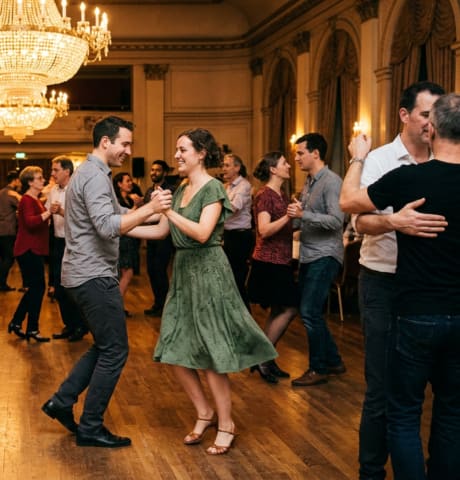 The 7 biggest no-gos on the social dance floorAvoid the most significant behavioral mistakes on the social dance floor. This guide shows you how to move respectfully and become a sought-after dance partner.
 Apologizing after a collision on the dance floorBumping into someone on the dance floor happens to everyone. Follow these simple steps to apologize elegantly and de-escalate the situation immediately.
 Switching dance partners: The guide for socialsShould you constantly switch partners at social dances or stick to one person? We explore the pros and cons for your progress as a dancer.
 Harmony in partner dance: giving feedback without conflictHow do you give feedback correctly while dancing? Learn the basics of dance communication to grow as a couple without killing the vibe.
 Dancing with beginners: 5 tips for advanced dancersAs an experienced dancer, you share responsibility for the atmosphere on the dance floor. With these five tips, you can dance respectfully with beginners and avoid overwhelming them.
 Backseat teaching in dance: Why unsolicited advice is a no-goUnsolicited advice on the dance floor can ruin the best party. Find out why backseat teaching in dance is a no-go and how to react elegantly.
 Thanking your partner after a dance: How to say goodbye elegantlyNot every dance is perfect. Learn here how to properly thank your partner, elegantly end an awkward dance, and maintain proper etiquette on the dance floor.
 Lead & Follow: Partner dance as teamworkLeading and following is more than just "directing" and "trailing." Learn how you and your partner can achieve perfect harmony on the dance floor!
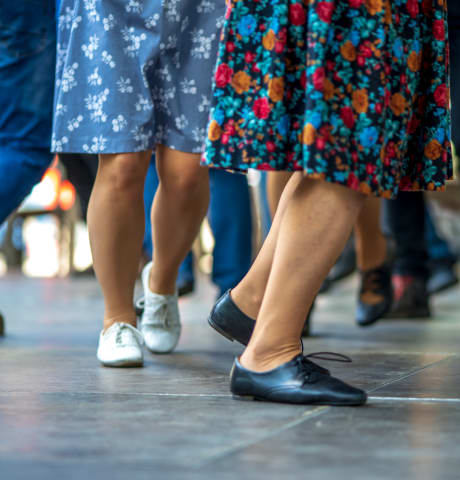 Setting boundaries while dancing: closeness, distance, and respectDance safely and carefree: learn how to clearly communicate your personal boundaries in partner dance and respect those of your partner.