

Find your dance community without any pressure
Whether you prefer to be in the middle of the action or just want to relax and survey the scene first: on udansa you will find like-minded people who share your passion and appreciate etiquette.

By Mary De LucaUpdated

Whether you prefer to be in the middle of the action or just want to relax and survey the scene first: on udansa you will find like-minded people who share your passion and appreciate etiquette.
Good manners don't just show when you take your first step on the dance floor. How you move and observe off the dance floor helps determine the atmosphere of the entire evening.
The invitation area in social dance refers to the zone directly at the edge of the dance floor, where dancers stay who want to signal that they are open and ready for a dance invitation.
When you enter a dance party, you often look at the couples in the spotlight first. However, the dynamics of a good party are decided long before the first step on the dance floor. The standing area of a dance party is not a passive waiting room, but an active part of the event. This is where it is decided who gets into conversation with whom, who finds the courage for the next dance, and how safe the couples feel on the floor. Respectful interaction therefore begins at the bar and in the walkways.
It is often overlooked that the space directly around the dance floor is a buffer zone. Couples performing sweeping turns need every centimeter of space. Anyone standing too close to the edge risks painful collisions. So, if you want to behave like a pro at the edge of the dance floor, always keep an arm's length distance from the active dance zone. This ensures safety for the dancers and protects you yourself from accidental kicks.
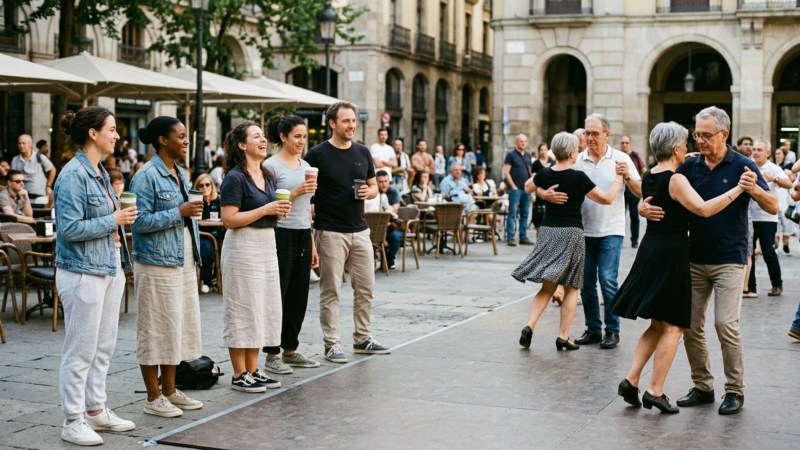
In the social dance scene, there is a fine line between attentive observation and uncomfortable staring. Watching others dance has its own etiquette. An admiring look, a smile, or applause after a particularly well-executed performance gives the dancers energy and appreciation. A fixed, scrutinizing gaze, on the other hand, creates pressure and can convey the feeling of being judged.
This is especially important in the sensitive invitation area at social dances. Here, dancers signal through their body language whether they are ready for the next round. If you are standing here, you should be open to eye contact. If, however, you just want to catch your breath or chat, consciously retreat to the back rows or the bar. This way, you avoid misunderstandings and leave the space free for those who are actively looking for a dance partner.
Correct
Wrong
The energy of a dance party is largely created on the sidelines. Anyone watching with a smile contributes just as much to the atmosphere as the couples on the floor.
Not everyone wants to dance in a pair all evening. Many use socials to try out solo dancing, feel the music for themselves, or practice new steps alone on the sidelines. This is completely legitimate and enriches the atmosphere, as long as the flow of the couples is not disturbed. Use the corners of the room or areas away from the main walkways for your solo steps.
If you feel unsure or want to jump back in after a break, a look at the community's Social Dance Etiquette will help. A friendly nod to the couples dancing past you signals connection. This way, you will quickly become part of the whole, even if you are just taking a break or simply enjoying the music.
Actively ready for the next dance
You seek eye contact, signal openness through an upright posture, and stand clearly visible in the designated invitation area of the venue.
Relax away from the hustle and bustle
You consciously retreat to the bar or the lounge corners to chat in peace or enjoy a drink without being in the way.
Keep at least an arm's length distance from the dance floor. Couples in the flow of dancing also need the edge area for expansive figures, which is why people standing there pose a risk of accidents.
Yes, that is absolutely fine. However, find a quiet spot away from the main dance floor and the walkways to ensure you do not hinder anyone in the flow.
Leave the dance floor area and retreat to the lounge or the bar. This way, you visually signal that you need a break right now.
Learn the steps and the etiquette in a relaxed atmosphere right in your area.
 Lead & Follow: Partner dance as teamworkLeading and following is more than just telling and trailing. Learn how to harmonize perfectly as a leader and follower on the dance floor with udansa!
 Ball Season Etiquette: Do's & Don'ts for the WaltzA dance ball is elegant and sometimes a bit intimidating. This ball season etiquette guide shows you the most important do's & don'ts so you can move on the dance floor with confidence, respect, and ease.
 Harmony in partner dance: giving feedback without conflictHow do you give feedback correctly while dancing? Learn the basics of dance communication to grow as a couple without killing the vibe.
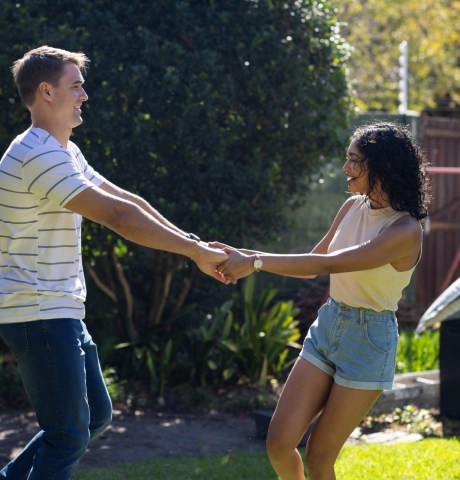 Social Dance Etiquette: Guidelines for stress-free dancingThe social dance etiquette is your guide to respectful interaction on the dance floor. Get to know the unwritten rules of social dancing.
 The 7 biggest no-gos on the social dance floorAvoid the most significant behavioral mistakes on the social dance floor. This guide shows you how to move respectfully and become a sought-after dance partner.
 Apologizing after a collision on the dance floorBumping into someone on the dance floor happens to everyone. Follow these simple steps to apologize elegantly and de-escalate the situation immediately.
 Switching dance partners: The guide for socialsShould you constantly switch partners at social dances or stick to one person? We explore the pros and cons for your progress as a dancer.
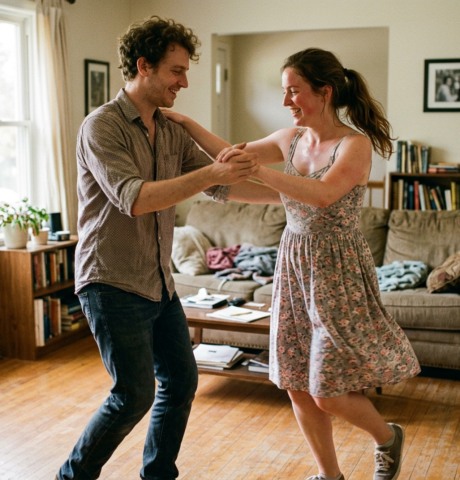 Dancing with beginners: 5 tips for advanced dancersAs an experienced dancer, you share responsibility for the atmosphere on the dance floor. With these five tips, you can dance respectfully with beginners and avoid overwhelming them.Harmony in partner dance: giving feedback without conflictHow do you give feedback correctly while dancing? Learn the basics of dance communication to grow as a couple without killing the vibe.
 Backseat teaching in dance: Why unsolicited advice is a no-goUnsolicited advice on the dance floor can ruin the best party. Find out why backseat teaching in dance is a no-go and how to react elegantly.