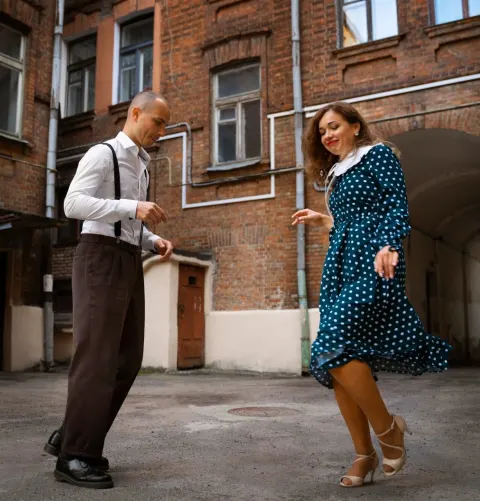
The music pauses, the inner pulse keeps going
A break is a noticeable interruption or thinning out of the music. The whole band may stop playing, or just the familiar drum pulse may disappear. Vocals or a single sound may continue. So you don't have to wait for complete silence to hear a musical break.
It's important to distinguish between the musical pulse, pattern, and visible movement. A pattern has its own sequence, and the break doesn't automatically fall on its last count. A stop can reduce movement without you losing the musical pulse. For this exercise, you deliberately choose an entry where the familiar pattern ends before the pause. This way, you initially avoid stops in the middle of a sequence or turn.
Your hand alone isn't a brake. If you're leading, you reduce your own movement in good time; if you're following, you stay receptive to this change instead of getting ahead of the familiar pattern. The elastic connection in Lindy Hop offers a related comparison for the difference between body movement and pulling with your arms, but it doesn't replace West Coast Swing technique.
An audible break doesn't mean you have to stop. If your balance or timing isn't right, ending calmly is the better choice.