
Finding the right dance course together
Here you will find patient dance instructors and relaxed preparatory courses that match your shared pace perfectly.


By Bernhard De LucaUpdated
Here you will find patient dance instructors and relaxed preparatory courses that match your shared pace perfectly.
Your opening dance is meant to be the romantic highlight of your wedding, but are sparks already flying during your first practice session in the living room? Don't worry, you are not alone: with the right mental approach, dancing together becomes a bonding experience instead of a test of nerves.
Wedding dance relationship test describes the psychological challenge that bridal couples must face when preparing their dance together. In the process, unconscious communication patterns, how to deal with mistakes, and mutual patience potential under stress conditions often become visible.
The preparation time before the wedding is often defined by to-do lists and tight schedules. When you add joint dance training to the mix, pent-up tension is quickly released on the dance floor. Often, completely different expectations collide here. While one partner may have been dreaming of a romantic choreography for weeks, the other faces the first dance with tangible stage fright or even reluctance. The supposed relationship test wedding dance usually arises not from a lack of talent, but from the pressure to perform perfectly in a very short time.
To minimize stress while practicing for the wedding dance from the very beginning, a radical change in perspective helps: say goodbye to the idea that the dance must be flawless. The guests do not want to see a professional tournament dance couple, but a happy bride and groom enjoying the moment together. Once you internalize this, the preparation instantly loses its threatening character. Planning in time also takes the pressure off. You can find out how best to stagger your preparation in our guide on the schedule for the wedding dance.

In most relationships, previous dance experience is unevenly distributed. If one person already has prior knowledge or finds it easier to pick up movement patterns, a gap quickly emerges. The more talented partner then unconsciously tends to correct, push, or become impatient with the other. This inevitably leads to frustration and blocks for the other person. Learning to dance as a bridal couple only works harmoniously if both partners act as equals and respect each other's individual limits.
The solution to this imbalance lies in clear and appreciative communication. The more experienced or motivated partner should consciously shift down a gear and take on the role of a patient supporter. Praise each other for the things that are already going well instead of constantly staring at the mistakes. If you notice the mood shifting, stop the training immediately. Laughing together about a botched step is a thousand times more valuable for your connection than a grimly forced turn.
Correct
Myth
The biggest hurdle for the wedding dance is not the sequence of steps, but the perfectionism in your head. If you let go of that expectation, you immediately regain your ease.
An essential key to harmonious preparation is choosing the right setting. Not every couple feels comfortable in a crowded dance school. If the fear of other couples watching increases your stress, a private setting can work wonders. You should honestly ask yourselves in advance which learning environment best suits your personalities. A detailed comparison of the different options will help you make the right decision: Take a look at the guide Preparing for your wedding dance to find the method that works for you.
Set realistic goals that fit your everyday life. If you have a busy work schedule, a highly complex choreography is a sure path to frustration. A simple, cleanly danced basic step with an elegant pose at the beginning and the end often looks much more stylish and elegant than an overloaded show where you can see the pure stress on the faces of both dancers. Focus on the connection between the two of you, look into each other's eyes, and forget the rest of the world for those few minutes.
Providing security instead of dominating
He takes responsibility for the flow and direction on the dance floor. His task is to provide clear, yet gentle signals that give the partner a sense of security, without restricting or patronizing them.
Giving trust instead of controlling
She trusts the partner's signals and engages in the shared movement. Following does not mean passivity, but active reacting and shaping the dance together in a common rhythm.
Because the opening dance is often burdened with enormous expectations. The fear of embarrassing yourselves in front of the guests combines with general wedding preparation stress, which makes nerves extremely thin.
By not giving each other any feedback that hasn't been explicitly requested. Leave the technical corrections entirely to the dance instructor and focus yourselves only on the positive feeling and praising successful moments.
Even a simple, rhythmic sway step can look wonderful if your posture is correct. It is important that you feel comfortable while dancing and radiate your affection for each other, instead of grimly counting steps.
Find the right class now to prepare your opening dance in a relaxed way and without any pressure.
Couple danceLimbach-Oberfrohna · Germany
PaartanzkreisFriday · 18:15 · Oct 23
Limbach-Oberfrohna
Couple danceBurgstädt · Germany
Paarkurs - Goldstar TanzkreisSunday · 15:00 · Oct 25
Burgstädt
Couple danceLimbach-Oberfrohna · Germany
Silberkurs für PaareSunday · 16:15 · Oct 25 - Nov 15
Limbach-Oberfrohna
 Wedding Dance Timeline: When to Start Practicing?When is the perfect time to start practicing for your wedding dance? Our detailed timeline shows you the stress-free path to your first dance.
 Preparing your wedding dance: Your stress-free timelineYour opening dance should be the highlight of your wedding celebration. With our stress-free timeline and helpful preparation tips, you will learn to dance in a relaxed way without any pressure.Preparing your wedding dance: Your stress-free timelineYour opening dance should be the highlight of your wedding celebration. With our stress-free timeline and helpful preparation tips, you will learn to dance in a relaxed way without any pressure.
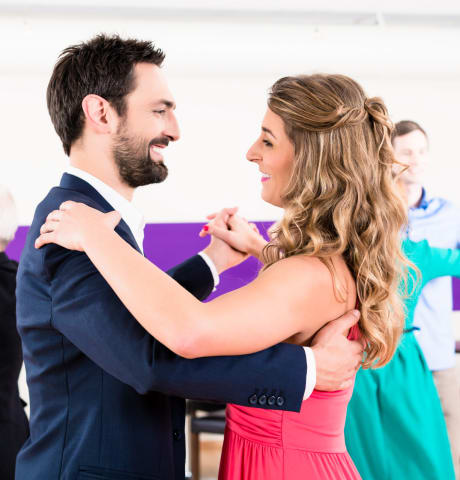 Last-minute wedding dance crash course: Is it doable?Running out of time before the wedding? A last-minute crash course saves your opening dance by teaching you the most important basics at express speed.
 The 7 biggest mistakes when planning your wedding danceAvoid unnecessary stress before your big performance. We show you the typical mistakes when planning your wedding dance and how you can easily avoid them.
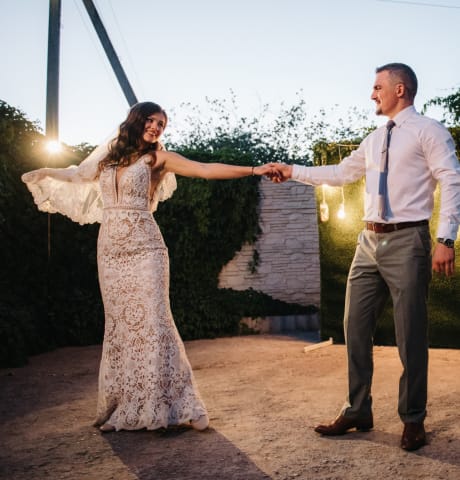 Planning your wedding dance with limitations: How to keep it stress-freeYour wedding dance should be a joy, not a source of stress. Learn how to plan a safe and beautiful first dance, even with physical limitations or during pregnancy.
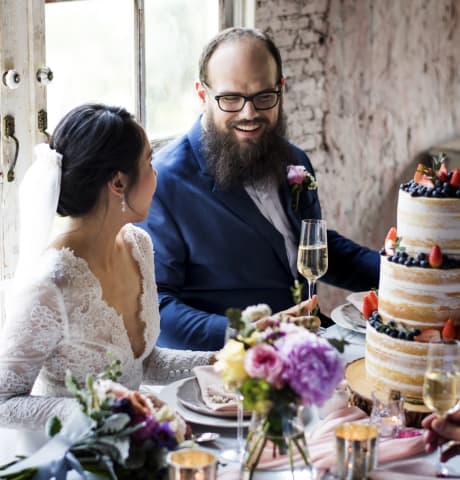 Planning your wedding dance: Coordinating with DJs and plannersProper preparation for your wedding dance with your DJ and planner ensures your first dance goes smoothly. Learn what matters most when coordinating.Wedding Dance Timeline: When to Start Practicing?When is the perfect time to start practicing for your wedding dance? Our detailed timeline shows you the stress-free path to your first dance.
 Wedding dance course quiz: Which learning format suits you?Find out which learning format for your wedding dance best fits your learning style and time budget with our interactive self-test.