

Stay active together
Find like-minded people at udansa for gentle movement and discover certified courses that perfectly match your current phase of life.

By Mary De LucaUpdated

Find like-minded people at udansa for gentle movement and discover certified courses that perfectly match your current phase of life.
Zumba during pregnancy is a wonderful way to stay fit with music. If you understand the biological changes and adjust the intensity, you can safely swing your hips even with a baby bump.
Low-Impact refers to a form of training that avoids jumps and hard impact, ensuring that at least one foot maintains contact with the floor at all times. This is gentle on the joints and minimizes the risk of falling.
Pregnancy is not an illness, but a phase full of physical changes. Many women who were active before pregnancy do not want to miss their beloved workout. The good news first: if you are healthy and experiencing an uncomplicated pregnancy, you can and should continue to move. Regular exercise during pregnancy strengthens the cardiovascular system, prevents excessive weight gain, and can alleviate typical complaints such as back pain or water retention. Zumba Fitness offers a wonderful combination of movement and joy for this, as long as the pace and intensity are adapted to the new circumstances.
However, pregnancy hormones fundamentally change the body. The hormone relaxin ensures that tendons and ligaments in the pelvic area become softer and more elastic to make room for the growing baby. At the same time, this increases the risk of twisting an ankle or sustaining joint injuries. In addition, as the belly grows, the body's center of gravity shifts forward, which affects balance. Anyone who wants to dance Zumba while pregnant should always keep these biological factors in mind and perform movements more consciously.

Safe training with a baby bump requires a conscious adaptation of familiar Zumba choreographies. The golden rules are: no jumps, no abrupt changes of direction, and no extreme hip rotations. Every time a jump is planned in the choreography, it is replaced by a simple step on the floor. Low-impact is the magic word for Zumba for beginners and pregnant women alike. One foot always maintains firm contact with the floor to protect your joints and prevent falls.
Another critical point is training intensity. The so-called talk test helps you stay in the green zone: you should still be able to hold a conversation in full sentences while dancing without getting out of breath. As soon as speaking becomes difficult, your heart rate is too high and the oxygen supply for you and your baby is no longer optimal. Use the music to move to the rhythm, but consciously shift down a gear during fast Latin American beats.
Dancing safely
Taking risks
Pregnant women are welcome to enjoy the energy of Zumba, as long as they skip the jumping and prioritize their body's signals over the beat of the music.
Every pregnancy is individual, which is why your own body awareness is the best compass. However, there are clear warning signs that mean you must stop training immediately. These include dizziness, shortness of breath, pain in the abdomen or pelvis, and premature contractions. You should also rest immediately if you feel extremely exhausted. Before taking your first step on the dance floor, you should always consult your gynecologist to rule out any individual risks.
Zumba during pregnancy should primarily be fun and increase your well-being. This is not the time for performance improvement or weight loss. If you listen to your body, reduce the intensity, and focus on joint-friendly steps, you can enjoy your time dancing well into the third trimester. After the birth, the focus will be on postnatal recovery at the appropriate time before returning to the regular courses on udansa.
Gentle low-impact training
You stay on the ground, replace jumps with steps, and keep the intensity at a level where you can easily hold a conversation at any time. The focus is on enjoying the music.
Ambitious high-intensity training
You train until you are exhausted, ignore dizziness, and perform fast turns or jumps as usual. This drastically increases the risk of injury for you and your baby.
Yes, provided the pregnancy is uncomplicated and your doctor has given the green light. However, the training must be adapted to a joint-friendly low-impact version without jumps.
The talk test is the simplest method. You should still be able to speak normally while dancing. If you train with a heart rate monitor, you should generally stay in a range below 140 beats per minute.
Consistently avoid jumps, hops, abrupt changes of direction, and extreme hip rotations. Replace these movements with simple steps on the floor to protect your joints and pelvic floor muscles.
Discover studios and instructors who will competently support you, even during pregnancy.
ZumbaLimbach-Oberfrohna
ZUMBA® Fitness Clubrunning since Aug 18
Limbach-Oberfrohna
 Zumba Fitness: The effective workout for body and mindZumba Fitness is the perfect workout for anyone who loves to move and wants to improve their health at the same time. Find out how to get perfectly equipped here.
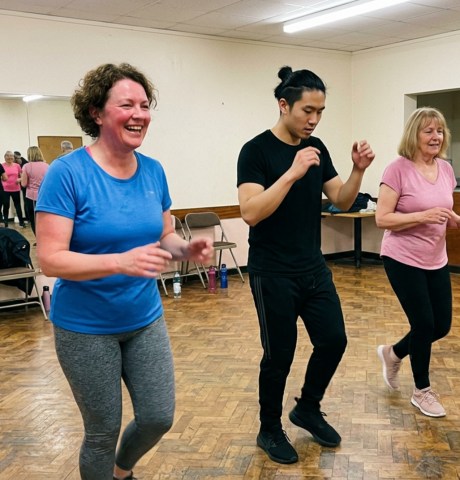 Zumba for beginners: The easy way to start your dance workoutGetting started is easy: With our beginner's guide to Zumba, you will learn about the most important formats and find out what to expect in your first class.
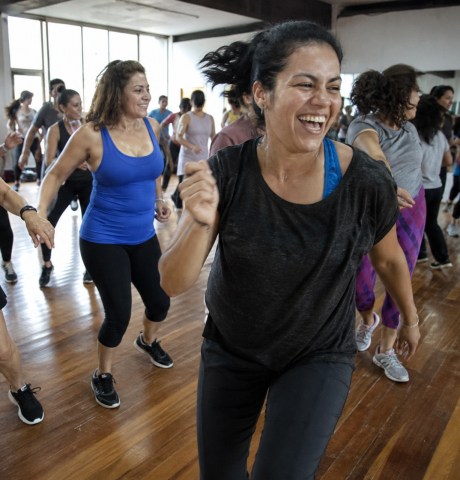 Zumba: The high-energy dance workout for every dayZumba combines Latin American rhythms with an effective full-body workout. Learn how to get started without any prior experience and which class format suits you best.Zumba Fitness: The effective workout for body and mindZumba Fitness is the perfect workout for anyone who loves to move and wants to improve their health at the same time. Find out how to get perfectly equipped here.
 Zumba coordination training: More balance in everyday lifeA strong sense of balance and quick reactions are the best foundation for a safe everyday life. Learn how to train your coordination effectively and playfully with udansa and Zumba.
 Zumba Fitness Trends 2026: Wearables and New StylesFind out how smart wearables and the latest functional styles are revolutionizing Zumba training in 2026. The ultimate trend report for your workout.
 Zumba wear: The perfect outfit for your workoutThe right style for maximum energy: Learn how the perfect Zumba wear gives you maximum freedom of movement and keeps you comfortably cool.
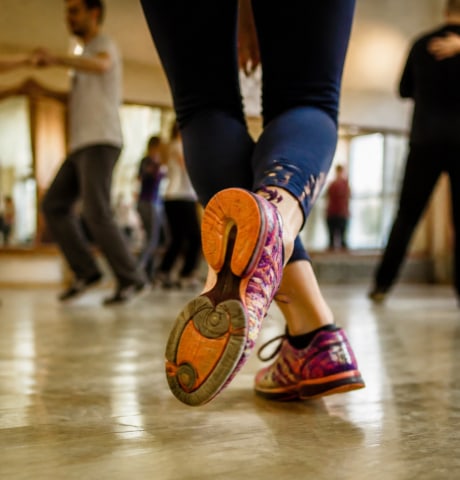 Zumba shoes: How to find the perfect gripThe right grip is key to safety and fun when doing Zumba. This guide shows you what to look for in a sole to protect your joints during quick turns.
 Zumba Gear: The 7 Essential Fitness ItemsReady for your next workout? With these seven essential items in your gym bag, you are perfectly prepared for every sweaty Zumba class.
 Zumba calorie burn: How effective is the workoutFind out how many calories you really burn per hour with Zumba and learn simple tricks to maximize your energy expenditure while dancing.