Practising together6 minutes

Switching dance partners in Karlsruhe: End things fairly

By Mary De LucaUpdated

In brief
  • If you want to change your dance partner in Karlsruhe, explicitly end your current ongoing partnership.
  • Outstanding bookings, costs, and performance commitments each need a specific agreement to settle them.
  • Ending your dance partnership does not automatically cancel a course contract you booked together.
  • For future encounters, agree on keeping your distance or dancing together for individual dances, without promising any new commitments.

A regular practice session can eventually start to feel like an obligation. A clear goodbye makes room for disappointment without turning every time you meet again into a discussion about your past partnership.

What you need to complete the course

  • A clear decision to end the established partnership
  • A list of shared bookings and confirmed performances
  • Proof of shared expenses already paid
  • A private setting without an audience
  • An idea of what kind of contact you’d like afterward

Dance partnerships and bookings are separate matters

When you end a dance partnership in Karlsruhe, you are first ending a personal arrangement: regular practice, attending classes together, or preparing a sequence of figures. That does not automatically mean paid lessons are forfeited, a booking is transferred to someone else, or a contract ends. Your decision to part ways and the handling of shared commitments are two separate tasks.

So, for every commitment, write down who booked, who paid, and what service is still outstanding. A private lesson paid for together should be handled differently from two independently signed course contracts. For context, see the guide on what you book with a private lesson without a subscription. A private agreement between the two of you does not change the provider's terms.

Even a rehearsed routine does not entitle you to keep dancing physically with someone. Still, you should give notice early enough for others involved to make new arrangements. Once you have parted ways, you can keep working on your technique on your own: the practice plan between two classes can help you maintain your rhythm and step sequences without a regular partner. So you do not have to agree to a new partnership just to preserve the progress you have already made.
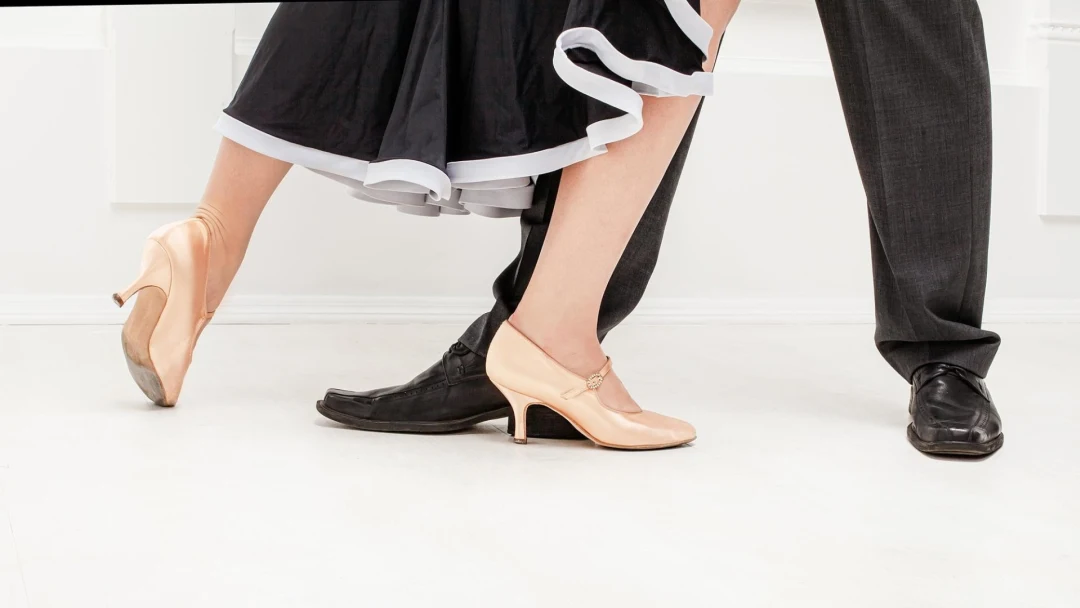
The feet and shoes of a male and female dance couple during a Salsa rehearsal
A proper wrap-up also covers borrowed shoes, costume pieces, and recordings that are still with the other person.

How to make the switch, step by step

  1. Define the scope of the parting

    Write down what is ending: fixed practice sessions, attending classes together, or even private meetups. Formulate a clear sentence for yourself, such as: "I want to end our regular dance partnership." A break is only the right term if you actually want to leave the option of returning open.

  2. Compile all outstanding commitments

    Assign bookings, performances, and shared expenses to a specific event and a person responsible. Separate amounts already paid from costs planned for the future. The list is complete when you can discuss each commitment individually instead of referring to “the course” as a whole.

  3. Communicate your decision in person

    State your decision first, then give a brief reason from your perspective: “I’d like to practice differently from now on, so I’m ending our regular partnership.” Avoid listing technical mistakes. Give them a chance to respond without making it seem like ending the partnership is up for a joint decision.

  4. Specify a solution for every commitment

    For each outstanding commitment, agree on one of three options: fulfill it, cancel it, or use an allowed rebooking. Record the amount, who is responsible, and the completion deadline. You can check with the provider once to see whether a booking is transferable; until this is confirmed, your requested rebooking is not considered complete.

  5. Limiting Contact in the Dance Scene

    Discuss whether you want to just say hello at first or dance together occasionally later. A useful sentence is: “At the next class, I don’t want to practice with you.” Don’t agree to a permanent division of groups or events whose attendance you can’t control.

  6. Briefly document the ending

    Send a short summary with the end date and any outstanding tasks. Inform others involved only about changes that are necessary for organizational purposes, not about your personal reasons. Don't casually announce a new ongoing partnership in front of your previous partner before you've said goodbye.

  7. Keep your boundary when you meet again

    Greet the other person as you agreed, and briefly decline any dances you don’t want. “Not today, thanks” is enough. Still follow through on any agreed outstanding payments or returns. That way, your no to dancing stays separate from your responsibility for anything still outstanding.

These phrasings leave less room for interpretation

This is okay

  • “Our regular practice sessions end on the agreed date”
  • “I’ll take care of the outstanding payment by the specified date”
  • “I don’t want to talk about our reasons in the group”
  • “A single dance doesn’t mean a fresh start”

Not like this

  • “Maybe we’ll practice again sometime,” even though you’ve ruled that out
  • “Once I leave, all expenses are settled too”
  • Justifying the breakup in front of others with lists of faults
  • Treating a single dance as a new firm commitment

What should be completed by when

Before the conversation

Preparation

After the Conversation

Conclusion

At your next dance meetup

Seeing each other again

Frequently Asked Questions

  1. You don’t have to give a detailed justification, a brief, honest reason is enough. Explain your decision rather than judging the other person’s abilities. “I don’t want to practice with you regularly anymore” is clearer than claiming you don’t have time if you’re already planning new practice sessions. Your decision doesn’t need anyone’s approval.

Dance Classes in Karlsruhe

On udansa, you'll find courses and dates in Karlsruhe to keep dancing after getting closure.

Keep dancing with clear boundaries

On udansa, you can find dance connections in Karlsruhe to keep up your dance practice. Once things have been clearly wrapped up, you can start a new partnership without silently carrying over old commitments.

Keep dancing with clear boundaries