Dance evenings6 minutes

Social Dance Karlsruhe: How to get a feel for the evening

By Bernhard De LucaUpdated

In brief
  • At a social in Karlsruhe, free dancing means combining steps you already know with the music yourself.
  • An announced taster session offers instruction, but does not automatically replace the prerequisites for the rest of the evening.
  • A show in the schedule is a moment to watch, and does not turn the entire social into a performance.
  • Explicitly stated participation requirements apply to the relevant program segments, and missing details are not a promise.

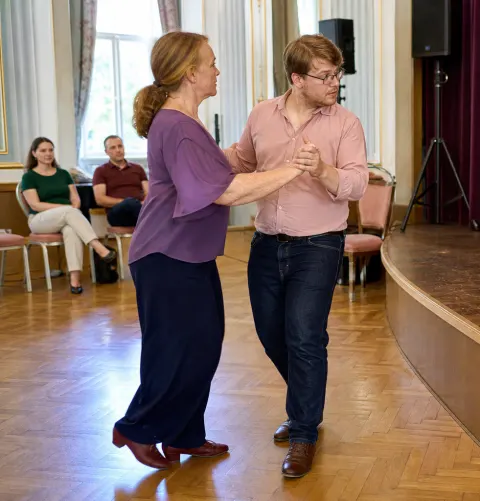
An evening can start with steps counted out together and later continue without anyone calling them out. If you focus only on the word „Social“, it’s easy to miss where your own dancing really begins.

What you need to know to put things in context

  • An event description for an event in Karlsruhe
  • Details about the start time and individual parts of the program
  • The participation requirements listed
  • An honest assessment of your dance basics

The Format Says More Than the Heading

In common usage, social dance refers to dancing together without competition. It is not a specific dance style, nor a promise that someone will explain every step. So for your evening in Karlsruhe, what matters is the activity described in the program: dancing yourself, practicing with guidance, or watching briefly.

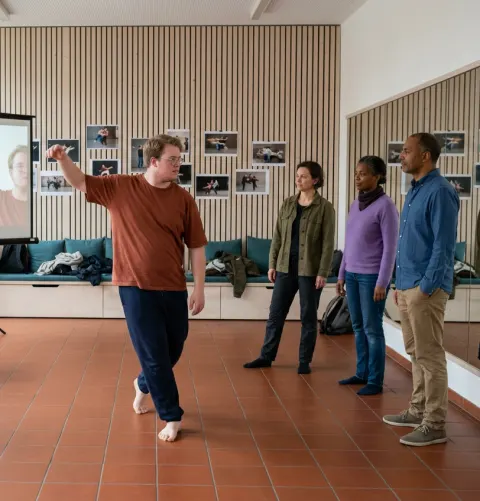
When dancing freely, you choose from your repertoire and respond to the music and the space. In a guided segment, someone leads the movements, counts along, or makes corrections. A demonstration can also support a lesson: if the teacher shows a sequence and then has you repeat it, that is part of the instruction. If, on the other hand, the program lists a separate show, watching is what you’re expected to do during that part.

Apply participation requirements to the relevant segment, not automatically to the whole evening. “No prior experience required” may apply only to the taster lesson. “Basic knowledge required,” on the other hand, may apply to a workshop before the open dancing. An open dance segment promises neither personal instruction nor music at a particular difficulty level.

If you already dance Swing, the guide to choosing a suitable Swing party explains the style-specific differences. If you’re missing the basics, the guide to which prior knowledge matters when joining a course later can help you describe your experience more precisely. Knowing a figure does not, by itself, mean you can dance to the music without help counting.
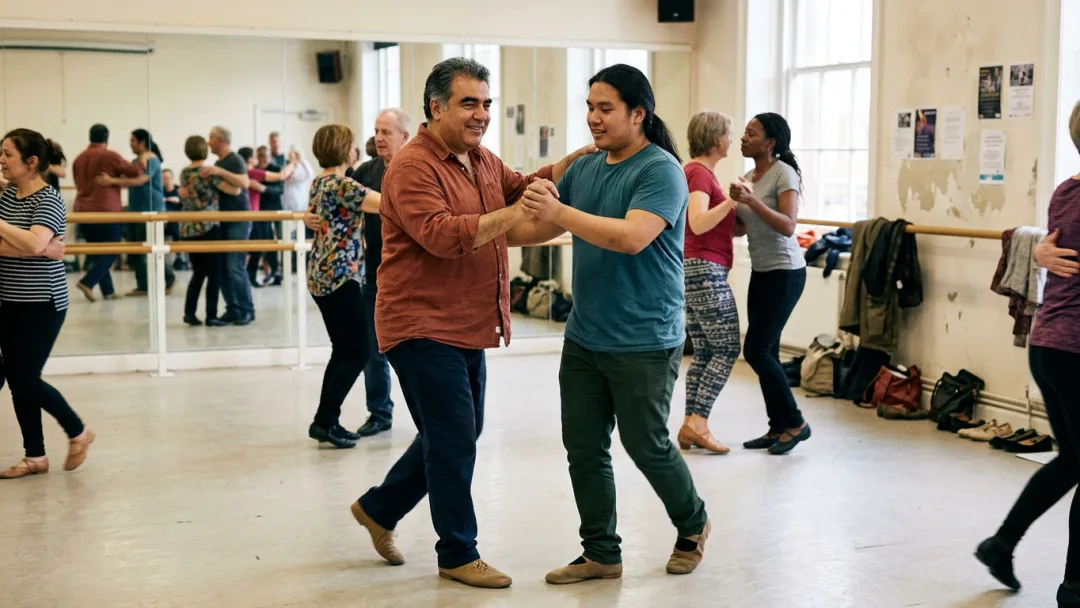
A second pair of shoes within easy reach makes it easier to switch from arriving to dancing, if changing shoes is allowed.

How to turn the text into a sequence

  1. Extract the activities

    Underline the statements in your description about what the participants do: learn steps, dance freely, or watch. Leave out terms like “lively” and “sociable,” because they explain neither the activity nor the role of instruction.

  2. Write down the order

    Put the announced parts in the order given. Distinguish between doors opening and the actual start of the programme: an open door does not mean instruction has started, and a lesson start time is not automatically the start of free dancing.

  3. Define the open dancing portion

    Classify phrases like “free dancing” or “dance party afterwards” as self-directed dancing. “Open practice” remains ambiguous without further explanation: it does not make clear whether someone supervises, leads exercises, or simply provides space and music.

  4. Define the instruction precisely

    Make a note of whether a trial class, workshop, or guided sequence is being advertised and what content is mentioned. A basic step with weight changes is a different starting point from a combination of figures; the word “workshop” alone does not mean it is suitable for beginners.

  5. Treat a show as an interruption

    Mark an announced performance as its own block. That way, you won't confuse performance time with available dance time. But a short show during the social doesn't mean you're expected to sit in the audience for the entire evening.

  6. Assign the requirements to the relevant sections

    Place details about prior experience, registration, age, shoes or clothing next to the relevant section. If a statement explicitly applies to the entire event, note it once above the schedule; if its scope is unclear, leave that item open.

  7. Set your starting point

    Choose the section whose explicitly stated conditions you meet, and plan your arrival accordingly. If a key requirement is unclear, ask the organizer once; don’t plan your visit on the assumption that silence means you’re allowed to participate.

Read these phrases correctly

That's right

  • Interpret “doors open” as the event opening
  • Separate an announced introduction from a later class
  • Use “open” only for the access explicitly described
  • Distinguish the show’s duration from your own time on the dance floor

Not like this

  • Expect the first class exercise as soon as you arrive
  • Expect individual corrections throughout the entire party
  • Assume that “open” means free participation without registration
  • Classify the entire evening as a performance because of a show

Your checklist before your first dance

Before the decision

Context

Before You Set Off

Preparation

Upon arrival

Orientation

Frequently Asked Questions

  1. A participatory session explicitly advertised for people with no prior experience may be a good starting point for you. Without instruction, you generally need at least a secure weight shift and a sense of the musical pulse. An introduction can teach you these first movements, but it does not guarantee that you will be able to dance to every song played on your own afterward.

Your evening needs a clear plan

On udansa, you can find dance events in Karlsruhe and use this guide to understand their descriptions. This helps you choose a participatory section that matches the skills you already have.

Your evening needs a clear plan