Practice together even on vacation
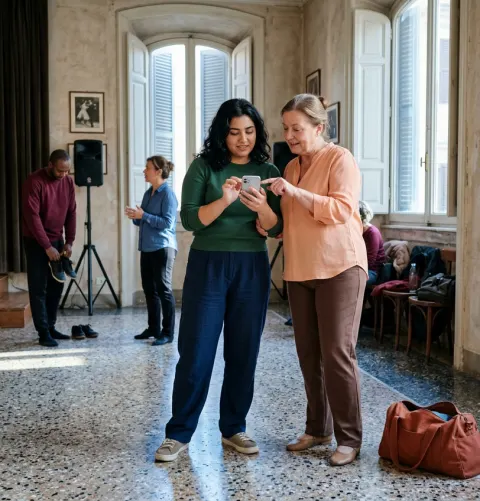
On udansa connect, you can find dance contacts in Rome and suggest practicing together during your trip. You can make it clear that your offer is only for this stay.

By Bernhard De LucaUpdated
On udansa connect, you can find dance contacts in Rome and suggest practicing together during your trip. You can make it clear that your offer is only for this stay.
Between travel, sightseeing and relaxing, sometimes there’s just the right amount of time when you’d love to dance. A short stay isn’t an obstacle, as long as your dance partner knows from the start that you’ll be leaving again soon.
You’re on vacation, while your potential dance partner in Rome may have an ordinary workday. These different starting points explain why friendly interest doesn’t necessarily mean your availability matches. An offer like “I’m free any time this week” sounds flexible, but shifts all the scheduling work to the other person. It’s more helpful to suggest a time period you can genuinely keep free.
Describe what you can offer, not just what you hope for. This includes a dance you know, your usual role, and a realistic activity you can do together. “Reviewing basic steps to music” is easier to assess than “learning as much as possible.” Different levels of figure knowledge aren’t automatically a problem: what matters is whether you can dance something familiar together.
You don’t need to completely recreate your profile just because you’re traveling. For your permanent details, see the guide to the dance partner profile for Rome. Reaching out personally has its own place too: how to write a first message to a dance contact. For your vacation, you mainly need to add your temporary availability. That way, someone can agree without implying any commitment beyond that.
First, put together your arrival and departure times, along with any times you’re already committed to. From these, choose a usable window with a buffer before and after, rather than offering every gap; you should still be able to stick to it without stress even if you return late from an excursion.
Choose something you already know: for example, keep doing the basic step for an entire song or repeat a familiar change of direction. Describe an observable success, such as staying on beat without stopping, instead of aiming to “dance better” in general.
Search on udansa for dance partners in Rome with a compatible dance style and a complementary role. Someone who lists the same dance but is exclusively pursuing a different training goal is a less suitable match than someone with a simple shared interest in practicing.
Include your arrival, departure, time window, and desired practice duration together. An adaptable example: “I’ll be in Rome from [arrival] to [departure] and will have about [duration] free on [day] for [practice goal]. I’d prefer not to commit to another meeting just yet.”
Distinguish between interest, a counterproposal, and an acceptance. “Sounds nice” doesn’t reserve a time; respond just as concretely to a specific counterproposal. If it doesn’t work for you, say so directly instead of packing an already full vacation day even tighter.
Once a suitable contact has agreed, stop offering parallel time slots for the same time window. Let people you've already contacted know that this time is no longer available. Keep the confirmed availability free; organizing the practice session in detail is the next, separate step.
On udansa, you'll find current classes and dates in Rome if you'd also like to schedule lessons during your stay.
Say yes
Not like this
Preparation
Coordination
Wrap-up
Yes, you can look after you arrive, but you should only offer times that are actually still available. A last-minute suggestion leaves less room for replies. So don’t keep other travel plans open indefinitely, and don’t treat silence as a tentative yes. Without confirmation, that time slot remains your own free time.
No, for finding a dance partner, your stay dates and the times you’re available are enough. Your hotel, sightseeing route, and personal appointments don’t explain your absence any better. If you turn down a suggestion, “I’m already booked then” is enough. This keeps things simple without making you justify your trip.
Yes, as long as you have separate free time slots and don’t make conflicting commitments. Several non-binding inquiries don’t mean you’ve booked the same time multiple times. Once you make a firm commitment, though, that time slot is reserved for that meetup. For a short trip, one good match is often more practical than several conversations with unclear availability.
Only suggest practicing together if you both actually know at least one dance. Similar music or related names don’t guarantee that you’ll share the same steps, counting, or leading cues. If you don’t have that common ground, it isn’t a suitable vacation offer. An impromptu introduction from your contact is different from the suggested practice together.
Here, non-binding means that getting in touch doesn’t have to lead to a regular partnership or more meetups. But a meetup you’ve explicitly confirmed is still a commitment your partner is planning around. So don’t say “we’ll see” about a time slot that’s already been reserved. What can stay open is whether you’ll meet again, not whether you intend to show up.
No, practicing together doesn’t obligate you to stay in touch. A brief thank-you is enough if you want to end things on a friendly note. Don’t promise to return or make future plans just to be polite. If you both want to dance together again later, you can arrange that on a new trip when you know your availability.