An invitation carries different weight in a work context
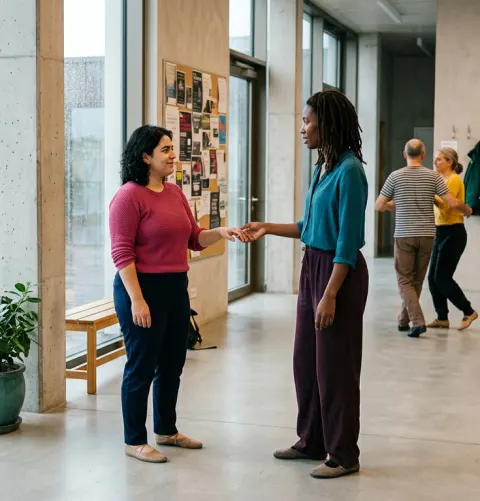
At a company party in Münster, people come together who will continue working with one another after the celebration. An invitation from a team lead can therefore feel more binding than the same question among friends. New employees in particular, or people in dependent work situations, may not want to stand out. A friendly tone alone does not remove this pressure. Voluntariness feels genuine when opting out is clearly possible without consequences.
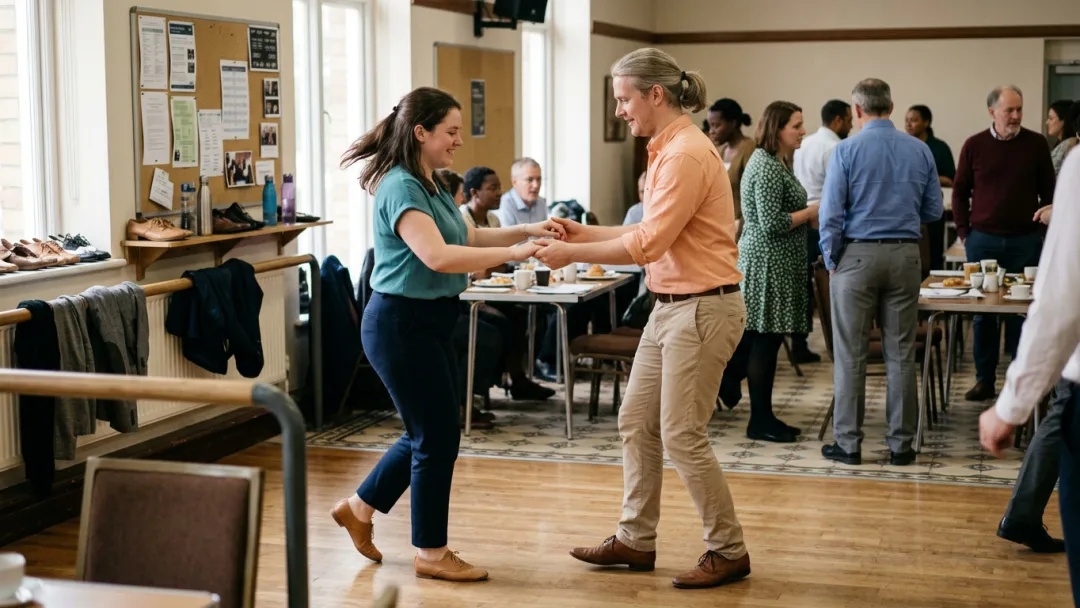
This also applies to physical contact: Working on a project together does not mean agreeing to a dance hold. You can accept or decline an offered hand; close dancing is not a requirement for an enjoyable dance. In partner dancing, leading and following are movement roles, not a continuation of workplace hierarchies. Knowing how to choose dance roles regardless of gender and habit is useful among colleagues too.
So plan the company party in Münster as a social occasion, not a showcase of skill. No one has to learn figures or represent a department. If you personally want to feel more confident, you can independently make targeted use of a trial dance class in Münster. This does not create any obligation for the team to prepare. Comments the next working day matter too: A carefree moment must not become the source of nicknames, judgments, or recurring jokes about individual employees.