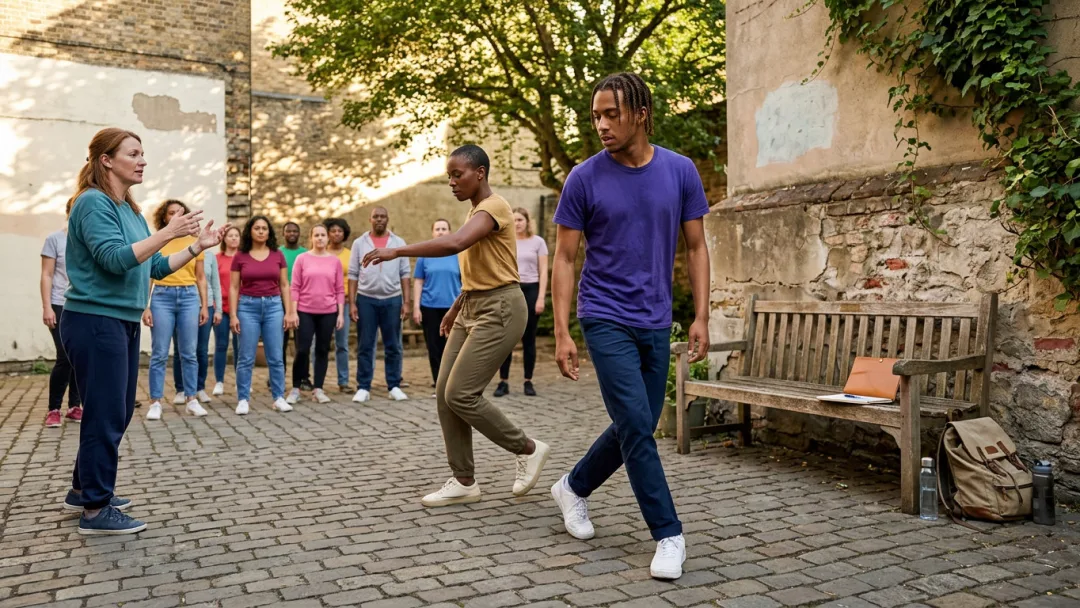
Learning progress becomes visible when you try it yourself
During a trial dance class in Vienna, pay attention above all to the process from demonstration to doing it yourself. A teacher can be an excellent dancer and still explain steps in a way that leaves you simply copying their movements. Clear teaching, on the other hand, helps you understand which foot is supporting your weight, when a movement begins and what you should focus on first. Technical terms are no problem as long as their meaning becomes clear through the movement.
You can recognize this in small tasks. For the Sailor Step without a turn, an explanation of the weight shifts is more helpful than simply demonstrating it quickly. When it comes to leading and following in Rumba, the timing of a signal also needs to be clear. These examples show the same principle: you need a task you can put into practice, not as much information as possible.
One unsuccessful repetition is not a sign of bad teaching. What happens next is what matters: Is the task made smaller, is the explanation changed or is the key moment shown more slowly? Then you get a new way in. If all you get is the same instruction to finally dance it correctly, you are not being given concrete help. So assess your progress during the class, not how far you are from the most experienced participants.