Find a Dance Partner5 minutes

Meet a Dance Partner in Zurich: Your First Meeting

By Mary De LucaUpdated

In a nutshell
  • Arrange your first dance meetup in Zurich in a public place with a clearly defined duration.
  • Before meeting, agree on the dance style you’ll dance together, your preferred dance role, and what you want to get out of the trial.
  • Start with simple steps and pay attention to comfortable contact, clear signals, and how you handle mistakes.
  • After the trial meetup, decide without obligation whether you’d like to meet again.

A friendly message doesn’t tell you much about what it feels like to dance together. A low-key trial takes the pressure off: you don’t have to perform especially well or agree to another date out of politeness.

What you need to give it a try

  • An existing contact on udansa
  • A dance style you both want to try
  • A publicly accessible place with a suitable dance floor
  • Comfortable clothing and shoes suitable for the floor
  • Your own way home and a phone you can be reached on

The setting determines what you can recognize

For a first meeting in Zurich, you need a setting that makes conversation and movement possible. A loud dance floor shows you how someone responds to music, but makes it harder to communicate. A conversation alone, on the other hand, won't tell you whether you find the rhythm together. So it's a good idea to have a short chat away from the music, followed by some simple dancing.

A dance practice evening in Zurich could work for this if the format includes time to practice freely. At a dance workshop in Zurich, on the other hand, the lesson determines the flow. There, you can see how you learn together, but you won't be able to test your own moves whenever you like or have long conversations. In either case, the meeting is an experiment, not a commitment to a steady partnership.

Don't judge how well you dance together solely by how well you perform the moves. Different names for moves or unfamiliar leading can be confusing at first. It's more telling whether you calmly start over after a misunderstanding, adjust the tempo, and accept a stop. Even an experienced person can pull uncomfortably or correct you without asking. Conversely, someone with only a few steps can dance attentively and communicate clearly. So a botched turn matters less than how you react to it.
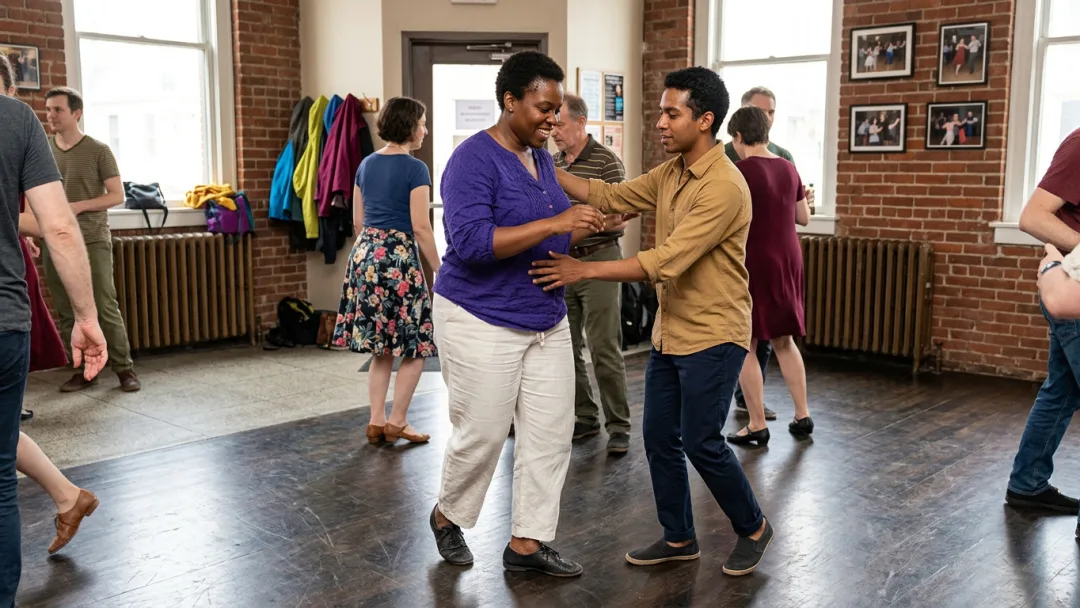
Wearing familiar shoes removes the distraction of feeling unsure in unfamiliar footwear.

Seven steps to a no-pressure meetup

  1. Suggest a time-limited trial

    Write something like this on udansa: “I’d like to try dancing together. Do you have time for about 45 minutes in Zurich?” The duration is a suggestion, not a rule. A set end time makes it easier for both of you to say yes without feeling committed.

  2. Align on your goal and dance role

    Be specific about what you'd like to try when you meet: for example, the basic step and a familiar turn, with you following. Also describe whether you'd prefer to repeat things at a relaxed pace or dance freely. That way, you won't start out with conflicting expectations.

  3. Set a meeting point and plan your exit

    Agree on a clearly identifiable meeting point in a public place, and set a start and end time. Let someone you trust know where you are, and arrange your own way home. Extending the meeting spontaneously is optional; there’s no need to go to a private home for this first meetup.

  4. Getting settled and agreeing on contact

    Greet the person first without taking a dance hold and briefly share how you're feeling today. Before the first hold, say what distance feels comfortable to you. A simple “Let’s start by dancing in open position” is enough; physical contact only happens when you’re both comfortable with it.

  5. Start with familiar steps

    Choose a song with a clearly audible beat and a comfortable tempo. Dance only the basic step at first, then at most one familiar figure. Pay attention to whether your weight shifts come together and signals are understood without pulling; the number of figures is irrelevant for this try.

  6. Use a Break to Share Feedback

    After a short dance, pause and name one specific observation: “I’m arriving late on the turn, let’s slow down.” Try the adjustment once. What matters is whether your partner listens and works with you instead of assigning blame.

  7. Wrap up the trial with an answer

    Thank them and say whether you’d like to dance together again or need more time to think. A clear rejection could be: “Thanks for giving it a try, but I don’t think we’re a good fit on the dance floor.” You don’t have to agree to meet up again or explain your decision at length.

Giving feedback without judgment

Yes, like that

  • Phrase “The hold feels too firm to me” as your own perception
  • Ask for consent before offering a technical suggestion
  • Specifically name an adjustment that worked well
  • Accept different preferences without trying to persuade

Not like this

  • Phrase “You lead badly” as a judgment of the person
  • Turn the meetup into a private lesson without being asked
  • Compare them with other dance partners
  • Discuss their preferences after they turn you down

Your checklist for meeting up

Before you head out

Preparation

Before the First Dance

Arriving

After getting home

Looking back

Frequently asked questions

  1. No, for a trial meeting, knowing steps you can comfortably try at your own pace is enough. Difficult figures could make it harder to see how you interact. Nervousness can make getting started a little awkward. So give yourselves a moment to settle in, without excusing a lack of consideration or uncomfortable pressure as nervousness.

Partner Dance Classes in Zurich

Use the course filter on this page to find current classes and dates in Zurich for getting started together after your trial meetup.

The first contact becomes concrete

On udansa, you can find dance connections in Zurich to arrange a trial run together. Use the conversation to make a clear proposal, rather than promising a committed dance partnership before you’ve even met.

The first contact becomes concrete