Social Dance5 minutes

West Coast Swing Party in Dortmund: How the Social Works

By Mary De LucaUpdated

In brief
  • At a West Coast Swing party in Dortmund, guests dance with different partners to a variety of songs.
  • A social is open to everyone: You can invite others to dance and don’t have to come with a regular partner.
  • The music varies in tempo and character, so dancers adapt their movements and energy to each song.
  • Be mindful of mutual consent, keep the dance floor clear, and leave enough space so everyone can move safely.

A social thrives on encounters that may last only one song. This openness is what makes the evening enjoyable, especially when you know how invitations and consideration work together.

DefinitionSlot

A slot is the imaginary dance lane along which a couple moves forward and backward in West Coast Swing. When others respect this lane, the floor stays organized and collisions become less likely.

A social is an open evening, not a set choreography

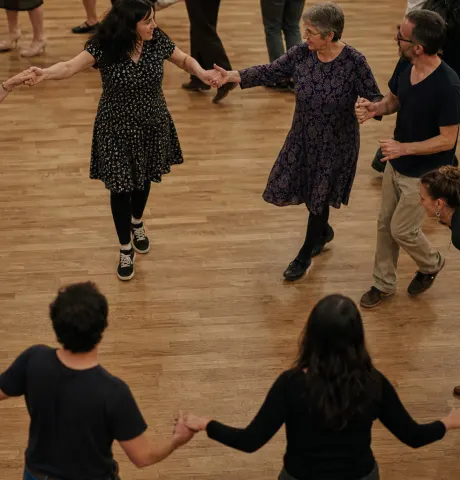
At a West Coast Swing party, people meet to dance freely, not to perform together. A song starts, someone invites another person to dance, they dance together, then go their separate ways or arrange to dance again later. There is no set order in which all the couples perform.

The format creates a balance between individual connections and shared music. Some guests dance almost continuously, while others chat in between or watch the floor first. Both are part of a social, as long as the paths stay clear and no one is pulled into a conversation or dance without being asked.

There are events for different dance styles and cultural activities in Dortmund, but that does not mean there is a specific WCS event. So check each announcement to see whether it is actually a West Coast Swing social and what rules apply for the evening. If you want to compare different formats, the overview of dance evenings in Dortmund can help.
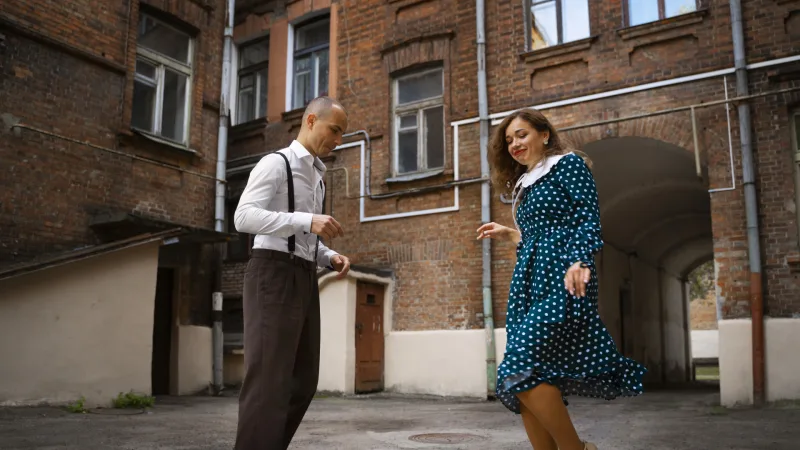
A smiling couple swing dancing in a full-body shot
By keeping the imagined dance line clear, you give other couples room to move without having to stop your own dance.

Invitations make switching partners easy

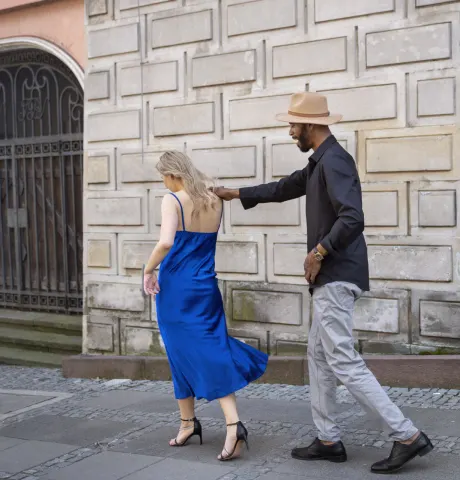
At a social, an invitation is usually brief and casual. You can make eye contact and ask a simple question to suggest dancing together. A yes applies to that dance, not automatically to the whole evening or the next song. If someone declines, a friendly nod is enough; asking again or seeking an explanation adds unnecessary pressure to a casual situation.

You don't have to wait for someone to ask you. At the same time, no one is entitled to dance with a particular person. Some guests stay together for one song, while others switch partners right away. If you need a break, you can say so clearly or step to the side. If you're the one ending an invitation, do so just as kindly and leave room for the next encounter.

The roles Lead and Follow describe tasks in the dance, not unchanging characteristics of the people dancing. At some socials, dancers switch roles; at others, they stick to a preferred role. If in doubt, ask openly rather than assuming someone's role based on their clothes, gender, or experience. This keeps the interaction respectful and lets the dance adapt to both people.

Invitations and etiquette at the social

Do this

  • Invite someone to dance and kindly accept a no
  • Wait at the edge until the dance floor is clear
  • Thank your partner briefly after the song and make room
  • Keep your movements smaller when space is tight

Not like this

  • Comment on a rejection or ask repeatedly
  • Walk straight through other couples on the dance floor
  • Stop moving after the song and block pathways
  • Continue making big moves despite the close quarters

A good social dance begins with an invitation and ends with both wanting to dance again.

West Coast Swing dance instructor

Music and open space shape the evening together

West Coast Swing is danced to different kinds of music, so a social does not necessarily sound the same throughout. One song may feel calm and flowing, while the next has a stronger beat. Dancers respond with their timing and movement energy. That does not mean every musical turn needs to be answered with a big move: a small, controlled dance can suit the music just as well.

On the dance floor, it helps to keep track of your own dance slot and leave room for other couples. The slot is not a marked lane, but an imagined direction of movement. When space gets tight, you can make your steps smaller or pause briefly instead of squeezing between other couples. Also take care not to move backwards into guests who are waiting or toward the edge of the room.

For more tips on sharing the floor with others, see the article on the dance floor and etiquette in social dance. For a specific WCS evening in Dortmund, check the current announcement yourself: the music, schedule and participation requirements can vary from one event to another.

Two roles, one shared dance

Lead

Make your suggestions clear

Leading means offering, not dictating

The leading dancer gives cues their partner can respond to. At a social, clear, adaptable leading helps because not every couple has the same preferences or experience.

Follow

Responding to cues

Following means co-creating

The follower picks up cues and brings their own reactions into the dance. This page also creates room for creativity, as timing and expression together shape how the song feels.

Frequently Asked Questions

  1. No, you can also come to a social on your own. At open dance evenings, partners often change from song to song, and you can invite other guests to dance while you're there. If you'd rather watch at first, that's also a normal way to ease into the evening.

Dance options in Dortmund

Compare current dance options in Dortmund if you're looking for a suitable class alongside socials.

Your next social starts with Curiosity

On udansa, you can search for dance partners and dance options in Dortmund. That way, it’s easier to find your people if you want to hit the dance floor after reading.

Your next social starts with Curiosity