Dance and Inclusion5 minutes

Inclusive Dance Class in Hamburg: What Access Really Means

By Mary De LucaUpdated

In brief
  • In Hamburg, an inclusive dance class takes into account different needs in its space, teaching and communication.
  • Before signing up, check directly with the instructor about routes, restroom facilities, breaks, music volume and possible adjustments.
  • Being accessible does not automatically mean a class is right for you. What matters is whether you can discuss specific arrangements and support in advance.

Dance can happen in many ways, but good intentions alone do not guarantee genuine participation. What matters is whether you can find your way around the room, join in with movements in a way that works for you, and speak up about your needs without having to justify them.

DefinitionAccessible Dance Classes

Accessible dance classes are designed to make spaces, information, and movement activities available to as many people as possible. The adaptations needed depend on the people taking part and the specific class.

In Hamburg, more than access to the room matters

A course isn't inclusive just because there's a ramp. The route to the restroom, the space to move between participants, the volume and the way instructions are given also determine whether you can really take part. The instructor's attitude matters too: Are different ways of moving treated as a normal part of the class, or do participants have to ask for adjustments every time?

In Hamburg, there are open movement classes like All Moves, to try out with no prior experience. This is an invitation to people with different levels of dance experience, but it is not a blanket guarantee of physical accessibility. So check the details for each individual session. To help you choose the right setting, take a look at different dance course formats in Hamburg: an open class and a regular course can offer different opportunities to ask questions and get comfortable.

Inclusive classes don't have to look the same for everyone. They create conditions in which different bodies and ways of perceiving can take part in the same shared activity.

When a movement has several suitable options, everyone can practice together without anyone being singled out.

Specific questions show how the course is structured

Before you sign up, it’s worth asking more than a general question about accessibility. Briefly describe what matters to you and ask for specific answers. This will help you tell whether the course suits your needs and whether the instructor is willing to work with you to find solutions.

  • Is the entire route from the entrance to the room step-free, and is there an accessible toilet?
  • How much space is there between participants, and can the room be rearranged if needed?
  • Can a movement be done seated, on a smaller scale or with an additional break?
  • Are changes of direction and transitions also announced verbally?
  • Can I speak briefly with the instructor or see the room before the course?

The answers don’t all have to be clear right away. What matters is that the instructor takes your question seriously and clearly explains what is and isn’t possible. Vague assurances like “It’ll be fine” won’t help you make a decision. If an adjustment isn’t feasible for organizational reasons, this should be explained early and respectfully so you can explore other options.

To make an initial comparison, you can browse the current options using the course filter for Hamburg. Then check the details with each provider, as these are often not covered fully in a course description.

How to recognize accessibility

This way

  • Ask in advance about the step-free route to the dance room
  • Ask about an accessible toilet and suitable changing facilities
  • Discuss adaptations openly, such as seated movement variations
  • Ask for a clear description of the schedule and breaks

Not like this

  • Only check the entrance and leave the rest of the route unplanned
  • Treat restroom facilities as an afterthought without asking
  • Assume everyone has to perform the same movement
  • Improvise the schedule and breaks only once on site

A good adaptation changes the task, not the value of participation.

Dance educator for inclusive dance classes

Inclusion also grows through how the group works together

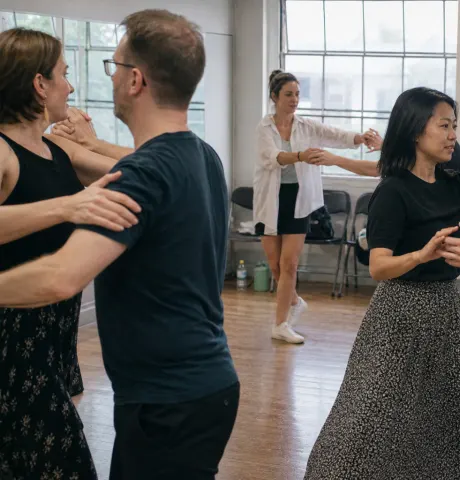
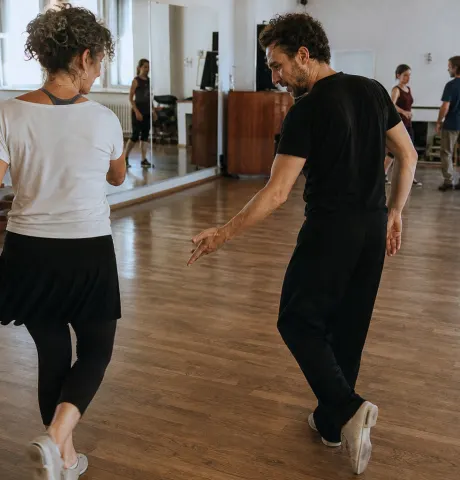
An accessible door does little good if the class accepts only one way of dancing. In an inclusive group, participants can approach the same musical or dance task in different ways. Some move while seated, others stand, change their range of movement or watch a sequence before joining in. This is not a separate substitute exercise, but a way of working on a topic together.

Communication within the group matters too. An instructor can let someone know before touching them and ask what kind of support they would like. They can make sure that bags and chairs do not block pathways and that taking breaks is not seen as a lack of motivation. Participants should also ask before pushing, leading or correcting someone’s movement without permission.

Dance offerings in Hamburg can vary in format and focus. Open sessions such as All Moves are for people with no prior experience, while other classes focus more on a particular technique or work with an ongoing group. None of these formats is automatically more inclusive. What matters is whether access, adaptations and respectful collaboration come together in the class itself.

There’s more than one side to access

Movement

Different Ways to Move

One exercise can have several equally valid variations.

A step can perhaps be done seated, with smaller movements, or with an extra pause. When the instructor offers variations, the group stays with the same exercise, and each person chooses an option that works for them.

Perception

Information in multiple ways

Explanations should not appeal to only one sense.

Movements can be demonstrated, described verbally, and explained through touch if everyone involved agrees. Clear cues about direction and changes also help when music or room noise makes it difficult to find your way.

Frequently Asked Questions

  1. No, an inclusive class does not have to be exclusively wheelchair dancing. What matters is whether wheelchair users can take part together with others, and whether movement exercises, routes through the space and pace are adapted accordingly. Ask specifically how a typical exercise is adapted.

Compare dance classes in Hamburg

Use the course filter to find current offerings and check in advance which accessibility options and adjustments are important to you.

Dancing together starts with Access

On udansa, you can compare current dance classes in Hamburg and search specifically for an offering that meets your access needs. Clarify any questions directly with the course instructor before signing up.

Dancing together starts with Access