Find a Dance Partner5 minutes

Dance Partners Without Dating in Nuremberg: Clear Boundaries

By Bernhard De LucaUpdated

In brief
  • When looking for a dance partner in Nuremberg, you can explicitly request a purely dance-focused connection without dating.
  • A dance hold, eye contact and regular meetups do not imply consent to flirting or romantic advances.
  • You can clearly turn down romantic interest without having to explain your relationship status.
  • If someone touches you without your consent or repeatedly pressures you, you can end the dance contact immediately.

Laughing together over a misstep, showing up reliably for class, and enjoying dancing together: This can mean a lot to you without having to turn into a love story.

DefinitionConsent

Consent means that everyone involved voluntarily agrees to a specific action and can withdraw that consent at any time. When dancing, this also applies to touch and the desired amount of physical distance.

Your wish describes a genuine dance partnership

If you're looking for a dance partner in Nuremberg without dating, it helps to describe your intentions positively: “I’m looking for a purely dance-based connection and am not interested in dating.” This names both what you hope to do together and where the boundary lies. You don’t have to explain why you’re not looking for a relationship or share details about your private life.

Words like “easygoing” or “let’s see what happens” leave your meaning unclear. Even “just dancing for now” can sound like a possible romance later on. A clear statement is kinder than wording that leaves the possibility of romance open when you don’t want that. However, it doesn’t guarantee that everyone you meet will accept your intentions.

When searching on udansa, one clear sentence is enough for this point, you don’t need to justify yourself at length. Someone who wants the same thing can respond to it. After all, two people working together as a dance couple says nothing about their relationship status. The guide on taking a couples course without a romantic relationship explains this distinction too: a couple in class is first and foremost a shared learning arrangement.
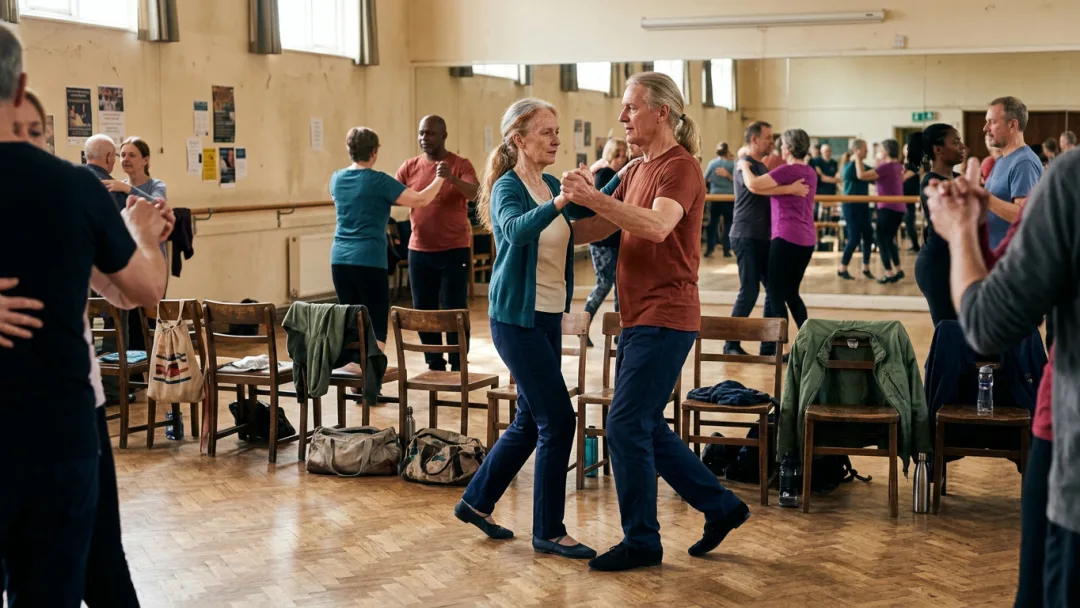
A song you hear together is part of dancing, but a private invitation requires separate consent.

Dancing Close Does Not Mean Romantic Intent

In partner dancing, closeness often serves a technical purpose. A hand connection communicates movement impulses, moving in the same direction makes changing direction easier, and eye contact can help you coordinate. You cannot infer romantic interest from this. Conversely, technique does not permit every touch: physical contact still requires your consent.

The term “singles” in a dance class without a regular partner in Nuremberg does not automatically imply an intention to date, either. What matters for your personal connection is what you agree on together. A smile after a successful turn can simply express joy at sharing the step.

An invitation outside of dancing, on the other hand, can mean different things. You do not have to read anyone’s mind. If someone clearly approaches you romantically, you can say: “I’d like to keep dancing with you, but I’m not interested in romantic dates.” A one-time invitation is not a boundary violation if your refusal is accepted. Repeatedly trying to persuade you after a clear no is different.

You can be kind about it, but you do not have to offer a consoling compliment. Saying “Maybe someday” weakens your message if you actually mean no.

How to Recognize Respectful Behavior

That's how

  • Respect someone's wish to connect for dancing without dating
  • After a rejected flirt, keep the conversation focused on dancing
  • After someone says stop, immediately release the touch
  • Respect a pause in contact without sending any more messages

Not like this

  • Treating a rejection as an invitation to persuade
  • Disguising your next flirt as a joke
  • Holding on to the dance hold after being told to stop
  • Ignoring a pause in contact by sending new messages

Accepting a dance answers the question of who you'll dance with next, not whether you're in a relationship.

Editor for dance partner search

Your boundary matters even in the middle of a dance

An agreed framework can be clarified at any time. Maybe holding hands works for you, but a closer embrace does not. In that case, “Please give me more space” is a complete statement. You don’t have to wait until the song is over. Agreeing to a dance hold does not mean agreeing to any further touch.

If there’s a misunderstanding, a brief correction may be enough: “I don’t want this kind of touch.” Respect means that the other person responds immediately and doesn’t argue about your perception. If your boundary is mocked, crossed repeatedly, or met with guilt trips, you don’t have to continue the connection.

If someone behaves in an intimidating way, you can release their hands, stop the dance, and move towards other people or the instructor. Your safety comes before a polite goodbye. You don’t owe anyone a conversation alone. If you’re in immediate danger, get help.

You can also stop replying to written messages. You can save unwanted messages before blocking the sender in case you need support. The fact that you’ve already had some lovely dance classes together doesn’t obligate you to put up with further pressure.

Two ways to connect

Dance focus

The connection stays on the dance floor

Shared steps, separate personal paths

You can nurture a warm dance partnership and turn down personal meetups outside of dancing. Your conversations can still be relaxed, without you having to share personal contact details or details about your love life.

Friendship

Connected beyond dancing too

Personal closeness without a romantic promise

You can also meet your dance partner as friends if you want to. A coffee together or a longer conversation doesn’t automatically change the boundary you’ve set: friendship isn’t a tentative agreement to date.

Frequently Asked Questions

  1. No, you don’t have to share your relationship status to turn down a date. Your own preference is reason enough. You can mention that you’re in a relationship if you want to, but you can also be single and want a connection that is exclusively about dancing.

Dance classes in Nuremberg

You can find classes in Nuremberg here, where you can learn together with a dance partner.

Dance together, respect boundaries

On udansa, you can find dance connections in Nuremberg and clearly state that you're looking for a connection without dating. That way, you can set clear expectations for the kind of dance connection you want.

Dance together, respect boundaries