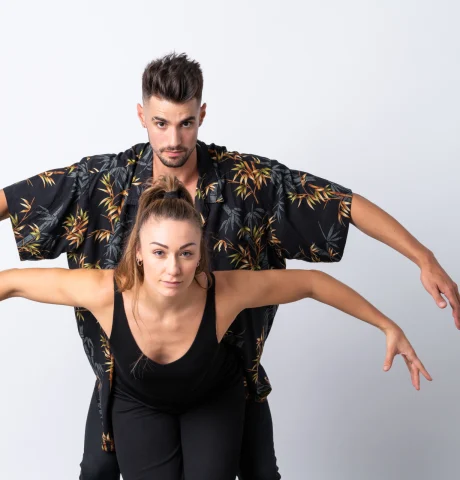
Dance styles differ in their movement logic
To get a sense of the dance scene in Nuremberg, it helps to first distinguish the movement itself. Ballet works, among other things, with clear lines, controlled transitions and precise organization of the body. Contemporary dance can release weight, use proximity to the floor or transform everyday gestures. Both can be highly abstract or portray characters and relationships. These characteristics explain forms of expression, not how common local offerings are.
Salsa often focuses attention on the shared musical pulse and communication between partners. Steps, turns and changes of direction are adapted to the surroundings within a shared space. Hip Hop emphasizes other qualities: groove, springy movements and individual rhythmic accents shape its expression. A group routine can preserve this personal quality, even when everyone dances the same sequence.
A style and a performance format are not the same thing. Salsa can be choreographed for the stage, and ballet technique can be part of an experimental piece. Dances from film and television also show how staging changes our impression. Editing and camera angles bring out details that come across differently on a dance floor. In Nuremberg, this does not create a ranking of styles, but rather a closer look at what is happening in each case.