Dance connections6 minutes

Find a dance community in Shanghai: How to build connections

By Mary De LucaUpdated

In short
  • In Shanghai, a dance community grows through repeated encounters, not through a perfect first performance.
  • Come back to dance events that suit you, and remember the names, preferences, and conversations of people you meet.
  • After dancing, start with a specific question or a sincere compliment about the moment you shared.
  • Suggest meeting again without pressure, and respect it if someone would rather keep dancing.

If you're new to a city, you may already know the steps, but not the people to dance them with. Connections often form between two dances, when a brief conversation turns into a familiar face you see again.

DefinitionRecurring Encounter

Recurring encounter means meeting the same person again on multiple occasions. In dance, this creates room for familiarity without immediately having to become a close friendship or dance partnership.

Community begins with a familiar face

A dance community is not automatically a closed clique. It often includes people who meet regularly, greet one another, and adjust to each other while dancing. In Shanghai, this feeling can take shape in all kinds of places: what matters less is the size of the group than the chance to come back and see familiar faces again.

If you’re new, you don’t have to remember everyone’s name right away or join a group. First, look for an opportunity that fits your interests and everyday life. Also think about what kind of dancing you’re looking for: the self-test for choosing a dance style can help you narrow down your options. On the overview page for dancing in Shanghai, you’ll find the bigger picture of courses, communities, and performances.

Your first visit doesn’t have to be a breakthrough. A quick hello, a dance together, or a conversation about music is enough to get started. The next time, you’ll recognize each other. Over time, that small sense of familiarity can help you find your place in the group, without having to pretend to be someone you’re not.
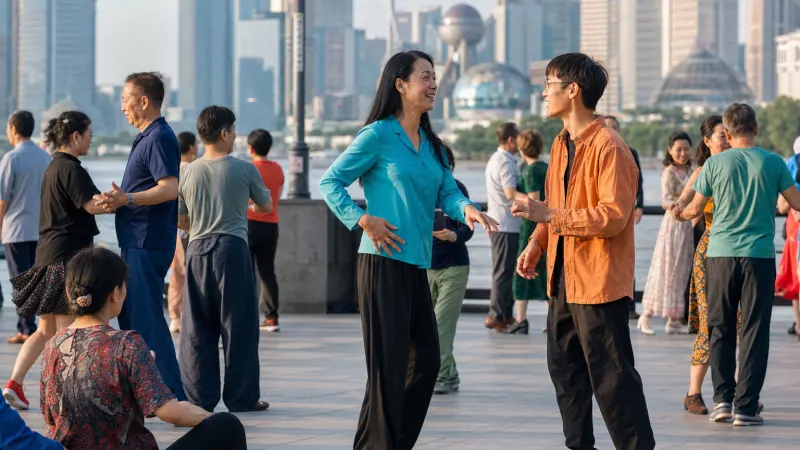
A sense of connection grows when a dance you shared turns into an easy conversation later.

Small Conversations Turn Encounters into Connections

After dancing, a specific conversation starter is usually more comfortable than a big self-introduction. For example, ask whether the other person knows the song, what they thought of the change in rhythm, or whether they have been dancing for long. The question should show genuine interest, not just serve as a lead-in to a request. That way, a conversation can unfold and still end after a short while.

Listen to the answer, then share something relevant about yourself. If you are new to Shanghai, you can say so without making it an obligation to explain. A name, a detail from the conversation, or a shared fondness for a dance can help you pick things up at your next meeting. This kind of recognition signals attentiveness without immediately assuming closeness.

An invitation can also be small and open-ended, such as asking whether you would like to dance together again the next time it feels right. A yes is not a commitment to meet regularly, and hesitation is not a personal rejection. If someone would rather dance alone or does not feel like talking right now, accept that kindly. This keeps encounters relaxed and leaves the door open to meeting again later.

Connection happens when we come together

Like this

  • After the dance, ask a specific question about the song
  • At your next meeting, pick up on their name or your conversation
  • Make dancing together an open invitation

Not like this

  • Start every conversation with a generic platitude
  • When meeting again, act as if you already know each other well
  • Treat an invitation as a firm commitment or obligation

A brief conversation after the dance can stay short; what matters is whether both would like to pick up where they left off next time.

Partner dance instructor

Belonging grows through mutual reliability

A community does not thrive because one person collects as many contacts as possible. It takes shape when people make room for one another: newcomers are welcomed, invitations remain voluntary, and no one has to justify taking a break or choosing a different dance style. You can contribute too by introducing people, repeating names, and seeing changing conversation partners as an opportunity rather than an obstacle.

Being reliable does not have to mean attending every meetup. If you cannot make an arrangement, let the others know in good time. If you can only dance occasionally, be clear about that. This helps others know what to expect from you, and keeps you from falling into a routine that feels like an obligation. To find current courses in Shanghai, you can use the course filter and look for a schedule that fits your weekly rhythm.

Some acquaintances remain friendly greetings, while others become dance connections. Both are a meaningful part of a dance community. The events section is a better fit for individual performances and stage programs; building connections, on the other hand, is about the people you see again and enjoy spending time with.

Belonging can begin in different ways

Conversation

Talk first, then join the dance

Great if you prefer to get to know new people at a relaxed pace

A conversation on the sidelines gives you time to take in names and interests before you head onto the dance floor. That way, you can pick up on a topic later and still get involved step by step.

Dance

Dance first, talk after

It helps when movement makes it easier to break the ice

Dancing together doesn't preempt the conversation, it gives you a specific reason to talk afterward. You can briefly ask how the other person experienced the rhythm, and that can lead to a natural exchange.

Frequently Asked Questions

  1. Bring up a specific moment you shared, such as the music or a great turn. An open question feels more natural than a memorized opener and gives the other person room to answer briefly or at greater length. Listen instead of already preparing your next invitation.

Discover dance classes in Shanghai

Recurring class sessions can deepen connections if you want to dance together and see familiar faces again in Shanghai.

In Shanghai, connections often begin between dances

On udansa, you can find dance classes and events in Shanghai where casual encounters can turn into lasting connections. Compare the current options and choose a way to get started that fits your everyday life.

In Shanghai, connections often begin between dances