Getting started with ballet5 minutes

Ballet flexibility test for adults: take the check

In a nutshell
  • A ballet flexibility test for adults helps to realistically assess current stretching ability and joint strength before the first class.
  • The test checks hip flexibility, ankle extension, and the strength of the deep core and back muscles.
  • Don't worry about strict criteria, because starting at a mature age does not require innate hyperflexibility, but rather patience and continuous training.

The dream of ballet is not a question of age, but of the right self-assessment. This test helps you analyze your physical foundation without any pressure.

Your body is ready for new movements

Anyone starting ballet as an adult quickly wonders if their own body is even up to the demanding movements. The good news first: You don't need to be extremely flexible or exceptionally athletic to enjoy your first ballet class. Nevertheless, a realistic ballet flexibility test for adults helps you to better understand your own strengths and areas for improvement.

Such a check of the physical requirements for ballet does not serve as a barrier, but as a guide. It shows you in which areas you already have a good foundation and where you can work on your flexibility injury-free through targeted training, such as with a structured ballet warm-up routine. This way, you can start your new hobby with a secure feeling.

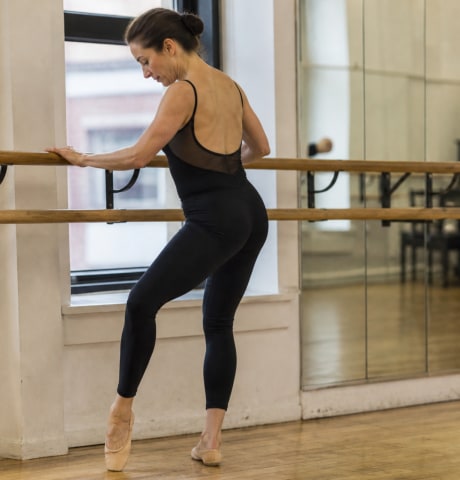
Take the flexibility test: How ready is your body?

  1. How far can you reach towards the floor while standing with your legs straight?

    • A: I can place my palms flat on the floor
    • B: I can easily touch my toes with my fingertips
    • C: I can reach my shins or just below them
  2. How easy is it for you to fully extend your feet while sitting?

    • A: My toes form almost a straight line with my shin
    • B: I can extend my feet well, but I feel tension in my instep
    • C: My ankles remain rather stiff and can hardly be extended
  3. How does a deep squat feel with your heels flat on the floor?

    • A: Extremely easy, I can stay in this position effortlessly
    • B: Quite doable, but it requires some focus on balance
    • C: Very difficult, my heels lift immediately or I tip over backwards
  4. How wide can you open your legs into a straddle while sitting?

    • A: A wide angle of over 120 degrees is no problem for me
    • B: I can reach a solid right angle of about 90 degrees
    • C: More than a narrow V-sit is currently not possible without pain

Your evaluation

Mostly A: The born mover

You have an excellent physical foundation for classical ballet. Your joints are flexible and your muscles are ready for the demanding exercises at the barre. Use this strength, but make sure not to overextend your joints and always work on the necessary stability as well.

Mostly B: The harmonious all-rounder

Your strength and flexibility are well balanced. You have a solid foundation that you can build on excellently in class. With a little patience and continuous training, you will see progress in your posture and coordination at the ballet studio very quickly.

Mostly C: The powerful beginner

Your body is currently a bit stiff, which is completely normal after years without intensive stretching. Your focus at the beginning should be on a gentle stretching program and building core strength. Don't get discouraged, because ballet is the ideal way to improve exactly these areas step by step.

Your physical prerequisites in comparison

CriterionType A (Flexible)Type B (Balanced)Type C (Stable/Firm)
Hip openingVery good, natural turnout comes easilyNormal, requires active trainingLimited, focus on gentle stretching
Foot tensionHigh flexibility in the ankleGood extension presentRather firm ankles, strength building necessary
Core stabilityOften needs extra stabilizationGood balance of strength and flexibilityVery good basic strength, ideal for posture
Injury riskLow for muscle soreness, caution with overstretchingVery low due to balanced physiqueSlightly increased with sudden stretches

The assessments are based on the typical requirements in ballet classes for adult beginners.

How to use your test results for your training

As soon as you know your test result, you can tailor your training specifically to it. If, for example, you lack strength in your ankles, simple exercises in everyday life will help, such as repeatedly rising onto your tiptoes while brushing your teeth. If you lack flexibility in your legs, you should focus on gentle, regular stretching sessions without forcing your joints.

Don't forget that ballet is a dynamic process. No one expects perfect lines or a flawless split from adult beginners. With the right attitude, patience, and perhaps the right ballet shoes for adults on your feet, you will quickly notice how your posture and flexibility improve from week to week.

Frequently Asked Questions

  1. Yes, you can learn ballet even without prior knowledge or extreme flexibility. The necessary flexibility and strength are built up step by step through regular training at the barre and in the center.

Ballet classes near you

Find the perfect class for your start in the world of classical dance.

View all matching classes

Together at the ballet barre

Find like-minded adults near you on udansa who, just like you, want to make their dream of ballet a reality, as well as the right studios for your start.

Together at the ballet barre

Read more