
Find your dance partner easily
On udansa connect, you will find like-minded people who, just like you, are looking for the perfect dance adventure. Meet dance partners who share your schedule and your budget.


By Mary De LucaUpdated
On udansa connect, you will find like-minded people who, just like you, are looking for the perfect dance adventure. Meet dance partners who share your schedule and your budget.
Dancing is pure joy, but only if your hobby truly fits into your everyday life will the fun last in the long run. With this guide, you can perfectly align your schedule and your budget with your new dance style.
Before you decide on a specific dance style, it is worth taking an honest look at your weekly commitments. Some dances only require a weekly one-hour class, while other styles come with a vibrant social scene featuring regular evening events. If you choose Salsa or Bachata, for example, it rarely stays at just the class: the community thrives on parties during the week where what you have learned is put into practice. Anyone who wants to keep up here must plan for significantly more free time than someone preparing for the next ball in classic ballroom dancing who primarily attends the weekly class.
Besides the time factor, financial planning plays a decisive role in your long-term enjoyment of your new hobby. Course fees are just the foundation. If you want to budget for your dance hobby, you should calculate hidden costs from the start, such as special shoes, suitable clothing, entrance fees for practice evenings, and potential travel costs. A well-thought-out budget check saves you from frustration and ensures that you can focus entirely on the music on the dance floor instead of worrying about the next bill.

Take your calendar and enter all your fixed commitments. Determine exactly on which days you have time for the commute to the dance school, the course itself, and any free practice evenings.
Set a monthly limit for what you can spend on your new hobby. Keep in mind that, in addition to the course fee, there are also costs for drinks on-site, clothing, and events.
Check how time-intensive your preferred dance style is. Latin American dances like Salsa often require additional practice parties, while ballroom dances or solo dance offerings often get by with the weekly course.
Use non-binding trial classes to test the atmosphere and the actual travel time. This way, you will quickly notice whether the effort is realistic and stress-free for you in everyday life.
Decide on a payment model that suits you. For beginners, time-limited basic courses or flexible ten-class cards are often a good choice, so you do not have to commit to long contract terms right away.
Planning correctly
Avoiding mistakes
Preparation
Arrival
During
The time required varies greatly depending on your goals. For beginners, a weekly class of 60 to 90 minutes plus travel time is often enough, while ambitious dancers should plan for an additional two to three practice evenings per week.
Yes, that is absolutely possible. Solo dance styles like Hip-Hop can be learned perfectly well via online tutorials in your own living room, which completely eliminates course fees and travel costs.
Dance shoes are a worthwhile investment because they protect your joints and make turning easier. However, for your very first trial class, clean sneakers or socks are sufficient to avoid damaging the floor.
If you have little time, styles focusing on simple basic steps like Discofox are suitable. A compact weekend workshop is also ideal for learning the basics without a weekly commitment.
Compare offers and start your new hobby stress-free and perfectly planned.
Couple danceLimbach-Oberfrohna · Germany
PaartanzkreisFriday · 18:15 · Oct 23
Limbach-Oberfrohna
BallroomMeißen · Germany
Tanzkreis | PROFESSIONALTuesday · 20:15 · Oct 27, 2026 - Jan 5, 2027
“Ein Haus für Vieles” - Saal Tanzkurse
Couple danceLimbach-Oberfrohna · Germany
Silberkurs für PaareSunday · 16:15 · Oct 25 - Nov 15
Limbach-Oberfrohna
 Can you learn to dance without a sense of rhythm?Think you have no sense of rhythm? Don't worry: learning to dance without a natural sense of rhythm is absolutely possible if you start with the right styles.
 Dance as fitness: The best styles for your staminaDo you want to improve your stamina and are looking for a motivating alternative to the gym? Discover how you can easily burn calories with the right dance styles.
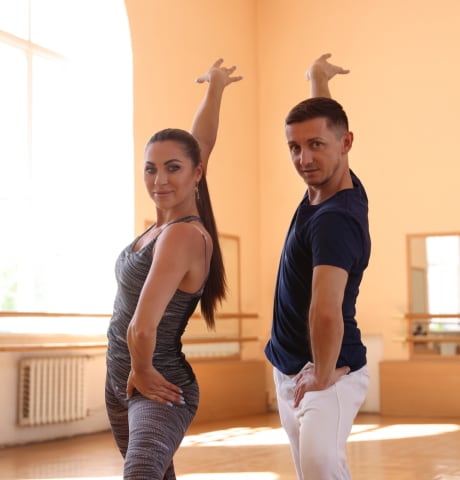 Finding a dance class for beginners: How to get started easilyGetting started is easy: With our guide, you will find the right dance class for beginners and prepare perfectly for your very first dance lesson.
 Choose a dance style based on your personality: What suits you bestFind out with our quick personality test which dance style truly matches your character, fitness level, and musical taste.
 Freedom on the floor: Dance styles with improvisationDiscover dance styles that don't rely on rigid step sequences. Learn how to find your own expression and clear your mind through improvisation.
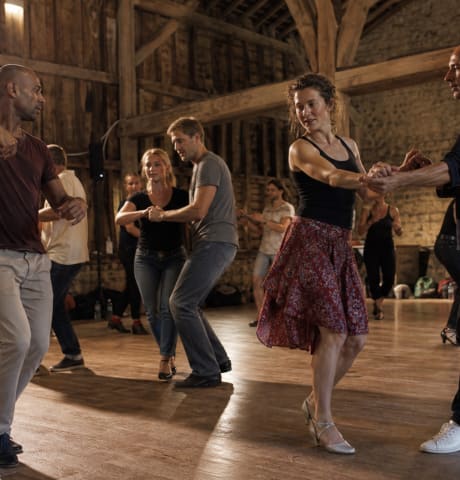 Frustrated in class: 5 mistakes to avoid when choosing a dance styleIf you quit your first dance class in frustration, you likely just chose the wrong style. Learn the typical mistakes beginners make and how to avoid them.Dance as fitness: The best styles for your staminaDo you want to improve your stamina and are looking for a motivating alternative to the gym? Discover how you can easily burn calories with the right dance styles.Can you learn to dance without a sense of rhythm?Think you have no sense of rhythm? Don't worry: learning to dance without a natural sense of rhythm is absolutely possible if you start with the right styles.
 Dancing for introverts: Top styles for youDancing does not have to be loud or stressful. Discover calm dance styles that are perfect for introverted people and do not require close physical contact.
 Assessing your physical readiness for danceHow fit are you really for the dance floor? This guide helps you properly assess your joints and stamina so you can dance injury-free and with joy.