Solo dance5 minutes

Contemporary Dance for beginners: The solo guide

By Mary De LucaUpdated

In a nutshell
  • Contemporary Dance combines elements from various dance styles into a free, expressive solo dance.
  • The focus is on individual feeling and the conscious use of gravity and breathing.
  • Beginners do not need any prior knowledge of ballet, just a joy for movement.
  • Long, comfortable clothing and non-slip socks or dancing barefoot provide the best basis for training.

Find your start in Contemporary

Whether it is fluid movements or powerful expression, with us you will find the right dance school and like-minded people for your journey in contemporary dance. Just take a look around our community and take the first step onto the dance floor.

Find your start in Contemporary

Contemporary dance opens the door to a whole new way of moving. Here, you learn how to translate your feelings into expressive choreography without words and completely without a partner.

DefinitionContemporary Dance

Contemporary Dance is a modern collective term for various contemporary dance styles, which are characterized by emotional expressiveness and the abandonment of rigid, classical ballet rules. It combines techniques from modern dance with elements of jazz, acrobatics, and free improvisation.

What makes contemporary dance so special

Contemporary dance is not a rigid set of rules, but an invitation to move. Emerging as a liberation from the strict lines of classical ballet, modern dance combines various influences into a unique language of its own. Here, there is no fixed choreography that has to be millimeter-perfect, and no ballet barre where you hold the same foot position for hours. Instead, you use your entire body to tell stories and make feelings visible.

For beginners, this style is particularly rewarding. Since the focus is on individual expression, there is no right or wrong in the classical sense. If you want to learn to dance without a partner, contemporary dance offers you the perfect platform to focus entirely on your own movement and body awareness. You learn how to shift your weight, use the momentum of your own body, and move fluidly through space.

In contemporary dance, the floor is not an obstacle, but a supporting surface for fluid transitions.

The most important basics of dance technique

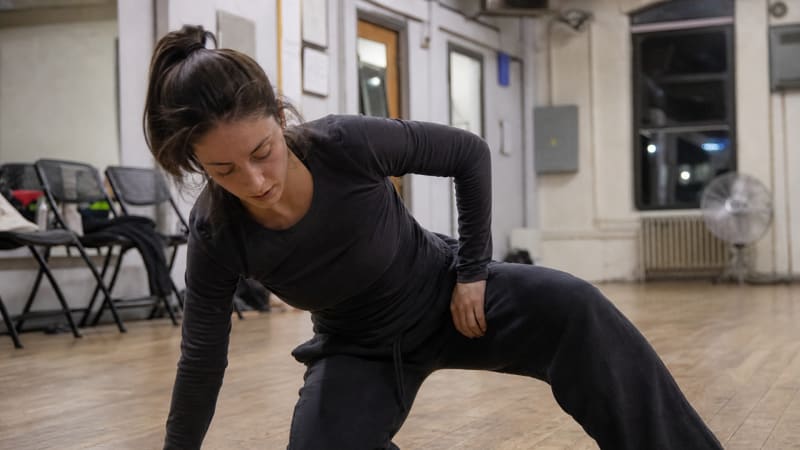
Even though contemporary dance thrives on freedom, it is based on a sound contemporary dance technique. A central element is working with gravity. While ballet strives for weightlessness, contemporary dance actively uses the floor as a partner. So-called floorwork, meaning controlled movement, rolling, and sliding on the floor, is an integral part of every class. You learn how to fall softly and get back up without using force.

Another important concept is the interplay between tension and relaxation, often referred to in technical jargon as release technique. Instead of keeping the body constantly tense, you let the movement flow and use the natural momentum of your limbs. This protects the joints and gives the dance its characteristic, breathing dynamic. Anyone who uses which dance style suits me as a starting aid often finds that contemporary offers the perfect balance between athletic challenge and emotional outlet.

The right start in contemporary dance

Correct

  • Wear comfortable clothing that covers your knees and shoulders
  • Use the floor as a partner and release your weight
  • Listen to your own breath and let your movements flow

Wrong

  • Training in tight jeans or with jewelry
  • Fighting against gravity and tensing muscles
  • Holding your breath and counting movements mechanically

Contemporary dance is not about looking perfect, it is about moving honestly. Every emotion has its own, right form in space.

Dance instructor for contemporary dance, Berlin

How your first dance class works

Starting out as a beginner in expressive dance requires, above all, the courage to let go. In the first few classes, it is rarely about memorizing complicated sequences of steps. Instead, the teacher guides you to explore your own movement patterns. You are given an emotional or visual task, for example to move like water or through thick honey, and you translate this into improvisation. This trains the connection between feeling and muscle tone.

To train without injury, you should make sure to wear comfortable, elastic clothing while practicing. Since a lot of work is done on the floor, long pants and a long-sleeved top are advisable to protect your skin from friction. You usually dance barefoot or in special socks that offer enough grip for turns, but still allow you to slide on the studio floor. This way, you can best feel the contact with the floor and develop a stable base for your jumps and turns.

The two dimensions of contemporary dance

Floorwork

Floorwork and Release

Using gravity as a partner

Here you use gravity to sink softly into the floor and move fluidly through the space. It is about consciously releasing weight and using the floor as support.

Spatial work

Alignment and jumps

Presence and dynamics in standing positions

In the standing sequences, you work on your balance, wide jumps, and turns. The focus is on alignment, spatial movement, and the dynamics of your limbs in the air.

Frequently Asked Questions

  1. No, you do not need any ballet experience for contemporary dance. The techniques in contemporary are structured in a way that allows you to develop a good sense of body awareness and the necessary flexibility from scratch, even without prior knowledge.

Modern dance courses near you

Find the right studio now and start your dance adventure without a partner.

View all matching courses