Find your flow together
With udansa connect, you can find like-minded people who have rhythm in their blood. Connect with dancers in your area and share your passion for the urban groove.

By Bernhard De LucaUpdated
With udansa connect, you can find like-minded people who have rhythm in their blood. Connect with dancers in your area and share your passion for the urban groove.
The groove in Hip-Hop does not come from complicated sequences of steps, but from the subtle interplay between music and body. Only when the constant bouncing becomes second nature, does the movement turn into dance.
Bounce musicality in Hip-Hop refers to the ability to make the basic rhythm of the music visible through a continuous, elastic springing of the body. This movement serves as a rhythmic foundation for all further dance steps.
In Hip-Hop, the rhythm is not just background music, it is the driving force behind every movement. If you want to understand the dance, you have to learn that the energy does not come from the head, but directly from the bass. The constant, springy impulse in the body ensures that you connect with the beat and do not just perform rigid sequences of steps. This organic flow distinguishes dancing from a purely mechanical sequence of learned movements.
To build this connection, it helps to shift the focus away from visual imitation. Instead of checking in the mirror how a movement looks, you should feel how it feels in relation to the music. When you let the beat into your knees and chest, a natural dynamic emerges. On udansa, you can exchange ideas with others and find a suitable Hip-Hop dance partner to deepen this musicality together during training.
A common misconception among beginners is the belief that you have to visualize every single note with a gesture or a step. True musicality in urban dance, however, means riding the fundamental wave of the music instead of frantically chasing after sound effects. The bounce acts as your internal metronome, which keeps you in time even in moments of stillness.
Once you have internalized this continuous impulse, even simple steps appear casual and controlled. It is not about showing particularly complex figures, but about celebrating the simplicity of the groove. Only when your body rhythm runs as if by itself do you gain the freedom to set accents in freestyle and play with the nuances of the beat. If you want to reach this state, you can also take a look at the street dance style test to find out which rhythmic orientation best suits your own body awareness.
Bouncing correctly
Common mistakes
Find the right studio and learn the real groove from professional instructors.
StreetdanceBurgstädt · Germany
Videoclip Teens 11-13 JahreMonday · 16:50 · Nov 9
Burgstädt
StreetdanceBurgstädt · Germany
Videoclip Teens ab 16 JahreMonday · 17:50 · Nov 9
Burgstädt
StreetdanceLimbach-Oberfrohna · Germany
Videoclip Teens 11-13 JahreTuesday · 18:35 · Nov 10
Limbach-Oberfrohna
If you don't have the bounce in your body, you aren't doing dance steps, you are just performing gymnastics to music.
The magic of the bounce lies in its versatility. It can be heavy and deeply anchored in the ground or appear light and springy, depending on which era or substyle of music is playing. By changing the intensity of your knee bend and the timing of your center of gravity, you instantly adapt to the mood of the track.
This adaptability is the key to an authentic dance style. Instead of stubbornly repeating the same pattern, you breathe with the music. When you learn to place the bounce on the on-beat sometimes and on the off-beat other times, your dance becomes lively and unpredictable. It is this invisible connection that fascinates spectators and lets you become one with the sound of street culture.
The earthy connection to the beat
The movement goes deep into the floor. The center of gravity is low, the knees are bent, and the energy is powerfully released downwards with every beat, which gives the dance an earthy presence.
The springy lightness in the beat
The impulse is directed upwards. The movement springs away from the floor with light feet, creating a floating, energetic dynamic that fits perfectly with fast and cheerful rhythms.
Bounce is an elastic up and down movement of the body, while groove describes the individual feeling and charisma that arise through this rhythm in dance. Bounce is the tool, groove is the result.
Yes, absolutely. Bounce is the most important foundation in Hip-Hop. If you learn to feel the rhythm in your body first and spring along, all later steps and choreographies will be much easier for you.
Focus on the heavy beats, usually the bass drum on counts one and three. Try to bend your knees at exactly that moment and let your upper body swing along in a relaxed way.
 Hip-Hop history and music: The roots of urban beats
 Architects of sound: Legendary Hip-Hop DJs profiled
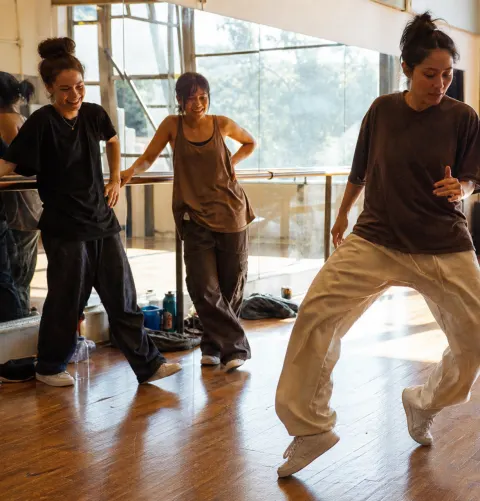 G-Funk and West Coast: How the California sound shaped dance
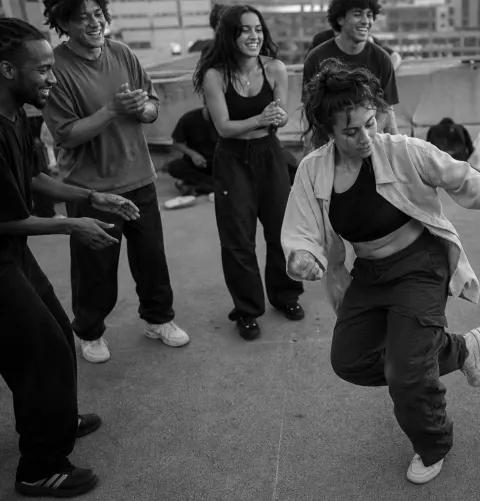 Hip-Hop Music Trends 2026: The new beats of the urban scene
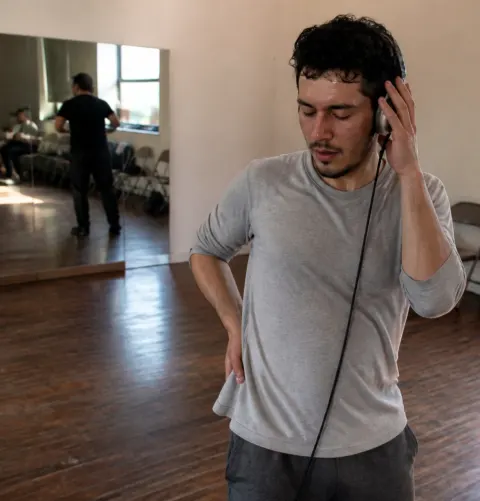 Interpreting rap flow: How to translate lyrics into movement
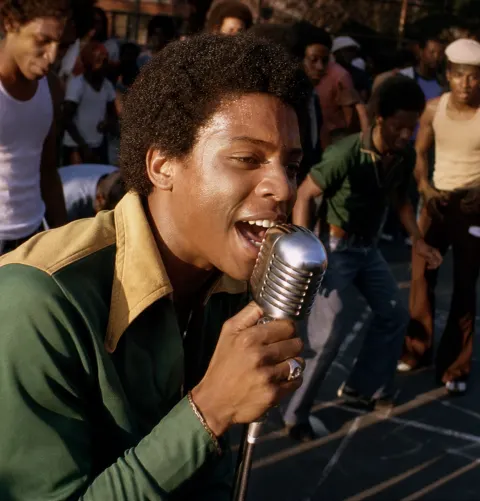 The Voice of the Party: The Role of the MC in Hip-Hop History
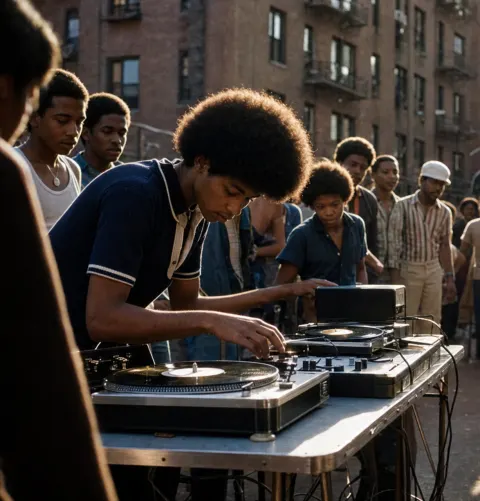 The birth of Hip-Hop: How it all began in the Bronx