

Find your crew on udansa
On udansa, you will find like-minded people, crews, and suitable dance schools that share the spirit of urban culture. Connect with the community and bring your knowledge directly to the dance floor.

If you want to understand the core dynamics of street dance, you have to return to its roots in the streets of New York. Only knowing the origin of the beats brings the movement on the dance floor to life.
A breakbeat is a rhythmic pattern in which the classic, continuous beat is broken up by syncopated, irregular drum hits. It originated from the deliberate looping of drum solos from older funk and soul records.
The roots of hip-hop culture lie in New York in the early 1970s, more precisely in the Bronx, which was marked by poverty and social isolation. On August 11, 1973, young DJ Kool Herc hosted a party in the common room of an apartment building on Sedgwick Avenue, which is now considered the birth of the movement. He noticed that the partying crowd reacted particularly intensely to the instrumental interludes, the so-called breaks. To artificially extend these moments, he used two identical records on two turntables and played the breakbeat in an endless loop. This technical innovation laid the foundation for the entire street dance history, as the first breakdancers, the B-Boys and B-Girls, expressed themselves through dance to these extended rhythms.
Its emergence was closely linked to social conditions. In an environment characterized by gang violence and a lack of prospects, the newly emerging subculture offered an outlet to resolve conflicts creatively and non-violently. From the rhythms of the Bronx, a worldwide phenomenon quickly developed that went far beyond the music.
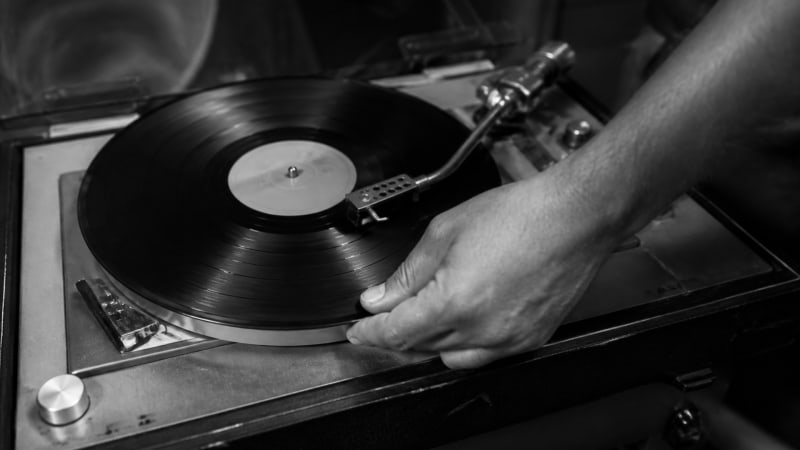
If you want to understand the musical structures in Hip-Hop, you have to engage with the classic four-four time signature, which usually lies in a tempo range of 80 to 110 beats per minute (BPM). The heartbeat of this music is determined by the interplay of the kick drum on counts one and three, as well as the snare drum on counts two and four. DJs refined this structure by sampling and rearranging funk, soul, and disco records. This technique created a deep, rolling groove that differed significantly from the straightforward disco music popular at the time.
With technological development, musical patterns also changed. While the golden era of the 1990s was characterized by jazz samples and warm, analog basses, the introduction of drum machines like the Roland TR-808 revolutionized the sound. The modern Trap sound, which rose from the southern United States starting in the 2000s, is characterized by extremely fast, rolling hi-hats, deep, sliding sub-basses, and an often slower base tempo. Dancers must precisely grasp these rhythmic shifts to physically translate the changed groove.
When listening to music, focus specifically on the snare drum. It is almost always on beats two and four, and it helps you keep your orientation even in complex songs.
The breakbeat was the spark that ignited everything. DJs took the instruments away from the musicians and created something completely new out of the best fragments.
Hip-Hop is far more than just a music genre, it is a comprehensive culture that traditionally rests on four supporting pillars. Alongside DJing, which is the playing and manipulation of music, and Breakin, the corresponding dance, MCing quickly became established. The Master of Ceremonies, who initially only fired up the crowd, developed spoken word into a complex art form. The fourth pillar is graffiti writing as a visual expression in urban space. Later, this foundation was often expanded to include the element of knowledge to emphasize the history-conscious and communal character of the scene.
This close connection of the disciplines ensures that the music and the dance are inextricably linked. Every rhythmic change in the studio, be it the introduction of syncopated beats or the use of new digital synthesizers, is immediately reflected in the aesthetics of the movement. Anyone who understands the history of this culture hears the music with different ears and develops a deeper sense for the dynamics that drive this worldwide lifestyle to this day.
The era of analog samples
The golden era is based on handmade samples from funk, soul, and jazz. The rhythm is warm, organic, and usually moves at a constant, driving tempo between 90 and 100 BPM.
The dominance of drum machines
Modern productions rely on digital synthesizers, extremely fast hi-hat rolls and deep, dragging 808 basses. Playing with tempo half-times challenges dancers in completely new ways.
It was born in August 1973 in the Bronx, New York. That is where DJ Kool Herc played two identical records at a party for the first time to extend the danceable drum breaks indefinitely.
Find the right studio and learn the basics of urban movement.
 The birth of Hip-Hop: How it all began in the BronxDive into the fascinating origins of hip hop in the Bronx during the 1970s and discover the four classic pillars of this global movement.
 Understanding Hip-Hop beats: How to find the rhythmIf you want to understand Hip-Hop beats, you need to know their building blocks. With this guide, you will learn to identify the kick, snare, and syncopations with confidence.