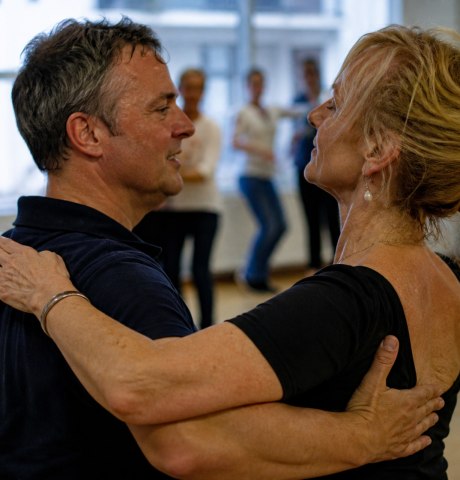
How anatomy influences the shared frame
When dancing with a significant height difference in ballroom dancing, couples quickly reach anatomical limits if they try to rigidly copy the classic textbook posture. If one partner is significantly taller, blindly adhering to standard arm positions often leads to the taller partner's shoulders being pulled up or the shorter partner's arms becoming fatigued. The key lies in counteracting the physical leverage forces. A stable dance frame must be flexibly adapted to body proportions instead of forcing oneself into an unnatural shape.
To harmoniously balance the height difference, the connection via the couple's right side should be established with particular precision. The taller dance partner lowers their elbows slightly to offer the shorter partner a comfortable surface to rest on. The shorter partner, in turn, seeks contact not by reaching their arms upward, but by supporting themselves gently from their own back muscles. Through this biomechanical adjustment, the shared axis remains stable, the steps can flow freely, and the height difference is perfectly balanced both visually and functionally.