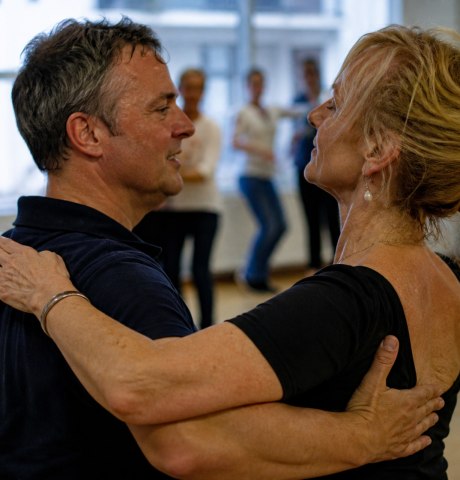
How spatial geometry stabilizes your dance figures
If you want to move confidently in ballroom dancing, you need more than just good body tension while dancing. Only the conscious geometry of the room transforms a sequence of steps into harmonious partner dancing. In the ballroom, there are fixed imaginary lines that run parallel to the walls and diagonally through the room. These orientation aids are essential for both leaders and followers to start figures precisely and avoid collisions. When you learn to use the walls and corners of the hall as fixed coordinates, you immediately gain dance sovereignty.
Especially in dances with significant floor coverage like the Waltz or the Quickstep, the alignment determines the success of complex turns. In the Slowfox as well, a clear eye for the axes helps you maintain the flowing timing, as taught in counting the Slowfox rhythm. When you orient yourself in the room, you do not look at your feet, but use the fixed points of the hall at eye level to keep your balance stable.