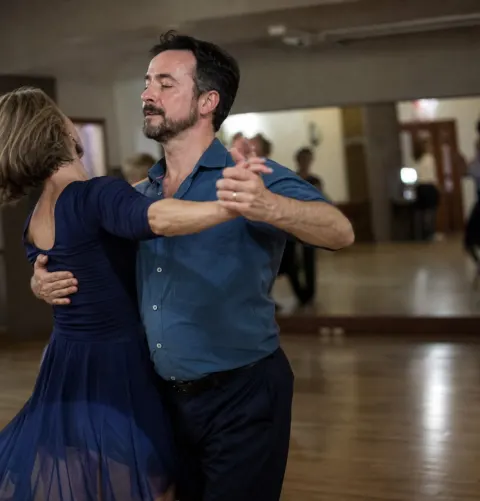
Find your rhythm as a pair
On udansa you will find like-minded people who share your passion, as well as suitable courses and events to take your sense of rhythm to the next level together.

By Bernhard De LucaUpdated
On udansa you will find like-minded people who share your passion, as well as suitable courses and events to take your sense of rhythm to the next level together.
Whoever leads in ballroom dance does not just set the direction, but acts as the couple's living metronome. With the right body tension and clear weight shifts, you transfer the timing effortlessly and build genuine trust on the dance floor.
Whoever takes the lead on the dance floor bears the responsibility for the shared beat. However, simply listening to the music is not enough: the decisive art in ballroom dancing lies in physically translating the rhythm so that your partner can feel it without delay. This rhythmic connection in ballroom is not created through words or hectic arm movements, but through controlled body tension and conscious weight shifting in your own center. Only when your own body precisely reflects the timing can your partner pick up the movement at the exact same moment.
A stable dance frame is the physical link for this transmission. Every weight shift that you initiate in your pelvis and legs must be passed on one-to-one through your upper body. If you lead unclearly or give up your frame, the signal dissipates into thin air. The result is misunderstandings, stumbles, and constantly lagging behind the actual beat of the music. The rhythmic confidence that you radiate as a leader gives the partnership the necessary calm to focus entirely on the shared flow, without having to constantly think about the next step.
Before you move, consciously absorb the music into your body. Shift your weight slightly from one foot to the other while standing to physically feel the pulse of the song before taking the first step.
Build a stable, yet flexible frame. Your arms must not move independently from your torso: every movement of your center must be transferred directly to your hands and therefore to your partner.
Announce every step a fraction of a second in advance by shifting your weight in the direction of movement. Your partner will feel this push or pull impulse in the frame, even before your foot actually moves.
Place your foot exactly on the beat and complete the weight transfer cleanly. Only when your standing leg carries your full weight at the end of the beat will your partner also be stable in their timing.
If your partner stumbles or gets off-beat, catch the movement by increasing the tension in your frame. Pause for a moment and restart on the next strong one of the music.
Find the right course now to develop your leading skills in ballroom dance.
Student DanceBurgstädt · Germany
Aufbaukurs Burgstädt Montag Schuljahr 2026/27Monday · 13:30 · Nov 9, 2026 - Jan 25, 2027
Burgstädt
BallroomMeissen · Germany
Fortgeschrittenen-Kurs | ADVANCEDTuesday · 18:30 · Nov 10, 2026 - Jan 19, 2027
“Ein Haus für Vieles” - Saal Tanzkurse
Student DancePenig · Germany
Aufbaukurs Penig Schuljahr 2026/27Monday · 14:30 · Nov 9, 2026 - Jan 25, 2027
Penig
Like this
Don't do this
Preparation
During
The best way to correct timing errors is to freeze your movement for a moment and keep your weight on a standing leg. As soon as the next clear one-count in the music sounds, restart the movement as a couple.
A good rhythmic connection in ballroom requires a stable, yet elastic dance frame. Your arms should neither hang limply nor be rigid like concrete, but must transmit the movement of your center directly to your partner.
In Tango, the focus is on flat, powerful steps without rising and falling, while Waltz is characterized by soft, flowing up and down movements. The way weight is shifted differs fundamentally.
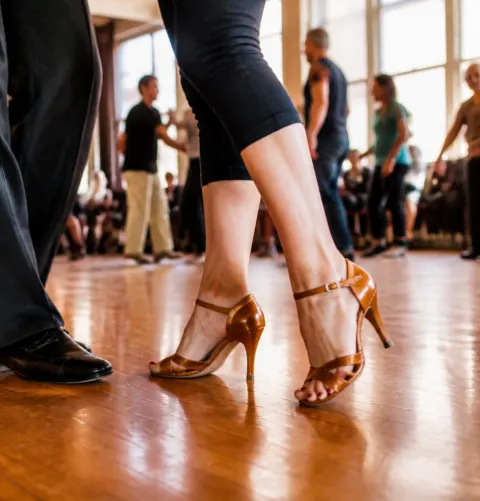 Recognizing the beat in ballroom dance: Understanding rhythm made easy
 Viennese Waltz vs. Slow Waltz: Rhythm Comparison
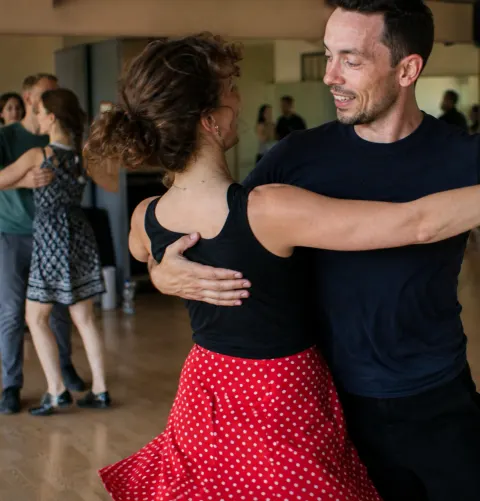 Quickstep rhythm mistakes: How to avoid stumbling
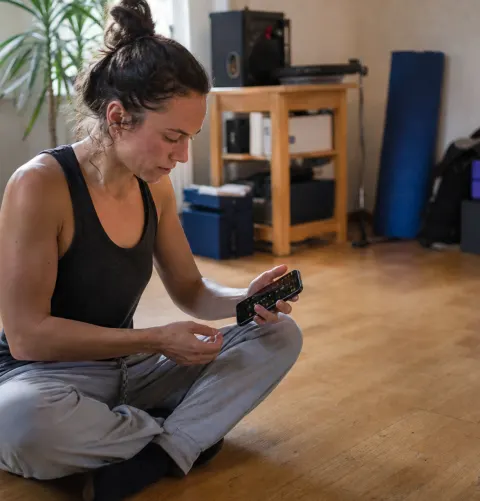 Train your sense of rhythm with an app: Your solo rhythm training
 Changing rhythms on the dance floor: Which dance fits?
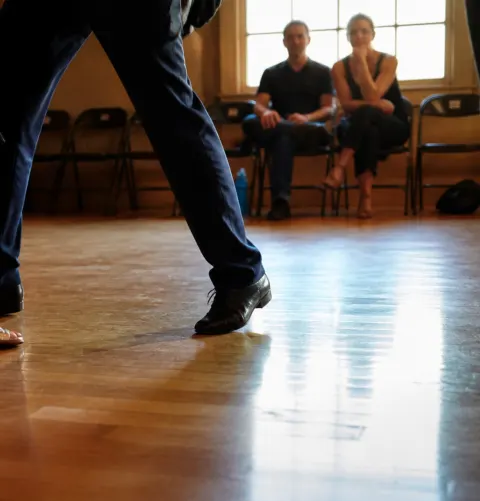 Rhythm of Ballroom Dances: The Five Beats Explained
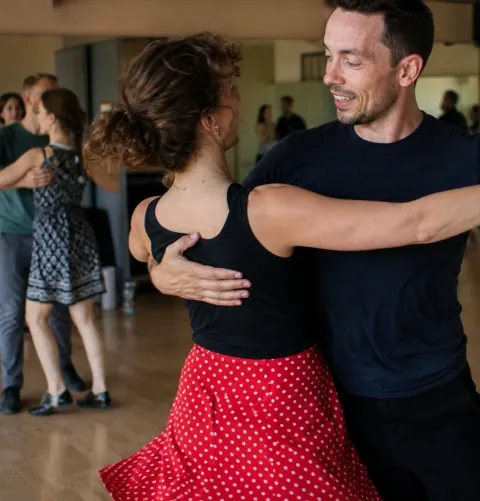 Hearing the Quickstep beat: How to master the fast tempo