Power Moves4 minutes

Learn the Halo in breakdance: technique and instructions

In a nutshell
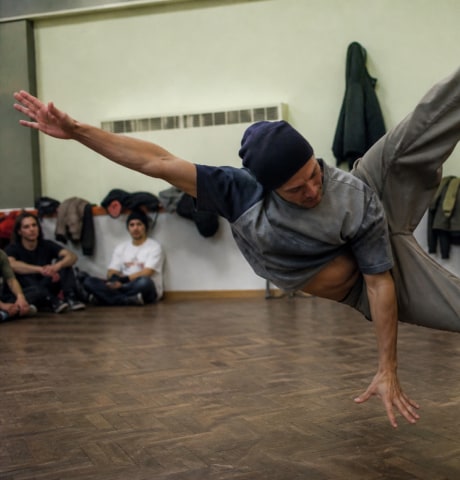
  • The halo in breakdance is a dynamic power move, where the dancer rotates on their head and hands in a diagonal path.
  • The crucial transition happens through an explosive push from the arms, which causes the body to briefly leave the floor.
  • A clean execution requires strong core tension, trained shoulders, and the ability to control balance on the head.
  • Injuries to the neck and wrists can be avoided through targeted warm-ups and learning the movement phase step by step.

The halo combines the speed of the windmill with the height of the headstand. With the right technique, you will master the spectacular transition from your head to your hands smoothly and safely.

What you need to bring for the Halo

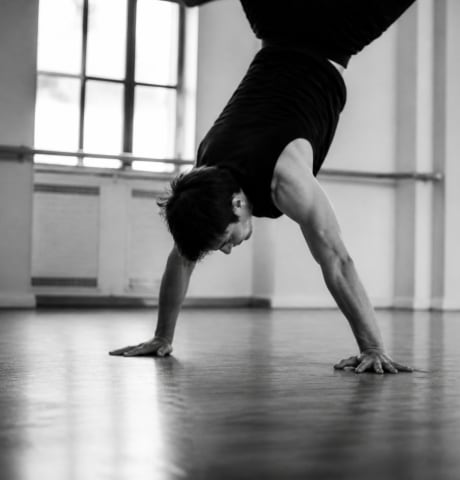
  • Secure three-point headstand without wall support
  • Stable handstand for at least five seconds
  • Mastery of the basic windmill technique
  • Good shoulder mobility and core strength
  • Padded cap, beanie, or a headspin helmet

Understanding the dynamics of the halo

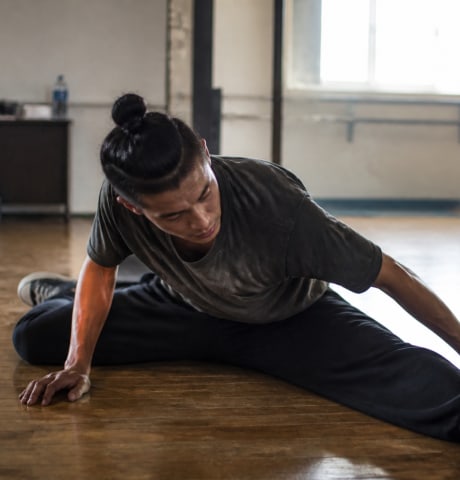
The halo is one of the most dynamic and visually impressive power moves in breaking. Unlike flat floor spins, your body moves along an inclined trajectory that resembles a halo. The key to this move lies not in brute force, but in precise timing when switching support points. You rotate on the upper side of your head and push off with your hands at the crucial moment to secure momentum for the next round. Without a solid foundation in handstands and clean headstand technique, the risk of injury is high. Therefore, prepare your body specifically and, if necessary, use structured training like stretching for breakdance to build the necessary flexibility in your shoulders and hips.

The physics of inclined rotation

With the halo, you use the centrifugal force of your legs to keep your body in the air. The transition from your head to your hands requires an explosive but controlled pushing motion from your shoulders. As soon as you leave your head, your hands catch your weight and initiate the next rotation before your pelvis can drop. Once you have internalized this weight shift, you lose the fear of tipping over and can fluidly connect the move to other power moves.

5 steps to a clean halo

  1. Building the stable triangle

    Get into the tripod headstand, where your hands and your head form a stable triangle on the floor. Lift your hips and spread your legs as wide as possible to create maximum stability and balance.

  2. Shift your center of gravity

    Tilt your pelvis slightly backwards so that your center of gravity shifts. Begin to shift your weight in a controlled manner from the center to the side of your head where you want to rotate later.

  3. Build momentum with your legs

    Build momentum with your dominant leg in a circular motion parallel to the floor. Use this impulse to pull your entire lower body into the rotation, while your hands are still touching the floor.

  4. Push off the floor explosively

    As soon as the rotation starts, push yourself off the floor powerfully with both hands. Your body lifts slightly, so you glide over the upper side area of your head without losing contact with the floor entirely.

  5. Catching yourself with your hands

    Catch the rotation by quickly placing your hands back down as soon as your head has completed the turn. Push yourself back up immediately to carry the momentum directly into the next round.

The most important do's and don'ts for halo

Like this

  • Rotate on the side of the forehead
  • Keep the legs wide apart and stretched
  • Push off actively and explosively from the shoulders

Not like this

  • Spin directly on the crown of your head
  • Bend your knees and lose your body tension
  • Let your entire weight rest passively on your neck

Your checklist for halo training

Before training

Preparation

While executing

During the process

After the session

Follow-up

Frequently Asked Questions

  1. For the Halo, you need a secure three-point headstand, a stable handstand, and the ability to perform a clean windmill. These fundamentals ensure the necessary body awareness and upper body strength.

Breaking courses near you

Find the right dance school and learn spectacular power moves under professional guidance.

View all matching courses

Find your crew for training

Are you looking for like-minded people to polish your power move technique and work on new combos together? On udansa, you will find motivated training partners and suitable courses in your area to take your breaking to the next level.

Find your crew for training