Breaking training5 minutes

Stretching for breakdance: flexibility for power moves

In a nutshell
  • Targeted stretching for breakdance creates the physical foundation for wide leg swings and reduces resistance during fast rotations.
  • Extreme hip flexibility enables a wide straddle position, which is essential for the stability and aesthetics of spins.
  • Open shoulders relieve the spine during all support figures and ensure a clean vertical axis over the hands.
  • Flexibility training should always be performed while warmed up and combine active stretching stimuli with holding exercises.

If you want to look weightless when performing windmills and flares, you do not need steel muscles, but supple joints. Only extreme flexibility frees your body from internal resistance and clears the way for fluid turns.

DefinitionFlexibility in power moves

Flexibility in power moves describes the ability of the joints and muscles to achieve extreme ranges of motion under dynamic load in a pain-free and controlled manner. It forms the mechanical foundation for all acrobatic rotations in breaking.

Why flexibility is the secret power behind spins

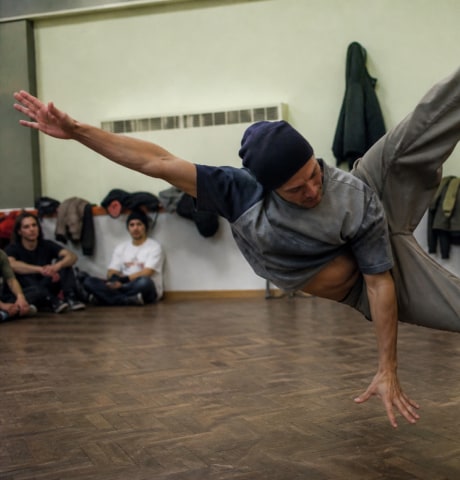
Anyone who wants to master spectacular spins on the floor will quickly reach their limits with pure muscle power alone. Targeted stretching for breakdance is the actual foundation for getting the body into the extreme positions that make dynamic spins possible in the first place. For example, if you want to master Power moves in breakdance: The athletic training for spins, your mobility in the pelvis directly determines how high your legs can swing. The wider you can spread your legs, the further out your center of gravity lies, which in turn gives you a more stable and faster spin.

For effective breakdance flexibility training, it is important to understand that we are not looking for static relaxation like in classic yoga here. We need active stretching ability, where the muscles remain controllable even at their maximum length. When stretching for breakdance, we focus primarily on two key areas: the hip joints for wide swings and the shoulder girdle for stable support positions on the floor. Without this physical base, your own body will block you before centrifugal force can even take effect.

Hip opening for maximum range in spins

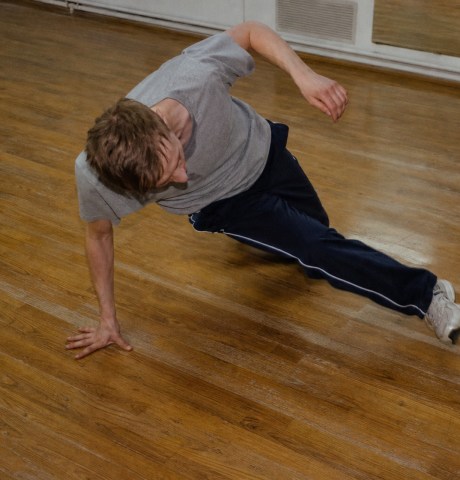
The hip is the epicenter of almost every dynamic spin on the floor. To pull off a clean spin, learning the splits in breakdance is an important milestone for many b-boys and b-girls. It is not about doing a perfect split on the floor, but about improving active flexibility while standing and supporting yourself. An excellent exercise for this is the deep lunge with your knee on the ground, where you gently let your pelvis sink forward and down to open the hip flexors.

In addition, the so-called frog pose is ideal for stretching the adductors on the inside of the thighs. To do this, sit on your knees, push your knees far apart, and lower your buttocks towards the floor. These exercises increase the radius of your legs enormously. If you have already mastered the basics in breaking for beginners, you will quickly notice how much easier the transitions become once your hips are working without blockages.

The right path to extreme flexibility

How to stretch correctly

  • Always stretch when well warmed up
  • Hold the stretch in a controlled manner and breathe calmly
  • Focus on hips and shoulders equally
  • Incorporate active stretching exercises into your warm-up

Avoid these mistakes

  • Going into deep stretches cold and abruptly
  • Holding your breath due to pain or exertion
  • Stretching only your legs and forgetting your shoulders
  • Static-passive stretching right before maximum physical exertion

Flexibility is the invisible engine in breaking. Strength gets you into the air, but it is only flexibility that lets you spin up there effortlessly and elegantly.

Breakdance coach, Berlin

Shoulder opening for stable support on the floor

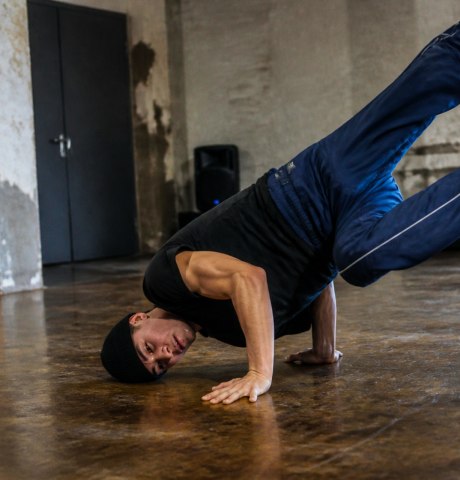
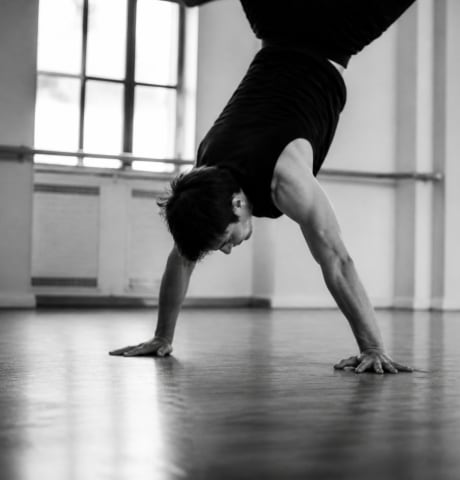
Next to the hips, the flexibility of your shoulders determines success or failure in almost all supporting elements. When you carry your weight on your hands, the shoulder must be able to open completely so that your arm forms a straight line with your upper body. If the shoulder area is tight, you have to compensate for this deficiency with a hollow back, which costs a lot of energy and leads to pain in the long run.

A highly effective exercise for shoulder opening is stretching against a wall or an elevated surface: Place your forearms on a shoulder-high ledge, take a step back, and let your chest sink down in a relaxed manner while your head remains between your arms. Gently stretching your wrists by leaning back in a quadruped position also prepares the tendons for high loads. Combine these sessions regularly with your training to keep your joints resilient and supple.

Two ways to maximum flexibility

Active

Actively controlling your muscles

Flexibility under muscle tension

Active stretching uses the power of antagonist muscles to lengthen the target muscles. This method perfectly prepares the nervous system for the dynamic loads during your moves.

Passive

Relax with gravity

Relaxation in a stretching position

Passive stretching uses props, your own body weight, or gravity to sink into a stretch. It is excellent for cooling down after training to lower your base tension.

Frequently Asked Questions

  1. Yes, stretching is absolutely necessary. Without the required flexibility in the hips and shoulders, the muscles block the flow of movement, which makes learning fluid rotations almost impossible.

Breaking courses near you

Find the right studio to get professional guidance for your flexibility and moves.

View all matching courses

Find your dance partner for training

On udansa you can find like-minded people for your training sessions in the studio and experienced coaches who will guide you on your way to your first power moves.

Find your dance partner for training