Dance technique4 minutes

The 7 most common mistakes when starting Contemporary Dance

In short
  • A typical contemporary dance beginner mistake is the desperate clinging to absolute control, which blocks the natural flow.
  • Many beginners unconsciously hold their breath during difficult passages instead of letting the movement flow through their breathing.
  • The gaze often remains insecurely fixed on the floor or the mirror, which disrupts balance and prevents the body from standing upright.
  • Gravity is often perceived as an opponent instead of a partner, which blocks a soft landing on the floor.

Getting started with contemporary dance gives you a completely new freedom of movement. If you know the typical stumbling blocks from the start, you will learn more relaxed and find your own flow much faster.

How we selected the typical mistakes

  • Practical relevance

    All analyzed errors are based on the real practical experiences of dance instructors in adult education.

  • Direct applicability

    The tips offer immediately actionable mental and physical support without complicated anatomy theory.

  • Independence

    This overview is created independently and does not contain any paid placements from studios or brands.

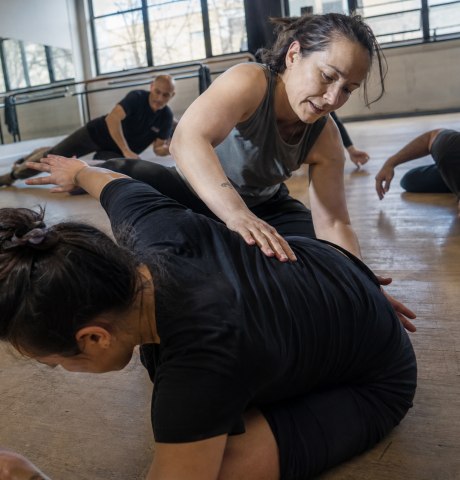
In contemporary dance, we use the floor as a partner to gain momentum and roll off gently.

The 7 typical mistakes and how you master them

  1. 01

    The urge to control in the upper body

    Mistake 1: Too much force and a lack of letting go

    • Body tension
    • release technique

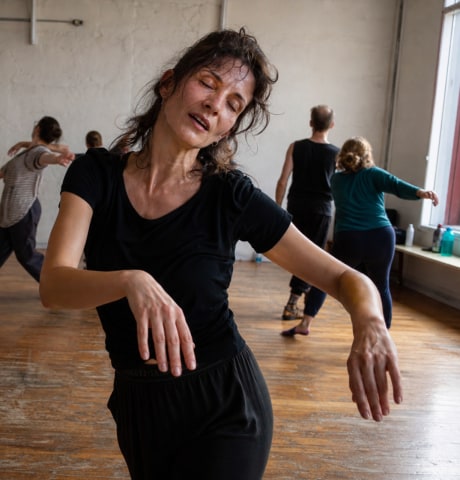
    Many beginners try to control every movement with maximum muscular force. This leads to a stiff posture and prevents the fluid gliding that is so characteristic of this dance style.

  2. 02

    Holding your breath

    Mistake 2: Pausing breath during difficult steps

    • Breathing
    • rhythm

    Holding your breath is a natural reaction to concentration, but it blocks your dynamics. Learn to use your exhalation purposefully to sink into the floor, and your inhalation for expansive upward movements.

  3. 03

    Rough landings and hard transitions

    Mistake 3: Fear of floor contact

    • Floorwork
    • weight transfer

    In contemporary, the floor is not an obstacle, but a partner. A common beginner mistake in dance technique is landing hard and without cushioning during steps and jumps, instead of rolling the weight softly.

  4. 04

    Visual fixation on the floor

    Mistake 4: The rigid gaze downwards

    • Focus
    • balance
    • spatial awareness

    If you only stare at your feet, you lose your balance and your connection to the room. Your gaze controls the movement of your entire body and should be consciously directed in the direction of the dance.

  5. 05

    The isolated movement of the limbs

    Error 5: Movement only from arms and legs

    • Center
    • isolation
    • movement impulse

    Beginners tend to move only their extremities, while the core remains rigid. However, every contemporary movement should originate in the center, the pelvis, or the spine.

  6. 06

    Avoiding off-balance moments

    Mistake 6: Fear of losing control

    • Off-balance
    • dynamics
    • gravity

    Contemporary dance thrives on playing with balance (fall and recovery). If you refuse to leave your secure axis for a moment, you will miss out on the most exciting and dynamic moments of the style.

  7. 07

    Copying without feeling

    Mistake 7: Perfectionism in imitation

    • Expression
    • individuality
    • copying

    Many beginners try to copy the teacher's movements exactly like a template. However, contemporary encourages you to adapt the instructions to your own anatomy and find your own expression.

How to release mental and physical blocks

Starting contemporary dance is a wonderful experience for many adults, but it also brings specific challenges. A particularly common typical mistake in modern dance is the unconscious transfer of rigid movement patterns from other sports. Anyone trying to control every pose perfectly blocks the natural flow. In contemporary, it is not about holding a rigid form, but about actively shaping the transition from one movement to the next. To improve this movement flow in contemporary and make it easier for beginners, it helps to shift the focus away from pure muscle power and towards gravity.

Another typical area of contemporary dance problems is breathing. Many beginners hold their breath during demanding passages, which leads to rapid fatigue and stiff movements. Breathing should initiate and support the movement, instead of being separate from it. If you want to learn how to optimally prepare your body for your first class, take a look at our guide Learning contemporary dance as an adult: Your easy start. With the right mental attitude and knowledge of these typical hurdles, your first dance class will quickly lose its intimidation factor.

Figures to guide your training

Focus on common beginner mistakes
7
centimeters of room for a smooth roll-off
100%
breaths per minute for optimal flow
12-16

Frequently Asked Questions

  1. The most common contemporary dance beginner mistake is the rigid holding onto muscle tension. Many beginners try to control every movement perfectly, which makes the dance look wooden and causes the natural flow to be lost.

Find contemporary dance near you

Discover suitable studios and courses for your start in contemporary dance.

View all suitable courses

Find the flow of movement together

Find the right studios and like-minded people on udansa to take your first steps in contemporary dance without any pressure.

Find the flow of movement together

Read more