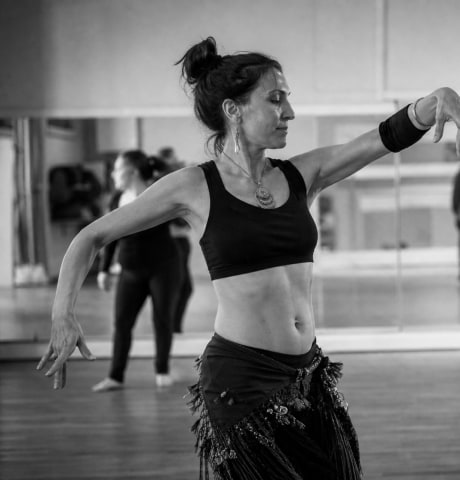
Dance history4 minutes

Learn the history of Raqs Sharqi: How to deepen your knowledge with udansa

By Bernhard De LucaUpdated

In short
  • A conscious engagement with the historical roots of Raqs Sharqi gives your movements depth and cultural authenticity.
  • Through targeted research into music history, you learn to embody traditional instruments and rhythms precisely in your dance.
  • Knowledge of the icons of the Golden Era sharpens your sense for stylistic nuances and prevents inappropriate cultural appropriation.
  • The theoretical background strengthens your artistic self-confidence and makes you appear noticeably more present on stage.

Behind every fluid movement of oriental dance lies a centuries-old culture. When you understand the historical roots, you are no longer just dancing steps, but telling a story.

What you need for your search

  • Curiosity about Arab culture and music history
  • Access to historical video archives or classic films
  • A notebook for your historical discoveries
  • Openness to the subtle nuances of the classical style

Why historical knowledge transforms your dance expression

Anyone who engages intensively with oriental dance quickly realizes that pure body technique is only half the truth. To truly grasp the soul of the dance, you have to learn the history of Raqs Sharqi. Every small hand movement, every lift of the hip, and every proud look on stage has its origin in a rich tradition that ranges from ritual celebrations to the Egyptian cinema stars of the 20th century. When you understand these roots, your entire dance expression changes: you no longer just imitate steps, but embody an entire culture.

Researching dance history for dancers is a creative process that goes far beyond simply memorizing dates. It is about interpreting the subtle nuances of the music and understanding the social role of dance in the Middle East. A deeper understanding also helps you to stylistically categorize the differences to more modern movements like the Oriental Dance Trends 2026. Only when you know where a movement comes from can you present it on stage with genuine conviction and dignity.

4 steps to historical understanding

  1. Studying the golden era visually

    Begin your journey into the past with films from the golden era of Egyptian cinema. Observe the elegant movements of legends like Samia Gamal or Tahia Carioca to visually internalize the subtle, soft style of this era.

  2. Analyzing the music structure

    Music is the heartbeat of Raqs Sharqi. Engage intensively with traditional instruments to understand which instrument controls which movement. For this, also use our guide on instruments of oriental music.

  3. Explore cultural contexts

    Read specialized literature on the social development of dance, from private circles of women to the grand stage. This helps you to better understand the emotional context of the songs and reflect it in your own expression.

  4. Anchoring knowledge in the body

    Bring your theoretical knowledge directly into the dance studio. Try to interpret a classical piece of music the way the pioneers of Raqs Sharqi would have, by setting conscious accents and avoiding exaggerated, modern show elements.

Cultural depth instead of superficial clichés

Researching correctly

  • Analyze original sources and historical films
  • Have the meaning of the lyrics translated
  • Learn the connection between musical instruments and movement

Common mistakes

  • Believing clichéd Hollywood portrayals without verification
  • Using modern pop choreographies as a historical reference
  • Ignoring the cultural origin of the music

Plan your historical journey of discovery

Before the research

Preparation

While learning

During

In the dance studio

Follow-up

Frequently Asked Questions

  1. Raqs Sharqi refers to the classical oriental stage dance that developed in Egypt in the early 20th century. It combines traditional Middle Eastern folk dances with Western influences, such as ballet and show dance, for the big stage.

Learn the history and dance with soul

On udansa you will find like-minded people who share your passion, as well as suitable courses and events to turn your theoretical knowledge directly into expressive movement.

Learn the history and dance with soul