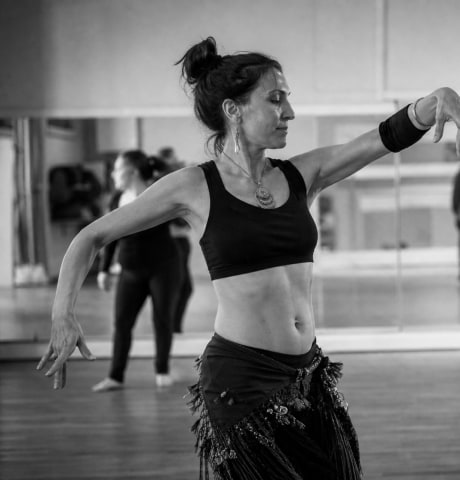
How the Cairo working class revolutionized dance
Shaabi emerged in the late 1960s and 1970s in the densely populated working-class neighborhoods of Cairo. As the voice of the working class, it was from the beginning a counter-design to the classical, often elitist Raqs Sharqi of the big stages. Its roots lie deep in traditional Baladi, but Shaabi brought a new, raw energy with it. It was no longer about portraying perfect elegance, but about the unfiltered expression of everyday life, protest, and the humor of ordinary people. Famous singers like Ahmed Adaweyah shaped the early history of Shaabi dance by incorporating everyday language and humorous, often double-entendre lyrics into the music.
Compared to other styles that you might find in a belly dance tradition, Shaabi forgoes artificial poses. The movement language is down-to-earth, cheeky, and humorous. Dancers use facial expressions and gestures to interpret the stories of the lyrics directly. It is a vibrant part of modern belly dance music that is constantly evolving without losing its roots in the asphalt of Cairo.