Oriental dance5 minutes

Tribal Fusion: The modern evolution of belly dance

By Bernhard De LucaUpdated

In a nutshell
  • The history of Tribal Fusion began in the late 1990s in the USA as a further development of the American Tribal Style (ATS).
  • The style breaks down traditional boundaries by fusing classical belly dance with Hip-Hop, Flamenco, Contemporary, and Indian temple dance.
  • Typical for this crossover style are extremely precise body isolations, snake-like movements, and a mystical, theatrical stage look.
  • In contrast to traditional folk dance, Tribal Fusion focuses on artistic freedom and individual expression.

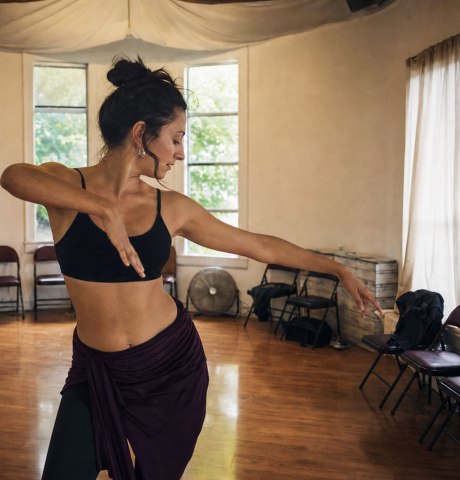
Tribal Fusion is much more than a modern variation of belly dance. This fascinating crossover style combines the earthy power of the Orient with contemporary dance forms to create an expressive, avant-garde art form.

DefinitionTribal Fusion

Tribal Fusion is a modern American crossover dance style. It combines the isolation techniques of oriental dance with elements from Hip-Hop, Contemporary, Flamenco, and Indian temple dances to create a theatrical performance.

The American roots of a global movement

The roots of Tribal Fusion lie in the late 1960s and 1970s in the USA. It all began with American Tribal Style (ATS), which was developed by pioneers like Jamila Salimpour and later Carolena Nericcio in San Francisco. While classical oriental dance is often conceived as a solo dance for the stage, ATS was based on group improvisation. The dancers used a system of non-verbal cues to dance together in sync and without a fixed choreography. This collective spirit left a lasting mark on the history of American Tribal Style and laid the foundation for an entirely new aesthetic that consciously turned away from the glittering cabaret costumes of classical Raqs Sharqi.

Out of this strong community, the desire for more individual freedom developed in the late 1990s and early 2000s. Trailblazers like Jill Parker, who is considered the original mother of Tribal Fusion, began to break up the strict improvisation rules of ATS. They mixed the earthy movements with elements from other dance styles and increasingly danced choreographed and solo again. If you want to dive deeper into the origins of the entire dance family, you will find valuable insights in The history of belly dance: From ritual to stage.

A melting pot of dance styles and aesthetics

The term fusion is the essence of this dance style. Tribal Fusion is characterized by an unparalleled openness to global influences. Performers combine the serpentine waves and sharp hip accents of belly dance with elements from contemporary dance, the Indian temple dance Odissi, Flamenco, and even urban styles. In this way, fluid movements reminiscent of the Limon technique in modern dance flow effortlessly into hip-hop-style popping and locking elements.

This stylistic diversity is also reflected in the music and appearance. Instead of dancing to traditional Arabic drums, artists today dance to electronic beats, dubstep, dark ambient, or folkloric crossover sounds. The costume design is a work of art in itself: heavy silver jewelry from Central Asia and North Africa meets Victorian lace fabrics, feathers, shells, and modern gothic elements. The dance thus becomes a theatrical performance that tells stories and brings dark, mystical, or avant-garde worlds to life on stage.

The path to your own fusion style

That is how it works

  • Train precise isolations
  • Allow your own creative influences
  • Respect the roots of ATS
  • Boldly mix music genres

Don't do this

  • Executing movements inaccurately
  • Clinging rigidly to classic rules
  • Ignoring the history of the style
  • Using only traditional instruments

Tribal Fusion is the freedom to bring your own personality and modern influences into an ancient movement language, without losing the connection to its roots.

Instructor for modern oriental dance, Berlin

Dance in 2026: Individuality and Expression

In 2026, Tribal Fusion presents itself as one of the most dynamic branches that modern oriental dance has to offer. The global community is closely connected, and the style is evolving rapidly through constant exchange at festivals and on social media platforms. Modern performers are increasingly using dance as a platform for personal expression that goes far beyond pure aesthetics. Topics such as female empowerment, body acceptance, and breaking down traditional gender roles in dance are often at the center of this.

Although dance today is highly individual and often presented as a solo art, the respectful connection to its own history remains. The deep connection to the community, which once began with American Tribal Style, still forms the emotional backbone of the scene. Anyone who wants to learn the basics of this fascinating style benefits enormously from clean movement technique. A solid foundation can be excellently developed by specifically focusing on learning belly dance isolations as a training priority.

Two sides of a movement: group versus solo

Community

The power of the group

The collective origin in ATS

American Tribal Style is based on strict group improvisation. The group acts as a community, follows a lead person, and uses a clear system of cues and key movements.

Individual

Solo expression

Creative freedom in fusion

Tribal Fusion focuses on the individual. Usually choreographed, this style allows the soloist to tell their own stories and freely incorporate personal influences from other dance styles.

Frequently Asked Questions

  1. American Tribal Style (ATS) is a pure group improvisation dance with a fixed set of rules. Tribal Fusion, on the other hand, developed from it as a mostly choreographed solo dance that allows for unlimited influences from other dance styles.

Belly dance and fusion courses near you

Find the right course on udansa and dive into the fascinating world of oriental crossover dance.

View all matching courses

Find your rhythm in Tribal Fusion

On udansa, you will find dance enthusiasts in your area who share your passion for creative crossover styles. Discover exciting workshops and like-minded people to explore new worlds of movement together.

Find your rhythm in Tribal Fusion