Dance history4 minutes

Belly dance legends: Icons of the Golden Era and their style

By Bernhard De LucaUpdated

In a nutshell
  • The golden era of Egyptian cinema between 1930 and 1960 decisively shaped modern oriental dance.
  • Dancers like Samia Gamal and Tahiya Karioka became global style icons through their film appearances.
  • Samia Gamal revolutionized dance by integrating ballet elements and dancing with a veil.
  • Tahiya Karioka remained famous for her classic, minimalist style and her incomparable hip work.

The era of classic Egyptian cinema produced dancers whose elegance and expressiveness remain unmatched to this day. Discover the fascinating icons who shaped oriental dance forever.

Our criteria for selecting the legends

  • Historical influence

    All featured artists have significantly shaped oriental dance in the 20th century.

  • Presence in film

    The dancers gained worldwide fame through lead roles in Egyptian cinema.

  • Style definition

    Every icon is characterized by a very unique, groundbreaking technique or style.

  • Independent selection

    This list was created independently, without financial contributions from associations or schools.

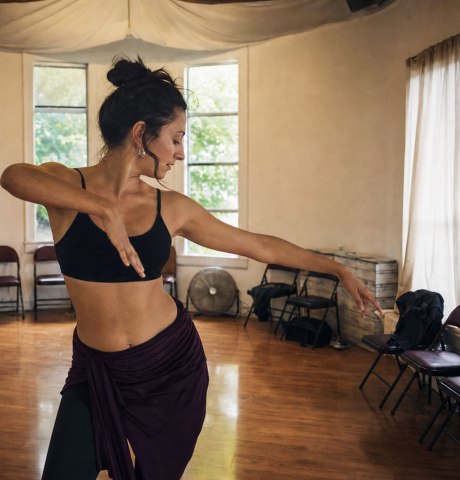
Expressive gestures and a proud posture: The pioneers of the golden era made the dance world-famous.

The most influential icons of Raqs Sharqi

  1. 01

    Samia Gamal

    Cairo, 1940s and 1950s, global star

    • Ballet influence
    • veil dance
    • elegance

    Samia Gamal is considered the absolute queen of the golden age. She introduced ballet elements into oriental dance, was one of the first to systematically use the veil, and danced with an incomparable, floating lightness.

  2. 02

    Tahiya Karioka

    Cairo, 1930s to 1950s, cinema pioneer

    • Precision
    • minimalism
    • musicality

    Her style was the pure essence of classical Raqs Sharqi. Tahiya Karioka was famous for her minimalist, yet incredibly precise hip movements and her strong charisma, which did not need big jumps to captivate the audience.

  3. 03

    Naima Akef

    Cairo, 1950s, all-round talent

    • Acrobatics
    • dynamics
    • speed

    Naima Akef combined the elegance of oriental dance with breathtaking acrobatics and rapid spins. As a trained circus performer, she brought a dynamic and energy to the screen that left audiences in awe.

  4. 04

    Badia Masabni

    Cairo, 1920s to 1940s, impresario

    • Pioneer
    • mentor
    • stage show

    As the founder of the legendary "Casino Opera" in Cairo, udansa created the platform that allowed the golden era to emerge in the first place. She trained almost all the great icons and modernized the stage presence of dance.

  5. 05

    Suhair Zaki

    Cairo, 1960s and 1970s, musical icon

    • Softness
    • Baladi roots
    • interpretation

    Suhair Zaki was the first dancer to dance to the songs of the legendary singer Umm Kulthum. Her style was extremely soft, harmonious, and deeply rooted in traditional Baladi, which earned her the reputation of the "singer with the body."

How Egyptian cinema revolutionized oriental dance

The golden age of Egyptian cinema, which spanned from the 1930s to the 1960s, was the birthplace of modern Raqs Sharqi. During this era, traditional Egyptian folk dances merged with Western influences like ballet and ballroom dance to create a glamorous stage art. The films of this era made oriental dance popular worldwide and turned their lead actresses into absolute global stars. Each of these icons shaped a very unique, unmistakable style that still defines the aesthetics and techniques of belly dance today.

Anyone learning oriental dance today cannot avoid the foundations laid by these pioneers. The soft, flowing movements and the dramatic stage presence that we admire in shows today were perfected for the camera back then. To take your own technique to the next level, it is worth taking a look at the roots: Why not take the belly dance level test to see where you currently stand. Engaging with the legends helps you develop a deeper understanding of the subtle differences between the styles and add more depth to your own expression.

The golden era in numbers

decades defined the golden era
3
Icons made dance world-famous
5+
films showed classic Raqs Sharqi
100+

Frequently Asked Questions

  1. The golden age of belly dance refers to the era between the 1930s and 1960s in Cairo. During this time, Egyptian cinema experienced a heyday that made Raqs Sharqi known worldwide through glamorous film productions.

Find your rhythm with udansa

On udansa, you will find like-minded people who share your passion for oriental dance. Discover top-class courses, exciting workshops, and the perfect dance partner for your next dance adventure.

Find your rhythm with udansa