Dance Partnership6 minutes

Dance Partners for Seniors in Augsburg: What Makes a Good Match

By Bernhard De LucaUpdated

In brief
  • When looking for a dance partner among seniors in Augsburg, shared pace, suitable breaks, accessible meeting places and similar expectations matter.
  • Age alone is not a reliable indicator of dance experience, stamina or preferred music.
  • A good dance partnership gives both people room to simplify movements and take breaks without having to justify them.
  • An easily accessible dance venue makes regular meetups easier when the journey there and back works for both people.

You may want to dance again after a long break, or you may have been on the dance floor for decades. An age entry leaves both possibilities open, while the idea of a great dance together can be very concrete.

DefinitionDance tempo

Dance tempo describes the speed at which you perform your dance movements to music. How strenuous a dance feels also depends on step size, turns, and range of motion.

What you want from dancing today matters more than your year of birth

If you're looking for a dance partner later in life in Augsburg, an age limit can make your options easier to navigate. But it doesn't describe what happens on the dance floor. One person may want to dance familiar sequences at a brisk pace, while another may prefer taking small steps and savoring the music. They can be the same age and equally experienced.

So your preferred pace involves more than “slow” or “fast.” You can dance to a calm piece of music with big, flowing steps. Depending on the dance, you can also accompany a livelier recording with compact movements. Turns, changes of direction, and the length of a sequence also affect how demanding dancing together feels. The guide to Foxtrot tempo in social dancing shows this difference through a specific dance.

The right person is someone whose preferred movements suit yours, not automatically someone born in the same year. An age range can remain a personal preference. It just shouldn't take the place of describing whether you prefer to dance continuously, pause now and then, or stick to familiar sequences without many turns. That way, “age-appropriate” becomes an idea your partner can actually understand.
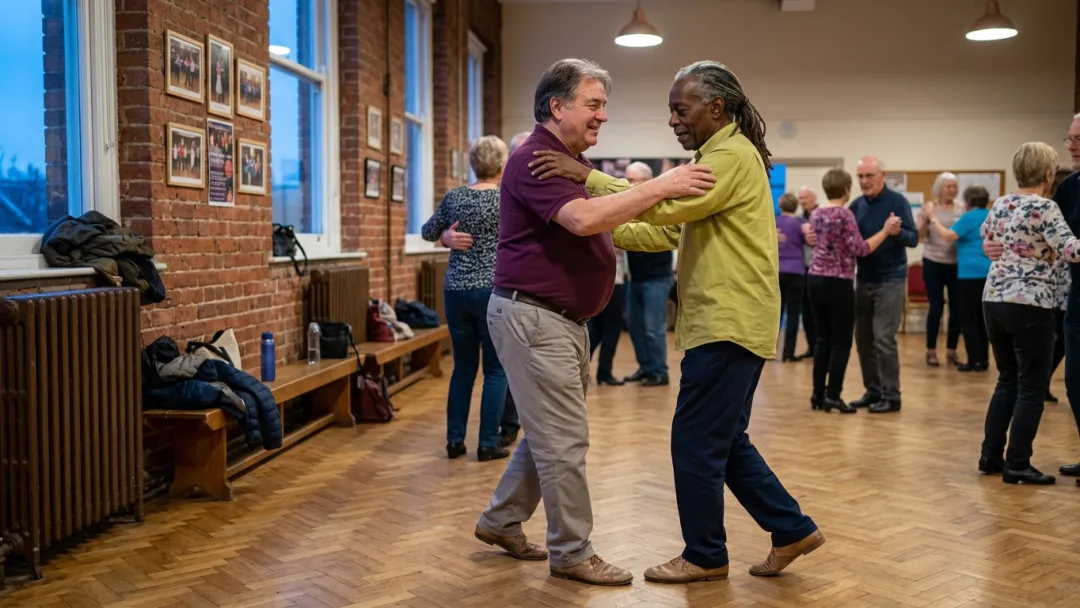
Well-fitting shoes remain a personal choice, even if you prefer the same music and dance figures.

Resilience shows in how you handle interruptions

“I enjoy dancing” doesn’t say how long someone wants to dance at a stretch. Years of experience also don’t mean every dance date will go the same way. Energy levels, attention and personal preferences can change. None of this is grounds for a health assessment or a judgment about someone’s ability.

What matters for your partnership is how you respond. If someone skips a move, shortens a sequence or stays seated, they shouldn’t have to prove that a break is necessary. Conversely, someone may enjoy an energetic round and then take a longer break. A break is not a judgment on how much you enjoy dancing together.

Misunderstandings arise when someone imposes restrictions without being asked. “That’s too fast for someone your age” takes the decision away from your partner. It’s more helpful to suggest a specific change: small steps instead of big movements, a simple sequence instead of repeated turns. These variations are about dancing together, not about someone’s supposed condition.

A strong connection also makes room for different needs for breaks. While one person sits, the other can keep dancing, if you’ve agreed on it together. This needn’t mean rejection or competition. What matters is whether you both feel comfortable with this arrangement and no one is pressured to return to the dance floor.

How to recognize the right expectations

This is a yes

  • Be specific about the desired step size and turns
  • Accept a pause as a decision in its own right
  • Take both people's journeys there and back into account
  • Distinguish between practicing together and social dancing

Not like this

  • Inferring the desired pace from someone’s year of birth
  • Pressuring someone to keep dancing after they ask for a break
  • Considering only the distance from your own home
  • Automatically treating every dance meetup as a training session

A break doesn't need a reason, and a dance partnership still has to work when fewer moves are possible today.

udansa editorial team for partner dancing

Getting there and commitment go hand in hand

A meeting place in Augsburg isn't a good fit just because it lies between your homes on the map. One person may enjoy a direct trip, while transfers or a longer walk may be a drawback for the other. The journey home is part of the plan too: if you like to head home early, you shouldn't have to depend on the other person's willingness to drive.

Getting there easily isn't just a concern for seniors or a blanket limitation. In practical terms, it determines whether dancing together can become a lasting part of your everyday lives. A place that's a little farther away but easy to get to can be more pleasant than a closer one with a complicated journey. You don't need to exchange exact home addresses for this, a general starting area is enough for now.

Shared expectations are just as practical. Do you want to dance occasionally, regularly revisit familiar dances, or consciously learn new things? How much correcting feels right to you? Someone looking for a social experience may find constant suggestions for improvement disruptive, while someone who wants to practice may miss exactly that kind of feedback.

Commitment means treating agreed-upon meetups with care, not being available without limits. A close personal relationship isn't an automatic result of having a regular dance partner either. The explanation of partner dancing without a romantic relationship helps separate these expectations. Dancing together can be a clearly defined yet warm connection.

Two reasonable wishes for dancing together

Familiarity

Enjoy familiar dances

Recognize the music and stay in rhythm together

You want to hear familiar music and repeat well-known sequences. A suitable dance partner enjoys this too and doesn’t see repetition as standing still. You can add variety through your choice of music and small changes.

Curiosity

Learning something new together

New moves with room to repeat them

You’d like to learn other dances or moves. A good dance partner shares this interest and understands that things may be a little awkward at first. You can tell what feels right for both of you by how much trying things out you enjoy.

Frequently Asked Questions

  1. Your dance partner does not have to be over 60 for you to be a good match. A similar age can bring shared experiences, but it does not guarantee a compatible rhythm of movement. What matters more is that you feel comfortable with the music, physical closeness, and how you handle interruptions.

Partner dance classes in Augsburg

If your expectations match, you can find current classes in Augsburg for learning together using the course filter.

Find your shared pace

On udansa, you can find dance connections in Augsburg to share your ideas about relaxed dances, new moves, and regular meetups.

Find your shared pace