Time together5 minutes

A dance class for couples in Düsseldorf that’s right for you

By Mary De LucaUpdated

In short
  • A dance course for couples in Düsseldorf is a good fit when both partners are comfortable with the music, learning format, and level of commitment.
  • Signing up together does not automatically mean that you will dance exclusively with each other during class.
  • Different levels of motivation can work, as long as neither of you pressures the other to make progress, practise, or feel enthusiastic.
  • A short-term introduction can give you time together as a couple without requiring you to commit to a long-term hobby right away.

A free evening can feel very different to two people: You want to learn something, while the person you're with wants to finally get away from everyday life. On the dance floor, these wishes meet head-on.

DefinitionPartner rotation

Partner rotation means temporarily dancing with other participants during class. It can be part of the learning approach, even if you sign up together with your regular partner.

The right class starts with a goal you share

If you’re looking for a dance class for couples in Düsseldorf, booking one often reflects a wish for some leisure time: a regular date together, music instead of screens, or a skill you can develop together. These wishes don’t automatically lead to the same kind of class. A class can be pleasantly sociable and still offer too little progress for you. Focused instruction can be a good fit in terms of content, yet feel like another obligation to your partner.

Three expectations can help you choose: What do you want your time together to bring, how much learning should it involve, and what level of commitment are you both willing to make? Finding common ground doesn’t have to mean you’re both looking for the same thing. You might enjoy new challenges, while your partner mainly values spending the evening together.

Music matters, too. Familiar sounds can invite you to join in, while music you consistently dislike can make the class feel like a chore. Lessons also involve listening, repeating, and occasionally waiting. Time together in class is therefore different from an evening whose schedule you decide entirely for yourselves.
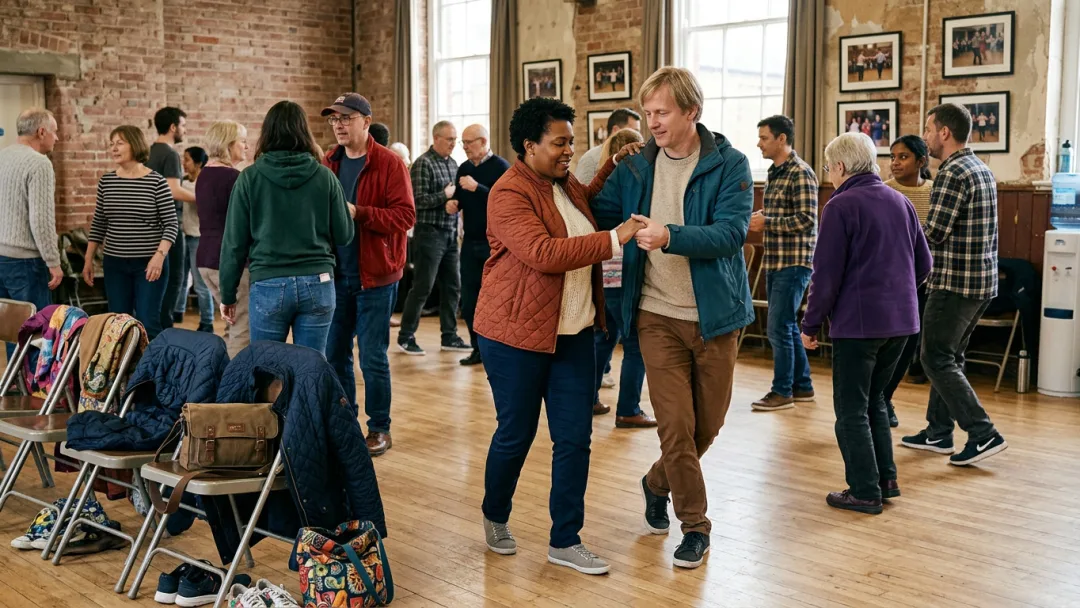
A break is part of your time together too, and doesn't have to become the next practice session.

Couple time and learning together are not the same

In partner dancing, you work together, but you are still two learners. One person may understand an explanation right away, while the other needs more repetitions. That says nothing about who is making more effort or who is less interested. The faster learner can easily take it upon themselves to correct their partner without being asked. Then shared free time turns into a test conducted by the person you actually wanted to spend a lovely evening with.

The teacher is responsible for explanations and corrections. Between the two of you, specific, non-judgmental feedback helps: “I need one more run-through” leaves room to learn. “You never listen” turns a lesson into a relationship conflict. Not every unsuccessful attempt needs to be discussed right away.

Changing partners also changes how you experience couple time. Practising with others can make your own habits more visible and briefly remove the responsibility you feel toward each other. If you explicitly want to spend the entire dance time together, the only important question to ask before booking is whether the class has fixed couples or partner rotation. Either can work, as long as it matches your expectations.

This distinction is also helpful when one of you can’t make it. What a class without your regular dance partner can offer depends on the lesson format.

How to Recognize a Decision You’ve Made Together

Yes, like this

  • Each of you gives your own reason for taking part
  • Agree on a limited goal to work towards together
  • Make it clear that any extra practice time is entirely optional
  • Frame changing partners as part of the lesson format

Not like this

  • Demand registration as proof of love
  • Treat a trial lesson as a long-term commitment
  • Assign additional tasks at home without asking
  • Equate booking together with exclusive couple time

A shared hobby requires two people to say yes willingly, but not two identical reasons for taking part.

udansa editorial team

Commitment can work even when you’re not equally ambitious

You can be more curious than your partner at first. A cautious “I’d be happy to try it with you” is genuine agreement, as long as it doesn’t secretly create the expectation that the same enthusiasm will soon follow. The difference only becomes a problem if one person is constantly being persuaded or the other is expected to completely hold back their desire to learn.

A limited commitment makes this difference manageable: you agree to the scope you booked, not automatically to every continuation. A single session gives you an impression of the class; a series of consecutive classes offers recurring activities and time to get used to them. The guide to a dance course without a subscription helps you distinguish a single booking from ongoing participation.

Commitment also applies to what happens outside the course. Extra practice, dance evenings or further bookings each require separate agreement. If you’d like to practice more often, you’ll find ideas for practicing between two classes, without turning it into a shared obligation.

Ultimately, for your decision in Düsseldorf, what matters is whether you both want to attend again. Taking a break or stopping after the agreed scope is not a judgment on your relationship.

Two good reasons for the same course

Couple time

An event that brings you together

You want to do something together

What matters to you may be getting out of your everyday routine and having something to talk about afterward. Repeats can feel familiar. For you, a great evening doesn't need a new move every time.

Love of learning

Develop a skill together

You want to feel more confident dancing

It makes a difference to you when a sequence starts to come together and you get better at recognizing the music. Lessons can be focused. Your desire to learn can coexist with relaxed time as a couple, without turning your ambition into an obligation for both of you.

Frequently asked questions

  1. No, you don't need to have the same dance experience, but you do need activities that both of you can follow. If one person has significantly more experience, it can easily create a private teacher-student dynamic. Classes where the basics are explained clearly take that pressure off you: the instructor provides feedback, not the more experienced partner.

Partner dance classes in Düsseldorf

On udansa, you’ll find classes and events in Düsseldorf for your time dancing together.

Turn one class into your time

On udansa, find partner dance classes in Düsseldorf for something you can both get behind. Choose a starting point that fits your shared expectations.

Turn one class into your time