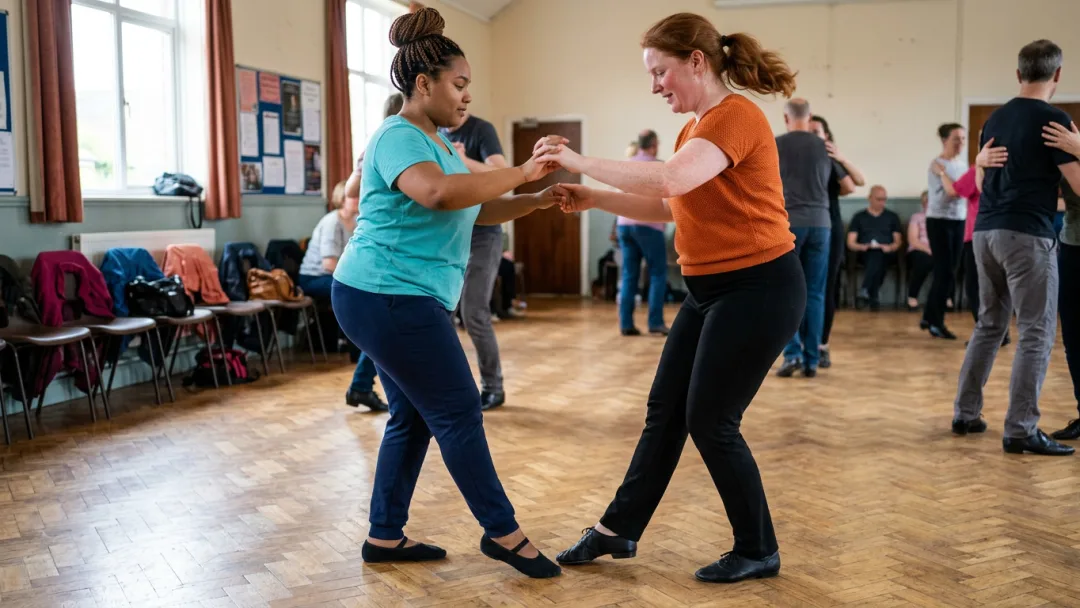
A shared level is made up of several skills
When you choose classes with your dance partner in Karlsruhe, the number of figures you know says little about your shared starting point. Maybe you remember turns but lose the beat. Your partner may not know any sequences yet, but can observe movements well and shift their weight with confidence. These differences do not add up to a simple matter of one person being better or worse.
For classes together, what matters is whether you can both manage the fundamentals being taught: finding the musical starting point, shifting your weight clearly, maintaining your balance and sensing movement cues. If any of these are missing, a longer sequence of figures can quickly become memorization with help from each other. The more experienced person may then end up verbally guiding every step, while the other barely dances independently.
The shared foundation should be within reach for both of you, but the learning task does not have to be identical. When doing the same side step, one person can start by organizing their feet. The other can work on keeping the step from getting too big and moving their upper body calmly along with it. So a beginner-level class does not necessarily mean standing still for you.