Project Casting6 minutes

Dancers Wanted: Your Project Casting Call for Karlsruhe

By Mary De LucaUpdated

In short
  • Your project call for Karlsruhe describes the project, the roles you’re looking to fill, and the dance experience required.
  • The rehearsal schedule covers group sessions, independent preparation, and possible performance times, including how committed participants are expected to be.
  • You clearly state whether the work is paid, expenses are reimbursed, or participation is unpaid, and keep these details separate.
  • You share the same call through udansa and your personal contacts, and explain how to respond easily.

An exciting idea is of little use if no one can estimate the effort involved. Contributors need to be able to see what task they would take on and how much time they should set aside before they agree to help you.

What you need to include in your request

  • A project goal with a clear outcome
  • A list of the tasks that still need to be filled
  • A realistic rehearsal period and time commitment
  • A budget or a decision to work unpaid
  • A way to get in touch and share feedback

A project role needs a clear framework

If you're looking for contributors for a dance project in Karlsruhe, you're offering a collaboration for a limited time. So your post should make clear whether the project is intended to result in a stage performance, a recording, or an internal presentation. A dance film, for example, calls for repeatable movement sequences across multiple takes. The page about dance films and the effect of the camera explains this difference in more detail, without requiring you to have a finished choreography already.

Describe experience in terms of tasks: remembering short movement sequences, starting on counts, repeating material independently, or working with a partner. “Advanced” alone doesn't say much. Roles also become clearer when you distinguish between solo work, ensemble work, and leading or following. A leading role is not an automatic requirement for a particular gender.

Every requirement should relate to an actual task. Acrobatics, floorwork, or close physical contact are not incidental extras. State these requirements explicitly instead of hiding them under “openness.” This helps interested people assess their abilities and boundaries.

Also keep project leadership separate from participation: someone who dances does not automatically take on organizing, sourcing costumes, or public relations. If you want to assign additional tasks, list them separately. The principle from the guide to clearly describing an offer on udansa can be applied here too: first explain the specific task, then invite people to respond.

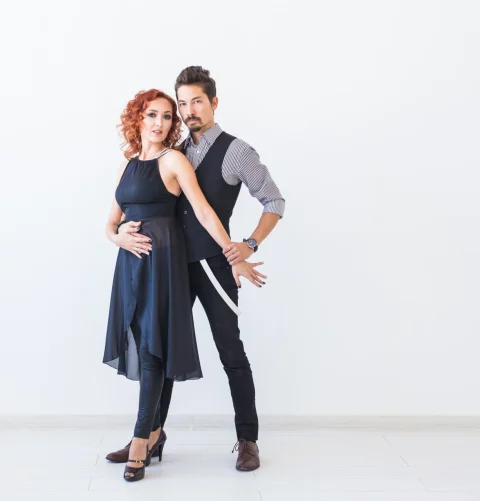
A beautiful couple dancing Bachata against a white background
A dated version prevents forwarded requests from spreading outdated terms.

Create a publishable request in seven steps

  1. Describe the project in one sentence

    Write what you want to develop in Karlsruhe, what outcome you’re aiming for, and within what timeframe. Mark a performance venue that has not yet been decided as open; a planned performance must not sound like a confirmed booking.

  2. Break down the roles you’re looking to fill

    Specify the performers you need and describe each role separately: for example, ensemble work, a solo, or a guided partner sequence. Include any special movement requirements and physical contact. Someone should be able to tell what they’re signing up for without having to take on every role.

  3. Describe experience in terms of skills

    Replace broad course levels with observable skills, for example, “remember short sequences to the counts” or “lead weight shifts confidently with a partner.” Distinguish essential skills from those that are nice to have. Explicitly mention when you teach the basics and can therefore include less experienced participants.

  4. State the total time commitment

    List the rehearsal frequency, duration, timeframe, and any additional preparation. Distinguish fixed dates from time slots that are still negotiable. As a completely fictional example, “six rehearsals of two hours each plus independent practice” would be clearer than “rehearse occasionally”; use only your actual plan in your post.

  5. State payment and costs separately

    For projects with a fee, specify the amount, basis of calculation, services covered, and payment date. If the work is unpaid, state this explicitly. Travel costs, costumes, and other expenses should be listed separately; possible funding must not be presented as compensation that has already been promised.

  6. Make it possible to give a brief response

    Ask for the desired role, relevant experience, and availability. A brief example of previous dance experience is enough to start; don't ask for extensive unpaid work. Include your contact details and a response timeframe of your choosing, without turning it into an audition appointment at this stage.

  7. Share the same listing strategically

    Publish the finished version through udansa and share it with your personal dance contacts. When forwarding it, ask them to include the full text, including compensation and time commitment. Later, mark roles as filled or close the listing to avoid unnecessary applications.

How to make your information reliable

Do it this way

  • List required experience and desired skills separately
  • Keep confirmed arrangements separate from plans still to be finalized
  • State the fee and reimbursement of expenses separately
  • Ask only for the information needed for the initial contact

Not like this

  • Present every desired skill as a mandatory requirement
  • Make a possible performance sound like it's already booked
  • Present reimbursement of expenses as payment for the dance work
  • Require copies of IDs or private health data as part of the application

Your checklist until you're matched

Before publication

Draft

When sharing

Publication

After the feedback

Completion

Frequently Asked Questions

  1. Use a template with fill-in details rather than a general invitation. “For my dance project in Karlsruhe, I’m looking for [roles] to achieve [outcome]. You’ll need [skills]. We’re planning [number of rehearsals] during [time period]. Compensation: [fee or unpaid]; expenses: [arrangement]. Get in touch with your role, experience, and availability via [contact]. Still to be decided: [points].”

Dance classes in Karlsruhe to help you prepare

If you still need to work on your technique for the project role you want, you can find classes in Karlsruhe using the course filter.

Your project needs the right people

On udansa, you can make your project call visible in Karlsruhe and discuss specific ways to get involved with interested people. Describe the roles you still need to fill so the responses you receive are a good fit for your project.

Your project needs the right people