Graduating Class Planning5 minutes

Münster Prom: Plan the transition to dancing

By Bernhard De LucaUpdated

In short
  • For your graduation ball in Münster, you and your class decide on the opening, open dancing and the people in charge.
  • A shared handover signal connects the end of the official program with the announcement, the start of the music and the open dance floor.
  • Room setup, the end of the event and rules for underage guests should all be included in the same schedule beforehand.
  • A short run-through without an audience shows whether the host, music and opening of the room for dancing all work smoothly together.

After the speeches, some wait for an opening dance, while others are already on their feet with their friends. If no one guides the transition, the graduating class disperses at exactly the moment that could bring everyone together.

What you need for planning

  • The closing program with its final official item
  • A room layout showing the seating, dance floor and walking routes
  • An overview of guests' ages, without a public list of names
  • Contacts for the host, music and room access
  • The agreed times for using the venue

A handoff cue replaces a pause where everyone is left guessing

For a prom in Münster, getting the dancing started is first a matter of program flow: after the official ceremony, guests need to understand that they should no longer stay in their seats. A performance alone does not provide that guidance. If another speech follows, the dance floor still feels like a stage.

So make a clear distinction between a performance and an invitation to join in. An announced class dance can mark the end of the program. Afterward, the host explicitly says that the floor is open to everyone. The next song should be ready to play without a long search and have a clearly audible beat. You don't need another choreography or a fixed partner for every guest to get everyone started.

If you're planning a rehearsed number, preparing it is part of the guide to organizing prom dance rehearsals. Voluntary partner matching within the graduating class is a separate task, too. For the handoff, all that matters is who performs, when the number ends, and who then opens the floor. That way, the end of the program remains clear, even if speeches run long or a performance is canceled.
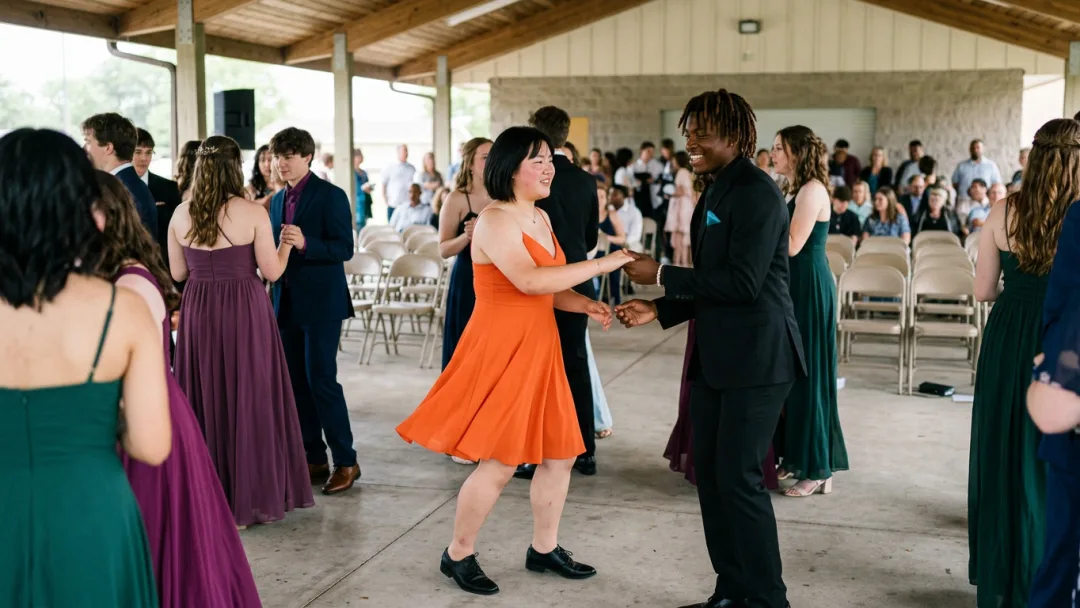
A seating area near the dance floor keeps guests who don't want to dance close to the group.

Seven steps to start dancing together

  1. Mark the transition in the schedule

    Schedule the start of dancing after the final official program item, not between two speeches. Note a clear trigger such as “closing remarks finished,” so a delay does not automatically trigger the music at the wrong time.

  2. Set the cohort's opening format

    Let the cohort choose between opening the floor right away and a short, voluntary opening. Record the decision in writing and name the people involved, so no one has to perform unexpectedly or invite someone to dance on the night.

  3. Agree on the details with the venue

    Agree with the venue on who is responsible for room setup, when the music must end, and the rules for minors. Public dance events are generally subject to the age and supervision rules of the Youth Protection Act; an invitation does not automatically make a large celebration a private event.

  4. Mark the open space on the floor plan

    Indicate which tables or chairs will be moved and where they will go. Assign a dedicated team for this, keep exits and passageways clear, and specify that the music only starts after the room has been fully cleared.

  5. Writing an announcement and handing over the music

    Draft a short invitation, such as: “The dance floor is open now, join us if you like.” Pair it with the prepared opening song and give someone responsibility for sending the start signal to the music system.

  6. Run through the transition once

    Run through the closing remarks, room clearance, announcement, and music start without an audience. Also test the backup plan without an opening number. The sequence works if everyone involved recognizes their cue and nobody waits for a decision that hasn’t been assigned.

  7. Handing over the evening dance segment

    The host waits until the dance floor is confirmed clear, then gives the agreed signal. After that, the person in charge of the music takes over, while others collect requests. Announce the last dance in good time so the event doesn't come to an unexpected end.

Clear handoffs instead of spontaneous extra tasks

Yes, like this

  • Assign the final starting signal to one person
  • Pass music requests on together to the person in charge of music
  • Remove dropped program items from the schedule
  • Keep guests off the floor during the changeover

Not like this

  • Having several people decide when the music starts at the same time
  • Discussing things right at the music controls after every song
  • Waiting all evening for a song that has already been canceled
  • Carrying chairs between guests who are already dancing

Check off these points one by one

After the age-group decision

Decision

Before doors open

Setup

After the Last Dance

Closing

Frequently Asked Questions

  1. No, a prom does not have to start with a waltz. You can open the dance floor straight away with a song you have chosen together. A formal opening dance is an optional decision for the graduating class, not a requirement for guests to dance afterward on their own, in pairs or in groups.

Keep dancing after graduation

On udansa, you can find people in Münster to go dancing with even after your graduation ball. Describe whether you'd like to attend events together or find a regular dance partner.

Keep dancing after graduation