Getting Started with Dance5 minutes

Beginner Mistakes in Dance Classes in Frankfurt: How to Avoid Common Pitfalls

By Mary De LucaUpdated

In short
  • In Frankfurt, you can start without any prior experience if you choose a beginner course that is explicitly suitable for beginners.
  • You don't need a regular dance partner for every course format, so check the participation requirements before booking.
  • Compare your expectations, pace and feedback with the teaching approach, rather than interpreting individual mistakes as a lack of talent.

Getting started rarely fails because of a complicated step. More often, assumptions about talent, a dance partner, or the right outfit keep people from giving it a try, even though these questions can usually be answered before signing up.

DefinitionMistake-Friendly Learning

Mistake-friendly learning means that new movements are allowed to emerge through experimentation, correction, and repetition. A misstep is information, not a judgment of your talent.

Beginners often struggle with expectations, not talent

When you look for a course for the first time, it is easy to imagine that everyone else already knows how to dance. This can lead you to think you need a sense of rhythm, good stamina, or a regular dance partner. For a course explicitly marked as a beginner course, these requirements are usually not necessary. In Frankfurt, it’s worth reading the course description carefully and asking if anything is unclear, rather than ruling yourself out too quickly.

The idea that you need to have mastered a whole choreography by your first class also creates unnecessary pressure. Lessons often begin with small building blocks. If a sequence feels awkward at first, that says little about how well you’ll be able to dance later. Instead, pay attention to whether you understand what you’re practicing and whether you get the chance to try it again. If a course description doesn’t make the level clear, take a look at the beginner course options in Frankfurt. That way, you can clarify what to expect from the course before you sign up.

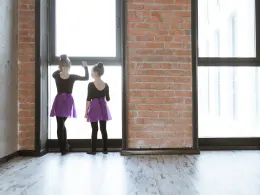
Young dancers dancing in the studio
A hesitant basic step often shows only where a movement should be broken down into smaller parts.

A good start calls for clear questions instead of self-comparison

A common beginner mistake is to constantly compare yourself during class with the people moving most fluidly in the room. Other participants may have experience from a previous course. So focus your attention on one specific thing: the rhythm, the direction or the transfer of weight. When you notice these one at a time, the vague feeling of “doing everything wrong” becomes a question you can answer.

It also makes sense to ask about anything unclear in advance. Ask whether you can attend on your own, what clothes allow you to move freely and whether you can try a class. These questions are not too much to ask, they help both sides work out whether the class is a good fit. When choosing a school, the criteria for finding a dance school in Frankfurt can also help guide you. During class, ask for a quick recap if you lose track. A teacher can often help more effectively if you say where you stopped following along, rather than broadly labeling yourself untalented.

Check common assumptions when starting a course

Yes, this way

  • Choose a course specifically designed for beginners
  • Check beforehand whether you can attend alone
  • Practice one move at a time and ask questions

Not like this

  • Book a course that requires prior experience and expect to catch up
  • Assume a regular dance partner is always required
  • Expect to get every step right immediately and at full speed

If a step doesn’t work, don’t immediately change the whole dance: first clarify which movement you’re practicing.

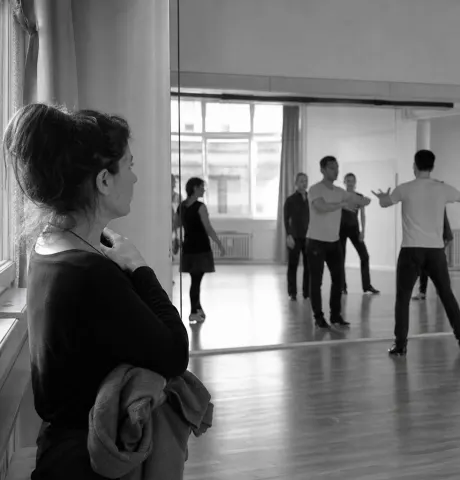
Dance instructor for partner dancing

Progress shows in clear next steps

After one hour, it’s normal not to remember every movement. That doesn’t automatically mean the course isn’t right for you. What matters more is whether you can name a next step to practice: for example, first listen to the rhythm, then place your feet, and after that connect the movement with a partner. If every class remains completely unclear or you’re constantly afraid to ask questions, talk to the teacher about the pace and your expectations.

Switching to a different course can also make sense, and it doesn’t mean you’ve failed. Consider whether you’d prefer more repetition, a different group size, or a clearer introduction. To compare current options in Frankfurt, you can use the course filter. It’s important that the course description matches your experience level and that you know how questions are handled. If you start with a small, achievable expectation, you can better assess after each class what feels more familiar and what still needs practice. Progress doesn’t have to look spectacular: sometimes you simply recognize the beat sooner or remember the beginning of a sequence.

Two ways to reinforce new steps

On your own

Practice again at your own pace

Helpful when a movement still feels unfamiliar

At home, you can slowly repeat a short sequence of movements without music and notice how you shift your weight. This gives you time without having to compare yourself to others.

Group

Try it with others

Great if you still need practice switching partners

In class, you'll see how the same sequence feels with music and different partners. Questions and watching others can give you pointers you might miss when practicing alone.

Frequently Asked Questions

  1. No, you don't need to be able to keep the beat confidently yet. A beginner's course gradually brings music and movement together. It helps to first notice the basic rhythm and practise a simple movement, rather than trying to control tempo, posture, and following all at once.

Dance Classes in Frankfurt

Compare current classes in Frankfurt and choose a starting point that suits your level.

Your first step into dance begins with Curiosity

On udansa, you can compare current dance classes in Frankfurt and look for an option that suits your starting level.

Your first step into dance begins with Curiosity