Flamenco5 minutes

Flamenco in Hamburg: Rhythm, posture and lessons

By Mary De LucaUpdated

In brief
  • Flamenco brings dance, singing, and guitar music together through a clearly structured rhythm.
  • For Flamenco classes in Hamburg, check the course filter to see which current options are listed.
  • In class, rhythm, footwork, posture, and arm movements are gradually brought together.
  • You don't need a dance partner or stage experience to get started, but you do need patience for careful practice.
DefinitionCompás

Compás refers to the rhythmic framework that guides dance, singing and music in Flamenco. It helps you not only hear accents and pauses, but experience them physically.

Flamenco connects dance, music and listening together

Flamenco is an Andalusian art form in which dance, singing and instrumental music come together. When you dance, you don’t just listen to accompaniment: you respond to the rhythm, let movements come to an end and add accents at the right moments. This interplay can feel unfamiliar at first, because footwork, upper body and arms each have different roles.

So when you’re starting out in Hamburg, what matters less is whether you already dance and more whether the lessons build up the fundamentals clearly. See whether the instructor makes the rhythms easy to hear, demonstrates the movements and allows time for repetition. The course filter shows you which options are currently listed. If you’re deciding between an open-level class and a fixed course block, the overview of dance course formats in Hamburg can help.

Flamenco dancing doesn’t mean making every movement as big or loud as possible. Presence also comes from controlled tension, a clear gaze and deliberately chosen moments of stillness. This quality develops with practice and precise feedback.
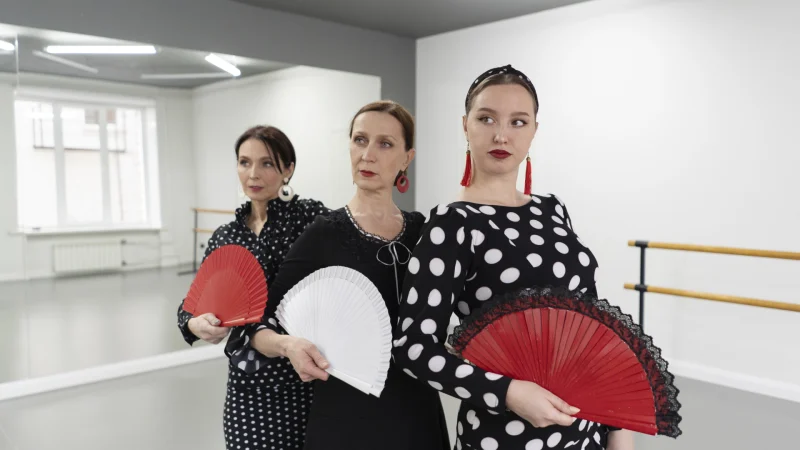
Flamenco dancers in the studio
When movement and compás come together, even a pause feels intentional and musically present.

Rhythm Becomes Something You Can Feel in Class

A common misconception is that Flamenco is mainly about fast foot stamping. The footwork is visible and resonant, but it is only one part of the rhythm. In class, you learn to hear and keep the compás before adding more complex accents with your feet. Clapping, speaking or simple movements can help you first get a feel for the pulse without the pressure of keeping up with the tempo.

Bodywork follows its own logic too: your upper body stays upright while your arms and hands move with clarity. That does not mean every posture has to be rigid. Instead, you practise controlling your tension and consciously finishing movements rather than continuing them out of habit. A good teacher explains what to focus on and gives corrections in a way that helps you understand the change for yourself.

If you’re still unsure whether group classes or personal feedback would suit you better, also read the article about private dance lessons in Hamburg. Private lessons can help you focus on a specific question, while a group also offers the sound and energy of practising together.

Learn Flamenco: Rhythm, not just stomping

Like this

  • Listen for the basic pulse before adding accents
  • Practice footwork slowly, with clear weight shifts
  • Keep your arms and upper body consciously engaged in the movement
  • Leave pauses when the music gives you room for them

Not like this

  • Stamp as loudly as possible without counting the beat
  • Increase the tempo even though your steps are still messy
  • Move only your feet and neglect your upper body
  • Fill every pause with extra movement

When you feel the rhythm in your body, you don't have to force the movement, it can respond to the music.

Flamenco instructor

Andalusian roots shape the expression, not a costume

Flamenco carries a complex history of Andalusian culture. In the dance, this connection shows not through a fixed stage setting or specific clothing, but through the way music and movement respond to each other. Singing can change the character of a moment; the dancer then shapes their posture, accents and intensity. That’s why it’s worth listening in class too, rather than focusing only on your own steps.

To choose an offering in Hamburg, it helps to ask specific questions: Do they explain which musical foundations you’ll practice? Is there room for beginners? How are footwork and posture developed, and how much clapping or counting do you do together in class? The answers tell you more about the teaching approach than a general description of the style.

If you’re interested in Hamburg’s dance scene, you can place Flamenco alongside other forms in the overview Which dance styles shape Hamburg. It’s important to remember that a single course offers an introduction, not the entire cultural history. Respect shows in learning carefully, listening, and not reducing a culture’s origins to decorative clichés.

Flamenco is born from the body and rhythm

Body

Posture gives movement direction

Arms, hands, and upper body convey expression.

Classes are about more than just steps. An upright posture and deliberately guided arms show how tension, calm, and accents work together.

Rhythm

Footwork makes the pulse audible

Accents and pauses shape the movement.

The feet set rhythmic cues that need to fit the music. If you listen closely, you can better control volume and tempo while leaving room for the vocals.

Frequently Asked Questions

  1. Yes, Flamenco is usually taught as an individual dance form. You practise movement sequences and rhythm on your own or with a group, and a regular dance partner is usually not a requirement.

Flamenco Classes in Hamburg

Compare current Flamenco classes in Hamburg and see which lessons suit your experience level.

Find your Flamenco rhythm

On udansa, you can compare current Flamenco classes in Hamburg and find an option that suits your experience level. That way, you’ll know where you can put rhythm and movement into practice.

Find your Flamenco rhythm