Dance Festival5 minutes

Dance Triennial Hamburg: A Festival in Urban Spaces

By Mary De LucaUpdated

In brief
  • The first Hamburg Dance Triennial took place in June 2026 and has already ended.
  • The festival brought together international companies, the local dance scene, a forum and a City Parade.
  • Activities in public spaces made dance visible beyond traditional stages.
  • All Moves is a dedicated, open movement program for people with no prior experience.

Those who live in Hamburg encounter dance not only as a performance in a theater. The Triennale also brought into focus the question of how movement is perceived in public spaces.

DefinitionCity Parade

City Parade is a format of the Dance Triennial that brings dance into urban spaces. It makes movement accessible to the public beyond a traditional stage.

The first edition connected the stage, forum and urban space

The first Dance Triennale Hamburg took place in June 2026. It brought international companies and the local dance scene together and complemented the program with a forum and the City Parade. This meant the Triennale was not limited to a single performance setting: dance was visible as a performing art, a topic for discussion and movement in public space.

This mix matters to visitors because the formats call for different kinds of attention. At a performance, you follow a work that has been set, while the forum focuses on exchanging ideas about dance. An event in public space, on the other hand, might happen to meet you wherever you are. You can also find an overview of other dance offerings in Hamburg online; the page on events in Hamburg lists current participatory formats.

The Dance Triennale is a series held every three years. The 2026 edition is therefore not an ongoing event, but the launch of this series in Hamburg.
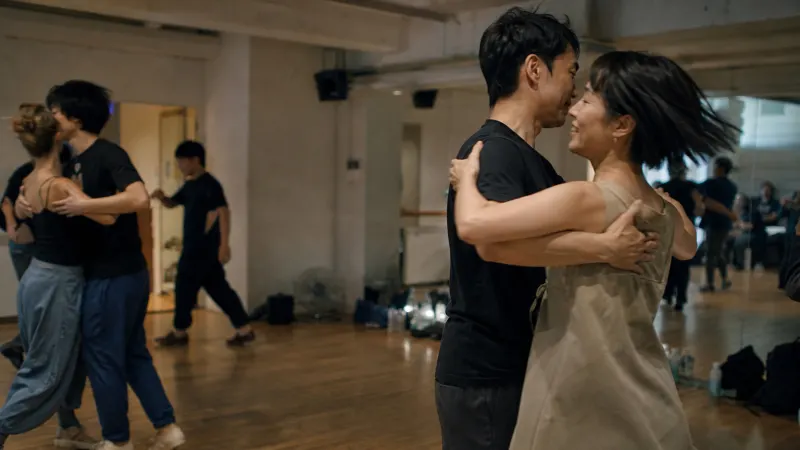
In urban spaces, dancers and spectators share the same public space, but not necessarily the same role.

In public spaces, the experience of dance changes

A City Parade changes the familiar setting: dance does not take place only in front of an audience that has specifically come to a performance venue. People passing by can also notice the movement. This changes the situation for both sides. Spectators experience dance in connection with their everyday surroundings, while the dancers have to take their surroundings and the people on the sidelines into account.

This does not mean that everyone spontaneously becomes part of the activity. Watching is a complete way to take part in its own right. If a specific activity invites you to join in, you can follow the participants’ cues. If you stay on the sidelines at first, you are more likely to see how the group moves and where there is room. That is more helpful than stepping into a formation without looking at the situation.

For your own planning, keep in mind that public activities are less predictable than a fixed-seating event. Choose comfortable shoes, check the weather, and leave yourself enough room to move if you plan to watch for a while or join an open activity.

How to come across activities around the city

Do this

  • Check in advance whether an activity is for watching or participating
  • Choose comfortable shoes and clothes suitable for the weather
  • Leave space when a group is moving through the room

Don't do this

  • Dance into the group without being invited at every opportunity
  • Expect people outdoors to wear the same clothes as they would to a dance hall
  • Join a formation without paying attention to the people in it

In public spaces, watching is a full-fledged way to experience dance; you should only join in if the activity invites you to.

Dance educator

All Moves opens up a different way to take part

All Moves is part of Hamburg’s dance program and invites people with no prior experience to try out different styles. It offers a different way in than the City Parade: at a parade, you can watch dance in the city, while an open movement session is specifically designed for you to try it yourself. Together, the two formats show different ways of experiencing dance, without requiring you to have already mastered a particular technique.

If you’d like to join an open session, you don’t need to have a clear idea of how well you can move. It helps to start by following the instructions and doing the movements to a degree that feels right for you. You can make a variation smaller or take a short break if it feels unfamiliar. For current dance offerings in Hamburg, you can use the course and event filter on udansa. That way, even after the Triennale, you can find opportunities not just to watch dance, but to get moving yourself.

Watch or get moving yourself

Watching

Experience the urban space mindfully

You take in movement and your surroundings at the same time.

By watching, you can see how dance works outside a studio and how passersby react to it. You don’t need to prepare anything, and you can decide for yourself how long you stay for an activity.

Join in

Accepting an Invitation Mindfully

You become part of the movement when it feels right.

Some open events are specifically aimed at people with no prior experience. For a specific activity, check whether you’re invited to join in, and follow the instructors’ guidance.

Frequently Asked Questions

  1. No, the first edition took place in June 2026 and is already over. The Tanztriennale is planned as a series held every three years, so you should check for up-to-date information about future editions.

Dance in the city begins with a glance

At udansa, you'll find current dance events and classes in Hamburg if you'd like to try something yourself or watch after the festival.

Dance in the city begins with a glance