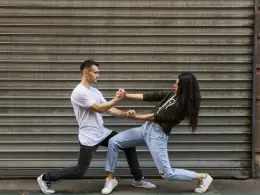
Dance course consultation5 minutes

Which dance course in Munich suits me? The big test

By Bernhard De LucaUpdated

In short
  • Which dance course in Munich suits you depends on your musical preferences, your weekly time budget, and your goals on the dance floor.
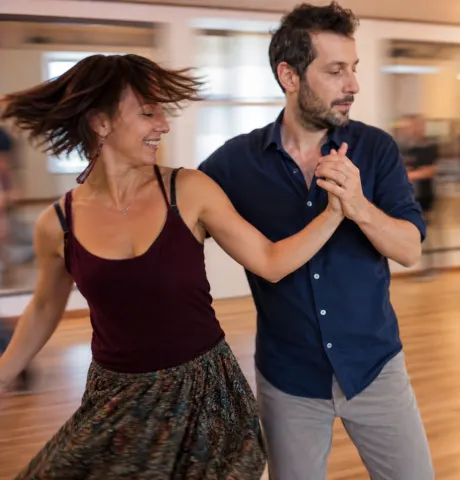
  • Structured ballroom and Latin dances offer clear step sequences, while Salsa, Bachata, or Tango rely on free leading and social dancing.
  • Solo styles like Contemporary, Jazz, or Hip-Hop are suitable for anyone who wants to train coordination and fitness without needing a partner.
  • Before signing up for a fixed course, it is worth taking a trial lesson to test the teaching pace and course atmosphere without any obligation.

Choosing the right dance course determines whether dancing becomes a fulfilling balance or a stressful chore. This quiz helps you realistically assess your preferences, time budget, and motivation.

Finding the right rhythm for your everyday life

Munich offers a diverse range of dance options, from classic ballrooms and vibrant social dance scenes to traditional folk dance evenings. If you are trying to decide which dance course in Munich best suits your goals, you should first take an honest look at your daily routine and musical preferences. Whether you prefer fixed course dates with progressive step sequences or maximum flexibility for spontaneous dance evenings, this will significantly determine your long-term enjoyment of dancing.

The range of styles differs not only in rhythm, but above all in dynamics and the learning curve. While ballroom dances like Waltz or Discofox provide a clear structure, dances like Argentine Tango or Salsa require more room for free improvisation and spontaneous leading and following. If you are also interested in local dance traditions, you will discover unique facets of dancing together at events like the traditional Kocherlball or open rounds for Bavarian folk dance in Munich.

The self-test: Find your perfect dance style

  1. Which music makes you want to tap your feet immediately?

    • A: Timeless orchestral sounds, pop classics and lively big band tracks
    • B: Rhythms with Spanish guitars, percussion, swing or urban beats
    • C: Electronic soundscapes, current chart pop or powerful R&B
  2. What is your main goal for a dance course?

    • A: To glide across the dance floor with confidence at parties, balls, and weddings
    • B: To meet new people and celebrate in a relaxed atmosphere at dance evenings
    • C: To get a good workout, improve coordination, and learn choreographies
  3. How much time commitment fits into your daily life?

    • A: A fixed weekly appointment over several weeks is perfect
    • B: I appreciate flexible formats with socials and freely selectable evenings
    • C: I want to spontaneously attend individual classes or open sessions
  4. How do you feel about dancing with a fixed dance partner?

    • A: I really like the traditional division of leading and following
    • B: I like to rotate and dance with many people in one evening
    • C: I prefer to move independently and focus on myself
  5. Which feeling should prevail after the dance class?

    • A: The satisfaction of having precisely mastered a new sequence of steps
    • B: The joy of a sociable time with good music and relaxed conversations
    • C: The feeling of an intense full-body workout with a noticeable training effect

Your evaluation

Mostly A: The classic ballroom dancer

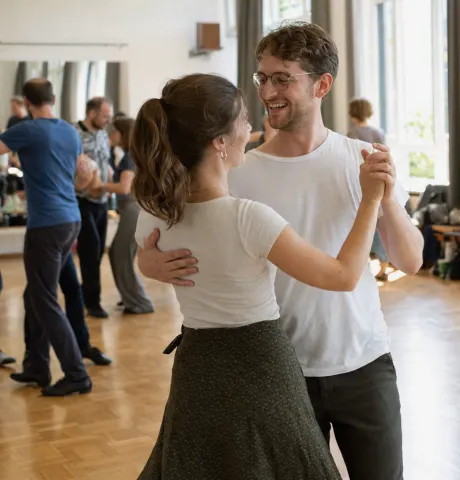
You are looking for a reliable structure, clear step sequences, and a versatile repertoire for festive occasions or balls. Ballroom and Latin dances like Waltz, Cha-Cha, or Discofox provide you with exactly this framework. Take a look at the Munich course offerings for classic partner dance beginner classes to build a solid foundation in posture and rhythm.

Mostly B: The lively social dancer

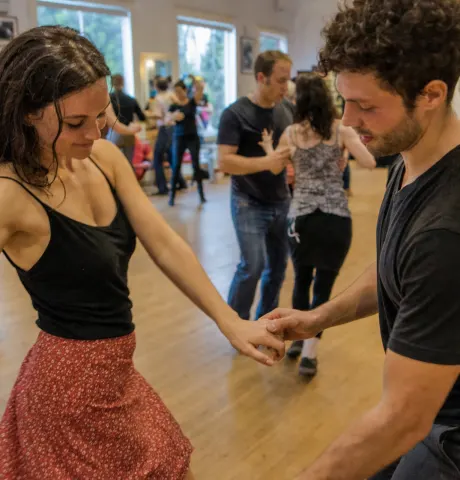
You want to enjoy dancing primarily as a social experience after work, without having to memorize rigid step patterns. Scene dances like Salsa, Bachata, or Argentine Tango thrive on relaxed interaction and spontaneous improvisation. Attend a trial class for social dance or take advantage of opportunities like free dancing in the Hofgarten to get to know the scene.

Mostly C: The individual solo dancer

You want to focus fully on your own movement, your body, and modern choreography, completely independent of leading or following. Styles like contemporary dance, modern dance, or Hip-Hop offer you the ideal training for expression, flexibility, and fitness. Find out about open classes for adults in modern studios where you can join without a partner.

A direct comparison of dance course formats

CriterionType A: Ballroom danceType B: Social danceType C: Solo dance
Typical stylesWaltz, Foxtrot, Cha-Cha, DiscofoxSalsa, Bachata, Argentine TangoModern Dance, Hip-Hop, Ballet
Partner commitmentFixed dance partner usually an advantagePartner rotation common in classNo dance partner required
Learning focusPosture, step sequences and leadingMusicality, flow and improvisationBody control, strength, choreography
OccasionsBalls, weddings, dance school partiesWeekly socials, open-air eventsOpen classes, studio showcases

The classification is based on typical teaching models and the requirements of the various dance disciplines.

Start with trial lessons and clear preparation

A test result provides reliable guidance, but your personal feeling on the dance floor is what ultimately decides your choice. To find out if a dance style and the atmosphere of a course suit you, it is always recommended to take a trial lesson or attend an open beginner workshop before making a firm commitment. This way, you can check stress-free whether the teaching pace, music selection, and group size meet your expectations.

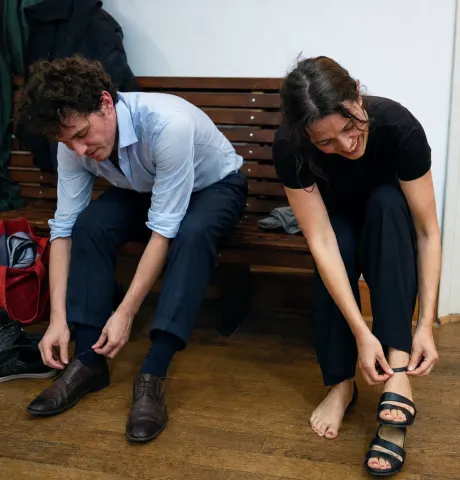
When preparing, make sure to wear comfortable clothing and shoes with a clean, spin-friendly sole to protect your joints and knees. If you want to start partner dancing but don't have anyone by your side for the course evening yet, you don't have to postpone your plans. Many dance enthusiasts find suitable partners for their dance journey via udansa, and local traditions like the carnival in Munich also offer frequent opportunities to try out what you have learned on real dance floors.

Frequently Asked Questions

  1. No, many dance schools in Munich offer courses with rotating partners or maintain internal waiting lists for individual dancers. In addition, you can search specifically for a dance partner for your desired course on platforms like udansa.

Find dance courses in Munich

Discover suitable beginner courses and dance styles right in your area.

Find dance partners in Munich

Enter your preferred dance style or your district and meet dance enthusiasts to start a course together in Munich.

Find dance partners in Munich