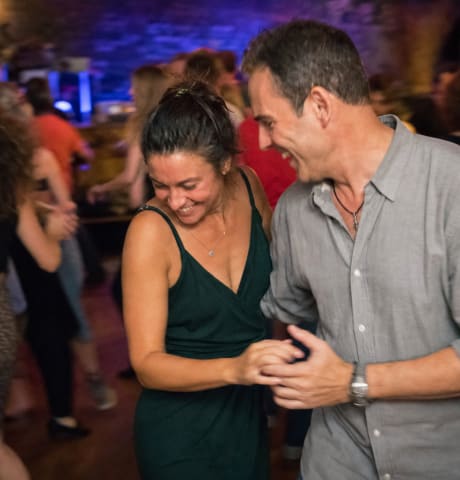
Bavarian folk dance in Munich: rhythm meets form
Anyone thinking of folk dance in Munich will quickly come across two traditional forms that could hardly be more different: the rhythmically complex Zwiefacher and the elegant Munich Française. While the Zwiefacher is a Bavarian folk dance deeply rooted in the Alpine foothills, the Française originally comes from the ballrooms of the 19th century. In Munich, both are a firm part of the repertoire of social dance events, where the shared experience is the main focus.
What is special about the Zwiefacher is the irregular change of time signature. Dancers switch fluidly between three-four time and two-four time, which requires concentration and careful listening. The Munich Française, on the other hand, is a five-part social dance that is danced in long rows facing each other. Both dances prove that traditional folk dance in Munich is not a rigid custom, but rather lively movement on the dance floor. Anyone who understands the basics will quickly find their place at open dance evenings.