Tango5 minutes

Tango in Munich: Milongas and the allure of Argentine Tango

By Mary De LucaUpdated

In a nutshell
  • Argentine Tango is based on free improvisation in a pair, while the European standard tango follows fixed step sequences and a rigid posture.
  • A milonga is divided into music blocks called tandas, which are interrupted by short interludes called cortinas for changing partners.
  • The traditional invitation happens discreetly via eye contact and a nod of the head through mirada and cabeceo across the room.
  • In Munich, established venues like the Dianatempel in the Hofgarten in summer, the Giesinger Bahnhof, or the Gärtnerplatztheater invite you to dance tango.

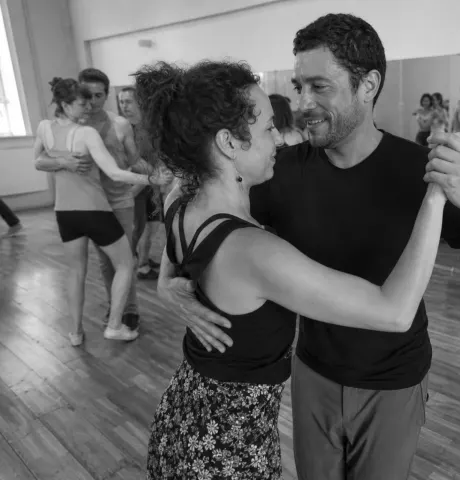
Argentine Tango is not a rigid sequence of steps, but a non-verbal conversation to the music. Anyone stepping onto the dance floor of a milonga in Munich experiences a dance that is created entirely in the present moment.

DefinitionMilonga

Milonga refers to both the traditional dance event for Argentine Tango and an independent, cheerful, faster musical form in 2/4 time. At milongas, clear rules apply for the flow of dance, the sequence of music, and how to ask someone to dance.

Improvisation instead of a step catalog from dance school

Anyone looking for Tango in Munich today almost always means Tango Argentino. Emerging at the end of the 19th century on the Río de la Plata, this dance differs fundamentally from the standardized tournament dance of European origin. While standard Tango is based on fixed sequences of figures, rigid posture, and emphasized head turns, Argentine Tango thrives on improvisation. Two people communicate through an elastic connection in the upper body, walking to the music, and the subtle interplay of impulse and response.

For beginners, this means there are no fixed step sequences to memorize. Instead, conscious walking forms the foundation, combined with turns like the Ocho or cross steps like the Cruzada. Learning it requires patience and mindfulness, but in return, it opens up the freedom to shape every moment on the dance floor anew. If you would like to get an overview of the right equipment in advance, practical Tango Argentino gift ideas for training and dance evenings will help you.
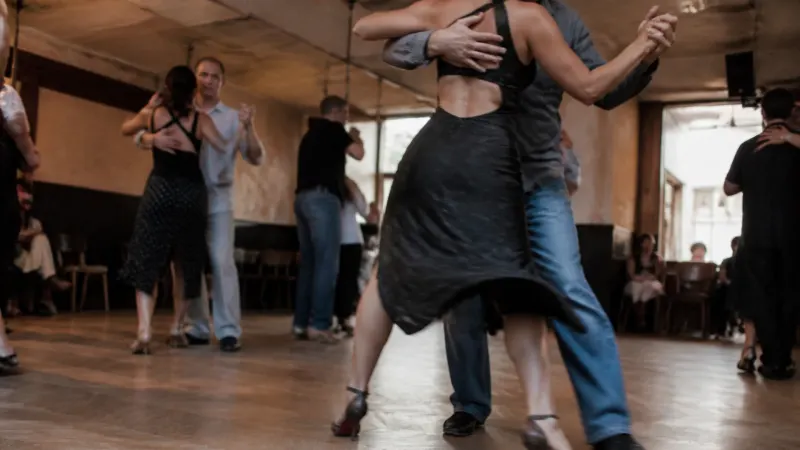
In Tango, the shared axis determines stability: every step arises from the attentive dialogue of the couple.

The milonga and the respectful flow of dance

A central meeting point for dancers are the milongas, traditional dance evenings with their own codes of conduct. The action on the dance floor follows clear procedures that ensure orientation and safety. Musical pieces are played in blocks of three to four tracks, which are called tandas. Traditionally, dancing takes place in the direction of travel counterclockwise on concentric lanes along the edges of the room, in order to avoid collisions in the dense crowd.

These blocks are interrupted by short musical interludes, the cortinas. They signal the end of the shared round, offer an opportunity to say thank you, and clear the dance floor. Anyone visiting a milonga in Munich will encounter this structure equally in classic halls as well as at summery outdoor dance opportunities. In the Hofgarten, the historic Dianatempel becomes a popular open-air dance floor on smooth marble when the weather is good. Cultural venues such as the Kulturzentrum Giesinger Bahnhof in Obergiesing or the Staatstheater am Gärtnerplatz in the Isarvorstadt also regularly open their spaces for Tango evenings, workshops, and milongas.

Milonga etiquette in comparison

Etiquette at the milonga

  • Follow the flow of dance counterclockwise in the outer lane
  • Wait for an invitation via eye contact and a nod
  • Politely thank your partner after a full tanda when the cortina plays
  • Adapt your steps to the available space on the dance floor

Don'ts at the milonga

  • Cutting straight across the center of the dance floor
  • Approaching strangers' tables uninvited and being pushy
  • Leaving your dance partner in the middle of a song
  • Performing large, space-consuming lifts in a crowded social setting

Tango is not about memorizing steps, it is the art of moving a shared center of gravity as a couple and feeling the silence between the beats.

Dance teacher for Argentine Tango

Eye contact, choosing a course, and a relaxed start

In traditional Tango, the invitation to dance happens through a subtle etiquette called Cabeceo. Instead of walking directly to a table, those who want to dance seek eye contact (Mirada) across the room. A slight nod confirms the invitation, while a discreet look away signifies a polite refusal, without anyone losing face. This non-verbal culture ensures a relaxed atmosphere in the room.

If you want to learn Tango in Munich, you can specifically look for offers that teach this culture. When choosing a course, pay attention to whether the school focuses on body awareness and social etiquette instead of just stringing complex figures together. A trial lesson offers the ideal opportunity to find out if the chemistry with the instructors is right. If you are interested in other partner dances as well, take a look at the Munich folk dance tradition or test with our guide which dance style suits you best.

Comparing Ballroom Tango and Argentine Tango

Ballroom

Classic Ballroom Tango

Competitive dance with a fixed sequence of steps

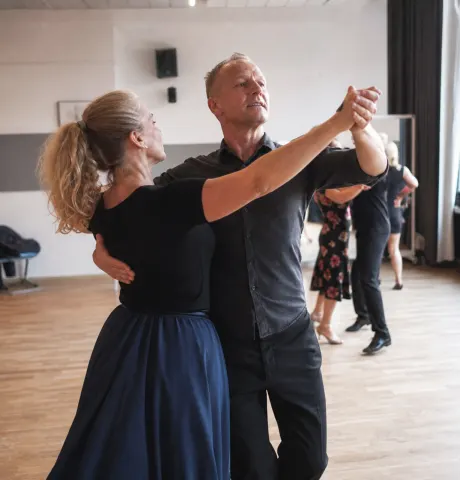
It is taught at dance competitions and in many classic dance schools. Characteristic features are the firm dance posture, powerful steps, and dynamic changes of direction following fixed choreographies.

Argentine

Traditional Argentine Tango

Social partner dance based on free improvisation

It originated at the Río de la Plata and is danced socially all over the world. Here, the couple improvises every step while walking to the music, supported by a flexible, warm embrace and constant dialogue.

Frequently Asked Questions

  1. Flat shoes with a clean, smooth leather sole are best for getting started. They allow you to turn effortlessly on the balls of your feet on the dance floor without straining your knee joints, before special Tango shoes become necessary.

Argentine Tango courses in Munich

Find suitable Tango courses and workshops for beginners and advanced dancers in Munich.

Don't dance your next Tango alone

On udansa you can find dance enthusiasts for joint milonga evenings as well as courses for Argentine Tango in Munich, suitable for your level.

Don't dance your next Tango alone