Dance culture4 minutes

Flamenco in Munich: Getting started with the Spanish art of dance

By Bernhard De LucaUpdated

In a nutshell
  • Flamenco in Munich does not require a dance partner, as the expression lies primarily in solo dance and the presence of the individual personality.
  • For getting started, comfortable training clothes and closed shoes with a stable, wide block heel are sufficient.
  • When choosing a school, look for a sprung wooden floor to protect your joints during rhythmic stomping.
  • Well-founded instruction trains the ear for traditional rhythms just as intensively as the posture of the arms and hands.

Flamenco fascinates with its proud posture, percussive footwork, and deep emotion. If you want to get started with this Andalusian dance, you need neither a dance partner nor previous experience, but a good sense of rhythm and the right guidance.

DefinitionCompás

In flamenco, compás refers to the basic rhythmic pattern and meter that sets the beat for dance, guitar playing, and singing. It forms the essential foundation upon which improvisation and sequences of steps are built.

Understanding Flamenco: Andalusian art instead of partner dance

If you are looking for Spanish dance art in Munich, you will quickly come across the Andalusian tradition of Flamenco. Unlike classic Latin American partner dances such as Rumba or Cha-Cha, Flamenco is not based on fixed partner figures or standardized leading impulses. Instead, it forms an interplay of solo dance, rhythmic footwork, singing, and guitar accompaniment. Exploring Flamenco classes in Munich means engaging with a holistic art form that demands body control and emotional presence.

On udansa, you can specifically search for offers that guide you step by step into this tradition-rich form. While classic social dances rely primarily on the shared acoustics in the hall, as one knows from the Kocherlball in Munich, Flamenco is strongly directed inward and requires a very specific posture of the torso, arms, and hands.
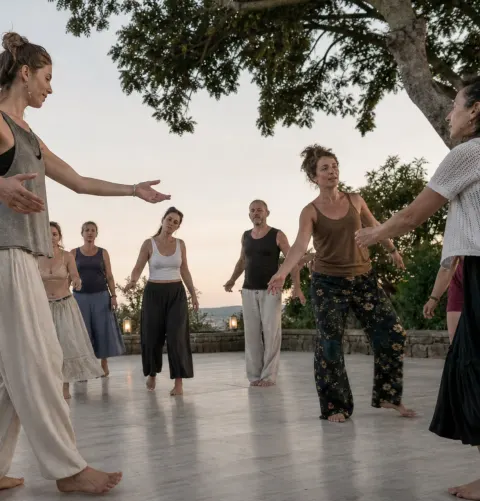
Upright in the torso and grounded in the step: Flamenco combines a proud posture with precise footwork.

Finding the right school for Flamenco in Munich

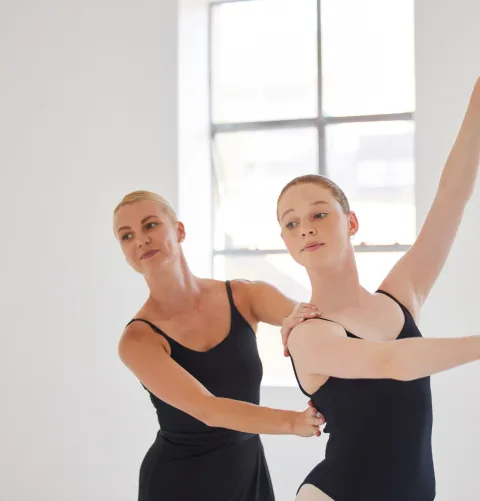
Searching for the right Flamenco lessons in Munich requires an eye for essential details. A reputable Flamenco school in Munich is primarily characterized by a joint-friendly sprung floor. Since rhythmic stomping with the heel and ball of the foot puts strain on the skeleton, tiles or bare concrete are unsuitable. In addition, the group should be small enough so that the instructor can precisely correct your foot posture and axis alignment.

Good instruction conveys not only isolated step sequences, but also an understanding of the compás, the rhythmic framework of the various song forms. Before your first class, ask if rental shoes are available or if sturdy shoes with a stable block heel are sufficient for the start. This way, you can approach the complex rhythm without making expensive bad purchases.

How to get started with Flamenco

Training correctly

  • Make sure the training room has a springy wooden or sprung floor
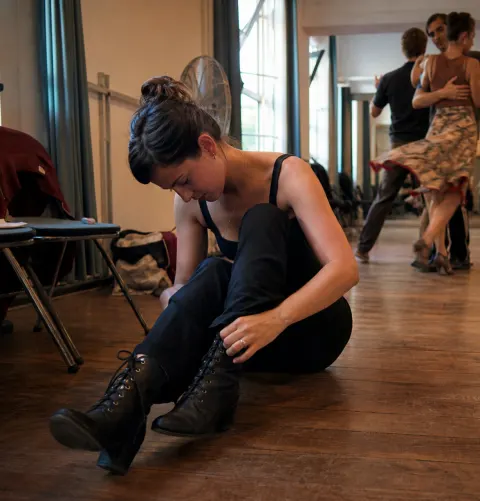
  • Choose shoes with a wide, stable block heel for balance
  • Count steps and arm movements slowly to the basic beat at the beginning
  • Build up body tension from your core and back

Avoiding mistakes

  • Stomping rhythmically on hard tile or concrete floors
  • Using shoes with stiletto heels or soft rubber soles
  • Practicing fast choreographies before the rhythm is secure
  • Throwing your arms up uncontrollably and emphasizing a swayback

Flamenco does not start in the feet, but in the posture of the back and the willingness to listen to the rhythm.

Dance instructor for Spanish stage dance

Equipment and bodywork in Flamenco training

To get started with Flamenco, you do not need expensive professional equipment at first. Comfortable training clothes that allow full freedom of movement are perfectly sufficient for the first few lessons. It is important to wear trousers or a wide skirt so that the instructor can clearly see your knees and ankles. A sturdy block heel, three to five centimeters high, ensures a stable stance without straining your joints.

Flamenco strengthens the deep muscles, improves spinal alignment, and trains your ear for complex time signatures. Once you have internalized the basics, you will often discover parallels to other demanding dance forms like folk dance in Munich, where rhythm changes also form the foundation. Patience and continuous practice are the key to developing your own expression in dance.

Flamenco compared to partner dance

Solo dance

Individual presence

Flamenco as personal expression

The focus is entirely on your own axis, the posture of the upper body, and the rhythmic dialogue with vocals or guitar. You dance independently of a partner.

Partner dance

Shared dialogue

Classic ballroom and Latin styles

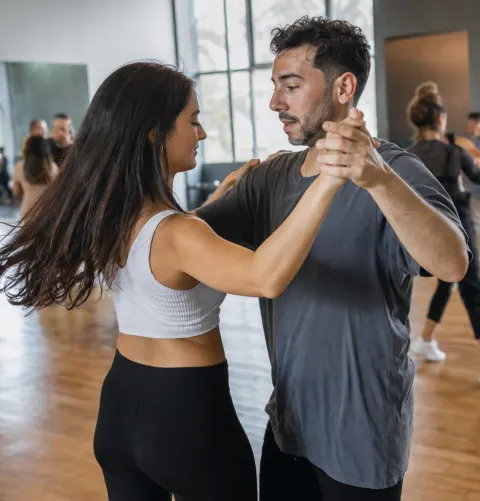
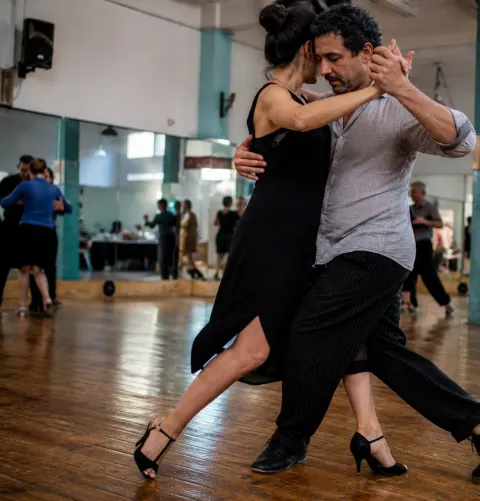
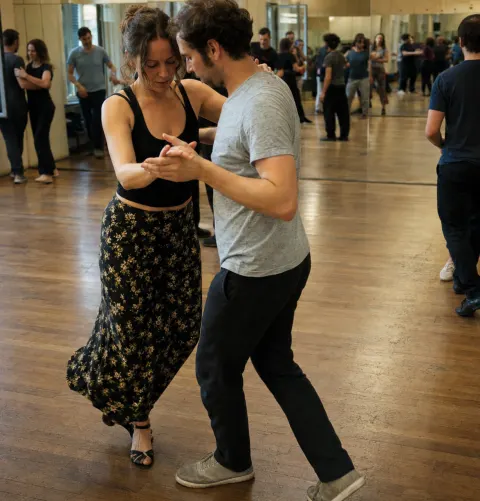
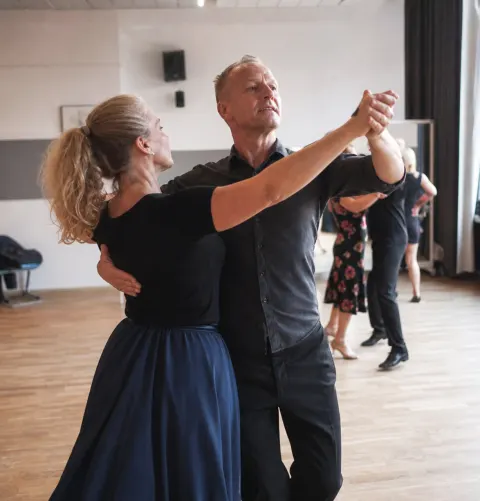
Leading and following determine movement in space. Steps and turns emerge in constant contact with a partner and require shared balance.

Frequently Asked Questions

  1. No, Flamenco is predominantly danced solo. You train your own posture, footwork, and rhythm, which is why you can sign up for a class alone at any time.

Flamenco courses and dance workshops in Munich

Discover suitable courses and offers for your start in Munich.

Find your rhythm with Flamenco

Compare dance classes in your city or connect with like-minded people who share your fascination for Spanish dance art.

Find your rhythm with Flamenco